Modern people often assume ancient astrology was superstition.
That assumption feels obvious to the modern mind. We inherit a world shaped by physics, engineering, medicine, instrumentation, and data. We imagine that ancient peoples, lacking our tools, were mostly guessing in the dark — projecting gods, myths, and fantasies onto the sky because they did not yet understand the universe.
But superstition is sometimes just the name a later age gives to an older form of observation before it understands the instrument being used.
Human beings mapped the heavens long before they could explain light, gravity, electromagnetism, or plasma. They tracked cycles before they knew orbital mechanics. They preserved patterns before they could describe mechanism. The absence of modern explanation did not mean the absence of real attention.
Electric Astrology begins there.
Not with the assumption that the ancients were automatically right about everything. And not with the assumption that they were fools.
But with a more serious question:
What if the ancient astrological tradition was preserving observations about real timing relationships, but encoding them in symbolic language because no technical language yet existed?
That possibility changes everything.
Observation Before Explanation
Human beings were reading the sky long before they could explain it.
They watched the sun rise and fall through the year. They tracked the moon's phases. They noticed wandering stars that moved differently from the fixed constellations. They observed repeating cycles, strange conjunctions, seasonal correspondences, and recurring relationships between celestial timing and earthly life.
They did not need Maxwell's equations to notice a pattern. They did not need satellites to recognize recurrence. They did not need modern cosmology to know that heaven and earth appeared to move together in ways worth preserving.
This matters because modern culture often assumes that explanation must come first. But in practice, observation often comes first. Human beings notice before they understand. They repeat before they formalize. They symbolize before they measure.
Ancient astrology may be understood in that light.
Not as a fully modern science hidden in the past. But as a long civilizational memory of patterned observation.
The astrologers of old may not have known the mechanism. But that does not mean there was no phenomenon being tracked.
Myth as Compression
The ancients did not write their knowledge only in equations. They wrote it in myth.
That is not a weakness. It is a clue.
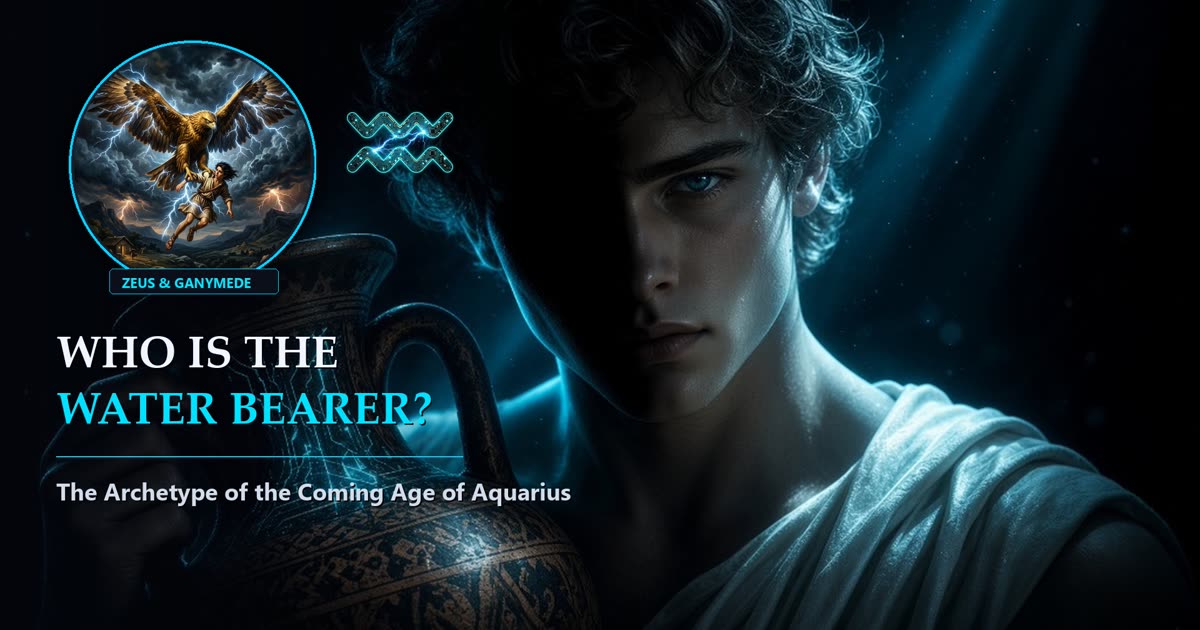
Myth is a compression technology. It stores pattern in memorable form. It carries layers of meaning across generations through character, image, story, and symbol. A god is not merely a fictional being. A god can also be a carrier of behavior, timing, temperament, tendency, and force.
This may be why planets became gods.
- Mars is not just a red point in the sky. He becomes conflict, action, heat, force, blood, severing, urgency.
- Venus is not just a bright body near the horizon. She becomes attraction, harmony, desire, beauty, magnetism, union.
- Mercury becomes message, exchange, relay, intelligence, motion, trade, speech.
- Saturn becomes limit, structure, delay, burden, resistance, boundary, time.
In Electric Astrology, these are not discarded as primitive fantasies. They are treated as symbolic carriers — compressed pattern language built before technical terminology could exist.
Myth made the sky portable. It allowed generations to remember what mattered. And if the ancients were tracking real relationships, myth may have been the only durable way to store that data before instrumentation arrived.
The Zodiac as Interface
Modern people often see the zodiac as decoration — twelve signs arranged around a wheel, useful for art, memes, and personality shorthand.
Electric Astrology asks us to see it differently.
What if the zodiac is not merely decorative, but functional? What if it is an interface?
An interface does not need to explain the full machinery behind a system. It needs to provide an accessible language for interacting with recurring conditions. A dashboard does not teach you the entire engineering of a power plant. It gives you a readable pattern. It translates a deeper process into usable form.
The zodiac may have served a similar purpose.
It organizes solar-system timing into symbolic structure. It translates recurring conditions into a readable language of signs, archetypes, seasons, tensions, and relationships. It does not have to be a literal mechanism to function as a meaningful interface.
This is where Electric Astrology makes its move.
It proposes that astrology may have been acting as symbolic instrumentation. Not instrumentation in the modern laboratory sense. But a human-scale interface for reading patterned timing in a cosmos that was already affecting life, even if the mechanism remained obscure.
That does not make the zodiac infallible. It makes it more interesting.
The Great Work
This is where the title comes home.
The Great Work is the attempt to reunite what modernity split apart.
- Symbol and system.
- Heaven and body.
- Spirit and circuit.
- Ancient observation and modern instrumentation.
The modern world gained precision, but often at the cost of symbolic depth. The ancient world preserved symbolic richness, but lacked the tools of technical description. Electric Astrology stands between those worlds and proposes that both may hold part of the same puzzle.
The Great Work is not blind nostalgia. It is not a retreat into romantic mysticism. It is not a rejection of science.
It is the effort to take the ancient map seriously enough to revisit it with better tools.
To ask whether the sky-language of old was describing relationships that modern electrical, biological, and solar understanding can now reinterpret. To ask whether the human being is not just a mind trapped in matter, but a living participant in a larger field. To ask whether astrology is not merely belief or superstition, but an unfinished symbolic system waiting for a more complete language.
That is the Great Work. Not the worship of the past. The rewiring of it.
Rewiring the Ancient Map
Electric Astrology does not return to the ancients in order to freeze them in authority.
It returns to them because they may have preserved something we have forgotten how to read.
The goal is not to say, “The ancients already knew modern science.” They didn't.
The goal is to say, “The ancients may have observed real patterns and encoded them symbolically, and we may now be in a position to reinterpret those symbols through a new framework.”
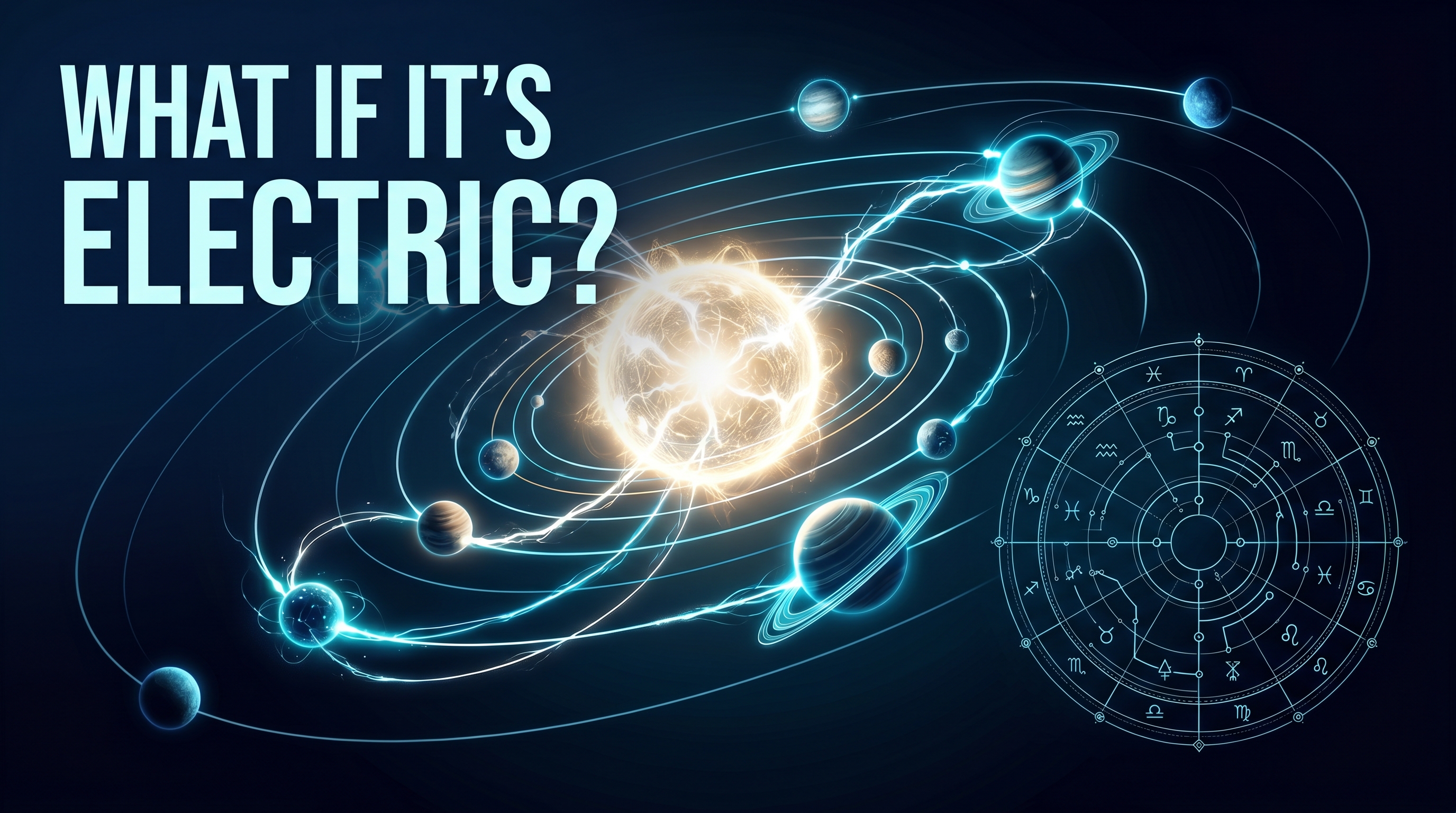
That framework is electrical.
- A solar system alive with field, timing, resonance, polarity, and relationship.
- A human body that is electrical, rhythmic, and environmentally responsive.
- A birth chart that may function more like a wiring diagram than a fortune.
- A zodiac that may be less superstition than symbolic interface.
- A mythic inheritance that may be closer to compressed observation than modern people realize.
Electric Astrology revisits the ancient map because the map may still point somewhere real.
Not because the past was complete. But because the future may require us to recover what was symbolically preserved before we had the means to understand it.
Enter the Great Work
If ancient astrology was only superstition, it would not still haunt the modern world.
If it was already a complete science, we would not still be arguing about it.
But if it was a symbolic system built around real observations — one that outlived its original explanatory framework — then its strange persistence begins to make sense.
That is the doorway Electric Astrology opens.
Not a return to naivete. Not a surrender to dogma. A new reading of an old map.
A serious attempt to ask whether the heavens were always speaking in symbols because symbols were the only tools available. And whether, now, those symbols can be rewired through a language of circuit, signal, timing, and field.
That is the Great Work.
Enter it through Electric Astrology.