Sunspot Number & Solar Cycle 25
Sunspots are the Sun's activity gauge — counted daily since the 1700s, rising and falling on the ~11-year solar cycle. Today's sun is below, live; beneath it, the full 275-year record with every cycle marked.
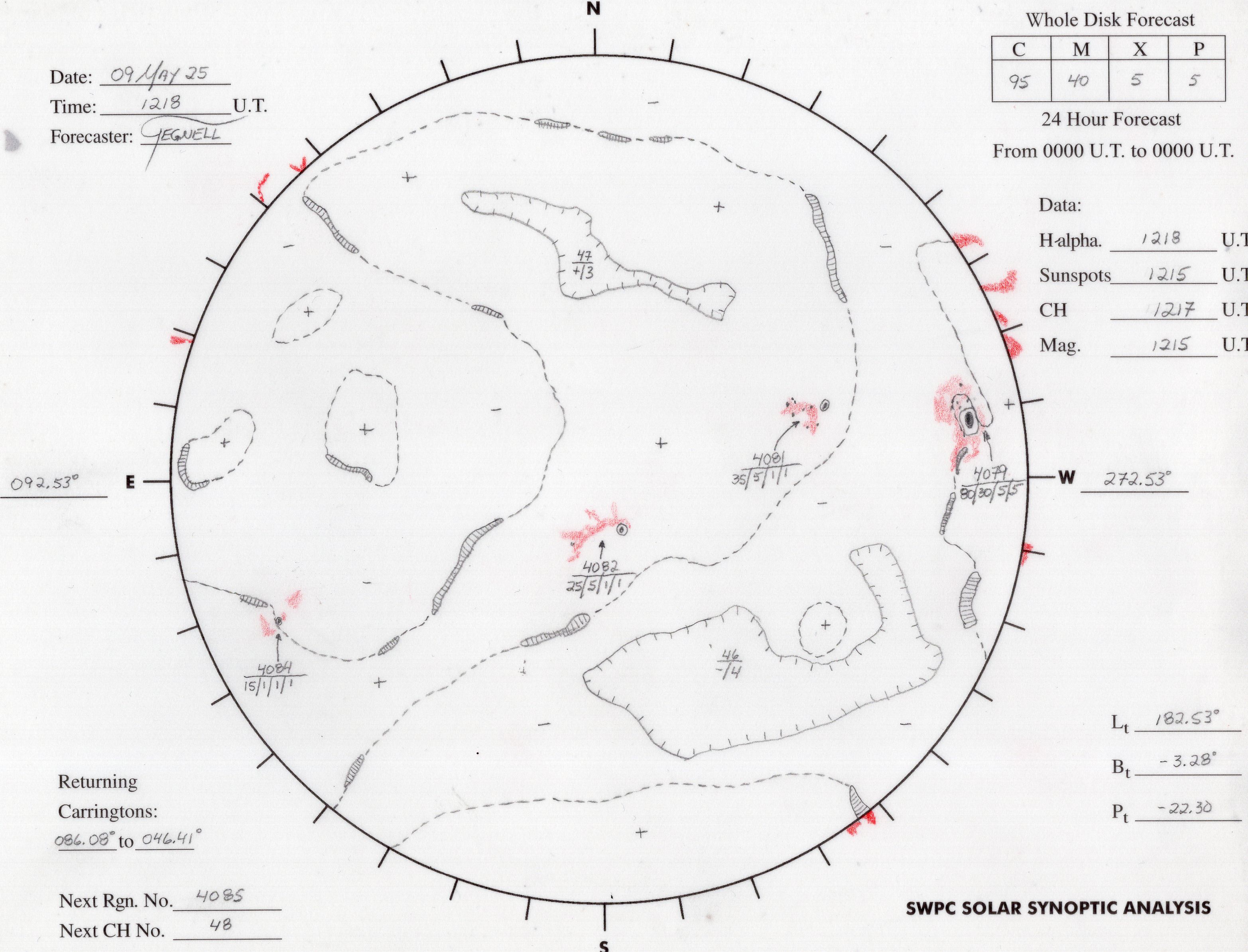
275 Years of the Record
Historical Field Records — Source Data
The Data Behind Your Commissioning Voltage
This is the actual archive — not a summary, not a chart generated from internal assumptions. SILSO sunspot records back to 1818. GFZ Potsdam Kp readings back to 1932. Your commissioning voltage was pulled directly from these datasets. Drag the handles at the bottom of each chart to zoom in.
Solar Activity — International Sunspot Number (SSN)
SILSO · Royal Observatory of Belgium · 1818–present
LOADING ARCHIVE…
Geomagnetic Activity — Kp Index (Daily Average)
GFZ Potsdam · Helmholtz Centre · 1932–present
LOADING ARCHIVE…
SSN v2.0 — SILSO, Royal Observatory of Belgium (1818–present) · Kp 3-hourly definitive — GFZ Potsdam / Helmholtz Centre (1932–present) · Data bundled locally; no third-party requests.
This same record — solar cycle phase and geomagnetic state at the moment of your birth — is stamped into every Electric Astrology commissioning schematic as your birth environment: the line voltage the grid was running when your circuit first energized. See it on a real schematic →
Common Questions
What are sunspots?
Magnetically intense regions on the Sun’s surface, cooler and darker than their surroundings. They are the launch pads for solar flares and CMEs — more sunspots means a more active Sun.
What is the solar cycle?
An approximately 11-year rise and fall in solar activity, tracked by the sunspot number since the 1700s. We are currently in Solar Cycle 25, near its maximum — which is why storms and aurora have been so frequent.
When is the solar maximum?
Solar Cycle 25’s maximum phase spans roughly 2024–2026. Activity stays elevated for a year or more around the peak before declining toward the next minimum early in the 2030s.
Get Storm & CME Alerts
NOAA and NASA publish the numbers. They don't tell you. The moment a geomagnetic storm, a major flare, or an Earth-directed CME is confirmed, we'll email you — no refreshing this page, no scanning raw feeds.
This is the general grid alert — the same one everyone gets. Reading it against your commissioning schematic is what the Planetary Logic Controller does.
Signing up puts you on our list — that's the deal: we watch the sky, you hear from us by email. Unsubscribe from alerts any time. Your newsletter choice remains separate.
Full accounts get the richer channel: push notifications, in-app alerts, and email — all tied to the same PLC dashboard.
Enable Space Weather Alerts in Settings →