The short answer
By the sky itself, we are still in the Age of Pisces. On the March equinox the Sun rises in front of the stars of Pisces, about 8° from the border with Aquarius, and crosses it around 2598 by the official constellation lines. Astrologers who divide the sky into equal signs put the start anywhere from 1447 to 3597. Electric Astrology points to 2031, and the reason is at the bottom of this page.
The film: Who Is the Water Bearer? · 9:44The story of Ganymede →
What astrological age are we in?
It depends on which of three clocks you read, and most pages about the Age of Aquarius never tell you which one they mean. Here are all three, labeled.
The sky Every March, on the equinox, the Sun sits in front of a particular patch of stars. Right now that patch is Pisces. The official border with Aquarius, drawn by the International Astronomical Union in 1930, is about 8° away, and the equinox reaches it in 2598.[2][3] By this clock the Age of Pisces began in 67 BCE and still has about 570 years to run.
The astrologers Most astrologers divide the zodiac into twelve equal 30° signs and anchor them in different places. Historian Nicholas Campion collected about 90 published start dates for the Age of Aquarius. They run from 1447 to 3597. The single most popular answer was the 20th century, which is why the 1960s sang about it.[1]
Our reading Electric Astrology points to a specific night in 2031. That is interpretation, not astronomy, and I will show you exactly where the line between the two sits.
When does the Age of Aquarius begin?
About 90 published answers, spread over 2,150 years
What is an astrological age?
Earth spins like a top, and like a top it wobbles. The axis traces a slow circle in the sky, one full turn every 25,772 years.[5] Astronomers call it the precession of the equinoxes.
The wobble drags the equinox with it. The point where the Sun crosses the equator in March slides backward along the zodiac, about one degree every 72 years. Split the full circle into twelve and you get the classic astrological age: about 2,148 years. Each age takes the name of the constellation standing behind the equinox Sun.
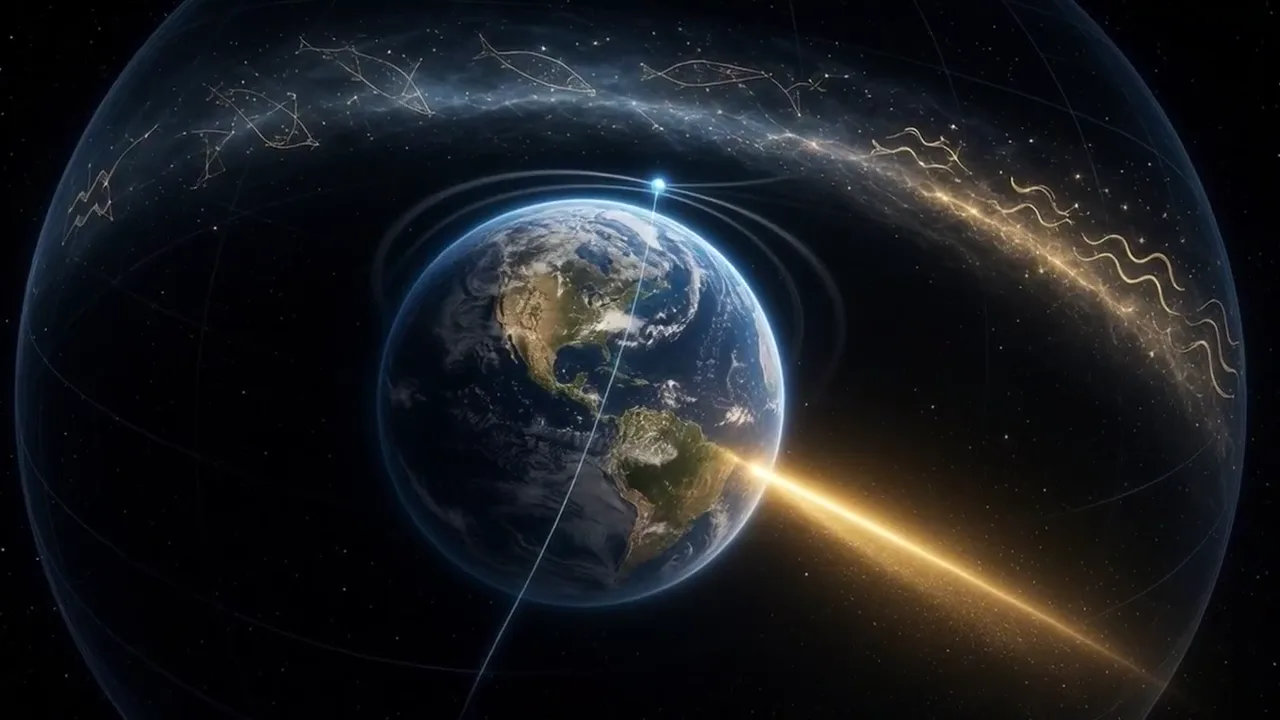
“But the sky is not static. Because of the Earth’s slow axial wobble, an astronomical cycle known as the precession of the equinoxes, the background constellation rising behind the sun on the morning of the spring equinox slowly shifts across 26,000 years.”
Spin it yourself: 4,000 BCE to 4,000 CE
The dial below runs the real calculation. The pointer is the March-equinox sunrise. The inner ring is the twelve equal signs, which astrology pins to that sunrise. The outer ring is the stars themselves, at their true, unequal widths. Drag it back to Babylon and watch the signs and the stars line up, then drift apart.
The Precession Dial
In 2026 CE, the March-equinox Sun rises in front of Pisces.
It crosses into Aquarius in about 570 years. The inner ring is the twelve equal signs, pinned to the equinox. The outer ring is the stars, at their real, unequal widths.
Today. The equinox Sun stands in Pisces, about 8° from the Aquarius border.
Computed with IAU 2006 precession and the official IAU constellation borders. Accuracy drops slowly beyond a few thousand years from today.
How did the ancients know?
They never saw the stars behind the rising Sun. Nobody can; daylight drowns them. They worked it out from the stars that rose just before dawn, and from records kept over centuries.
- Late 5th century BCE, Babylon. Astronomers fix the zodiac as twelve equal 30° signs, the system astrology still uses.[6]
- 129 BCE, Rhodes. Hipparchus compares his star catalog with records made about 150 years earlier and finds every star shifted. He has discovered precession.[4]
- 67 BCE. By the modern borders, the equinox slips out of Aries and into Pisces.[2]
- About 150 CE, Alexandria. Ptolemy’s Almagest ties the signs to the equinox itself, not to the stars. Aries begins wherever the March Sun is.
That last choice is why your sign and the constellation behind the Sun on your birthday no longer match. Astrology’s founders were writing at the exact moment the sky slid from the Ram to the Fishes.
The signs are equal. The stars are not.
How much of the Sun’s path each constellation really covers
Is it the Age of Aquarius now?
Not by the stars, not yet. It is close, though, and closing: 8° to go, one degree per human lifetime. That nearness is why so many astrologers say the age is dawning, and it is what the film means here:

“For the last two millennia, humanity has been traveling through the age of Pisces. Right now, the sun marker is moving into the constellation of Aquarius.”
Measured against the real borders, the ages are uneven. The Age of Aries lasted about 1,800 years (1864 to 67 BCE). The Age of Pisces will last about 2,660 (67 BCE to 2598 CE), because Pisces is one of the widest constellations on the Sun’s path.
The Great Year on a clock face
If one wobble of Earth’s axis took twelve hours, each astrological age would be about an hour.
- Recorded history: 2 h 26 min (writing, about 3200 BCE)
- The Age of Pisces so far: 58.4 min (since 67 BCE)
- The electric age: 4.2 min (the last century and a half)
- A human life: about 2.2 min
Put the whole cycle on a clock face and the scale lands hard. All of recorded history is about two and a half hours of the twelve. The electric age, from the first power grids to the device in your hand, is the last four minutes.
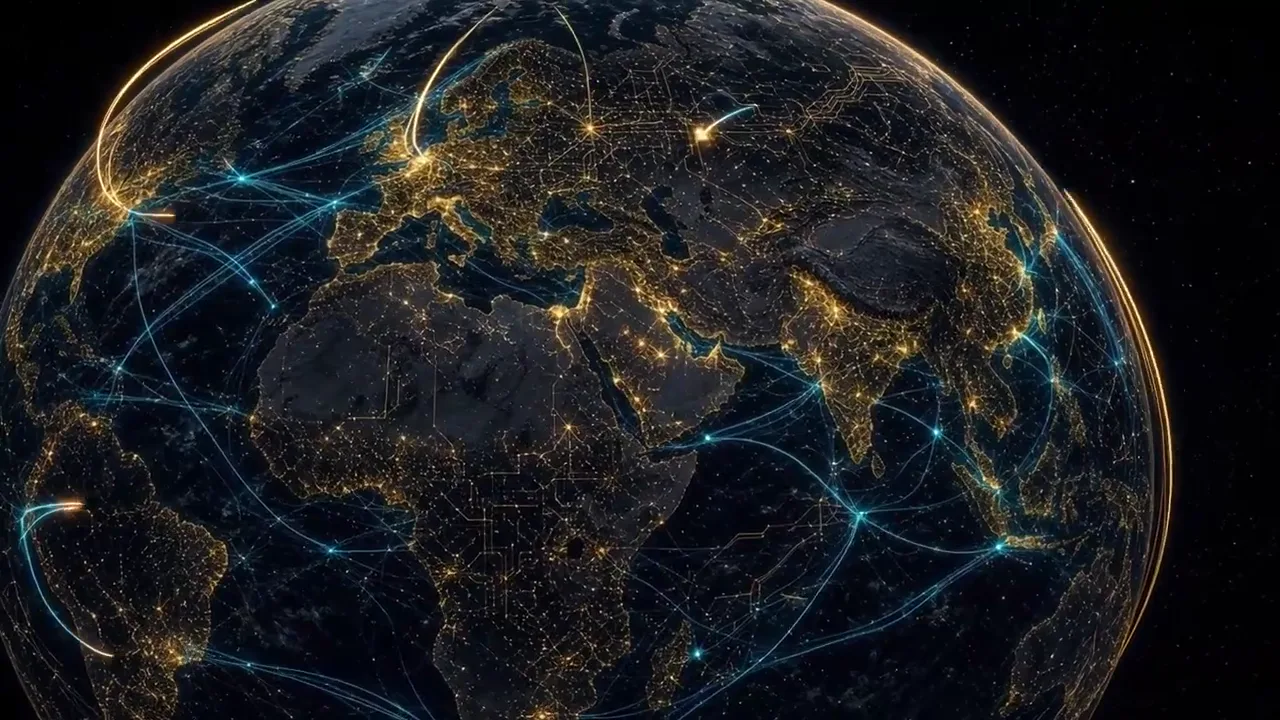
“Then, in just the last century and a half, a single second in cosmic time, humanity did something extraordinary. We strung copper across the continents.”
What does the Aquarius symbol mean?
The glyph ♒︎ is two parallel waves, the stream the Water Bearer pours from his jar. The figure is Ganymede, the shepherd Zeus carried to Olympus to pour for the gods, and set among the stars as Aquarius.
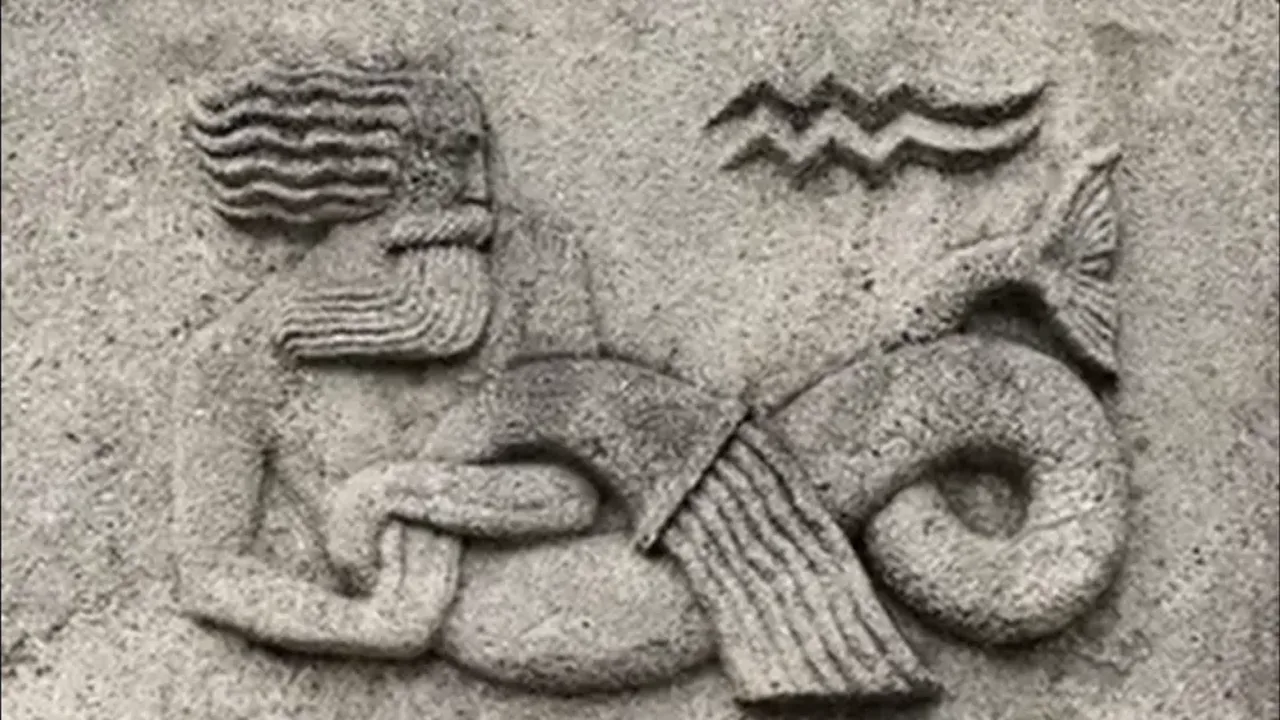
Here is the puzzle most people walk past: Aquarius is an air sign, not a water sign. Why would the air sign of the zodiac be drawn pouring liquid?
“When people see the water bearer pouring a stream from his vessel, they assume Aquarius is a water sign. But it isn’t. Aquarius is an air sign.”
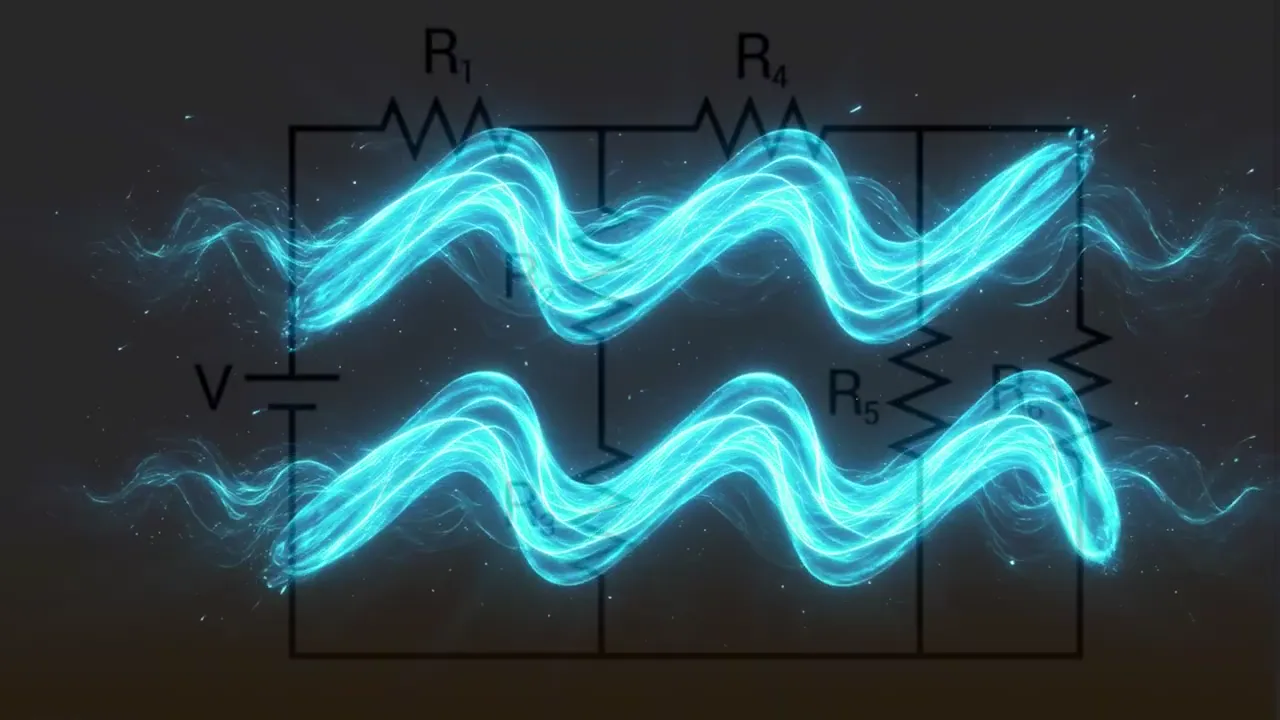
Electric Astrology’s answer is plasma: ionized gas, the fourth state of matter, which flows like a fluid, conducts like a wire, and makes up most of the visible universe. Read that way, the two waves are not water. They are current.
The North Star moves too
The same wobble that walks the equinox through the zodiac walks the North Star through the sky. Slide through the centuries and watch the pole pass from star to star.[7]
The North Star moves too
In 2026 CE, the pole star is Polaris, 0.6° from the pole.
Ours. Closest to the pole within this century.
One wobble, two clocks. As Earth’s axis circles, it slides the equinox through the zodiac and walks the pole from star to star. The pyramid builders steered by Thuban. We have Polaris. In about 12,000 years it will be Vega.
2031: the night we are pointing at
Interpretation Everything above is measurement, and you can check every number of it. This part is my reading, and I am labeling it that way on purpose.
The 2598 border is a real line, but it is a surveyor’s line, drawn in 1930 so astronomers could file the sky. The ancients did not mark the turning of an age with a boundary survey. They marked sacred time with calendars, festivals and temples.
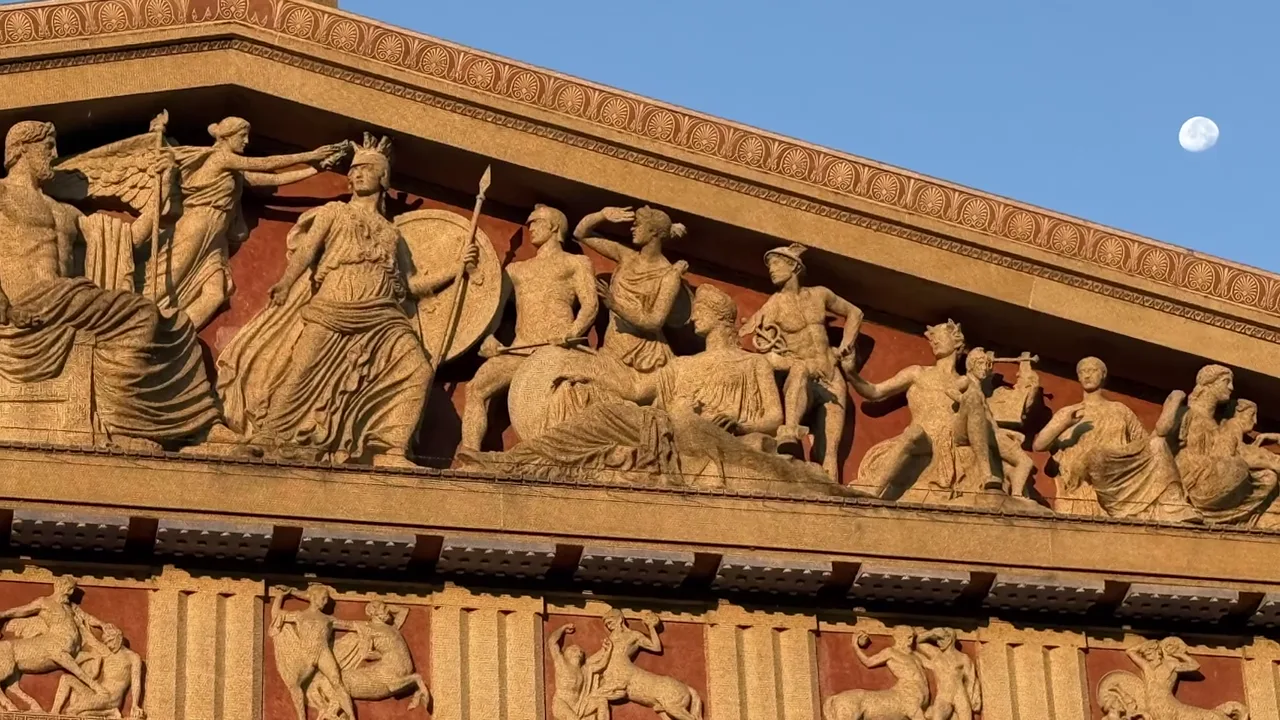
When I ran an old festival calendar forward, one night stood out. It is a night in 2031 when a festival the Athenians timed by the Moon, a temple’s hundredth year, and the sky overhead all line up. That is the night I believe the Age of Aquarius turns. Not at the astronomers’ border, but at the ceremony.
Sealed for now
I am not publishing the date or the minute here yet. The full argument, the chart, and the exact moment are documented in the book. The next film goes inside the temple.
Common questions
What astrological age are we in?
By the sky itself, the Age of Pisces. On the March equinox the Sun rises in front of the stars of Pisces, about 8 degrees from the border with Aquarius. By the official constellation lines it crosses that border around 2598. Astrologers who use twelve equal signs place the change anywhere from 1447 to 3597. Electric Astrology points to 2031.
When does the Age of Aquarius start?
There is no single agreed date. The March-equinox point crosses the IAU border between Pisces and Aquarius around 2598. Nicholas Campion collected about 90 published start dates from astrologers, ranging from 1447 to 3597; the 20th century was the most common claim. Electric Astrology reads the turning as a specific night in 2031, documented in the book.
Is it the Age of Aquarius now?
Not by the stars: the equinox Sun is still in Pisces. It is, however, close. The equinox point is about 8 degrees from Aquarius and moving toward it at one degree every 72 years, which is why many astrologers say the Aquarian age is dawning now.
How long is an astrological age?
About 2,148 years if the 25,772-year precession cycle is split into twelve equal ages. The real constellations are unequal, so ages measured against them are too: by the official borders the Age of Aries lasted about 1,800 years and the Age of Pisces lasts about 2,660.
What causes the astrological ages to change?
The precession of the equinoxes. Earth’s axis slowly wobbles like a spinning top, tracing a full circle every 25,772 years. As it turns, the point where the Sun crosses the equator in March slides backward through the zodiac constellations, about one degree every 72 years.
What does the Aquarius symbol mean?
The glyph ♒︎ is two parallel waves, the stream poured by the Water Bearer. Aquarius is traditionally an air sign, not a water sign. Electric Astrology reads the waves as current: charged, flowing plasma rather than drinking water.
Sources
- Nicholas Campion, The Book of World Horoscopes: survey of about 90 published start dates, 1447–3597 (as summarized in “Age of Aquarius”, Wikipedia)
- IAU constellation boundaries (Delporte 1930), digitized by Roman (1987), CDS catalog VI/42
- Skyfield: IAU 2006 precession and constellation lookup, used for every equinox position on this page
- MacTutor History of Mathematics: Hipparchus and the discovery of precession (129 BCE)
- Encyclopaedia Britannica: Precession of the equinoxes
- The development of the Babylonian zodiac: the twelve equal 30° signs, late 5th century BCE
- Pole star: Thuban closest in 2830 BCE, Polaris about 2100, Vega about 14,000 CE
Equinox positions and constellation crossings on this page were computed for Electric Astrology with Skyfield’s IAU 2006 precession model and the IAU constellation boundaries. They reproduce the standard published results: the equinox entered Pisces in 68/67 BCE and reaches Aquarius in 2597/2598 CE.