Episode 003 · Music City and the Music of the Spheres

The Real Reason Nashville Is Called Music City

A temple to the goddess of the shield. A radio tower called “We Shield Millions.” One architect, and a city of music between them.

The short answer

The name was declared on the Grand Ole Opry stage in 1950, and the usual story credits fiddles, guitars and record studios. This film follows the wire underneath. Between 1920 and 1931, Nashville rebuilt a full-scale Parthenon to Athena, goddess of the shield, in steel and concrete. In the same window, the National Life insurance company raised an 800-foot tower and put WSM, “We Shield Millions,” on the air at 50,000 watts.

The same architect, Russell E. Hart, worked on the temple and the transmitter, and both came online in stages: a baseline in 1925, full power in 1931. A temple and a transmitter, with Music City between them.

The first layer, and the one underneath

Ask anyone why Nashville is called Music City and you’ll get the tourist story: fiddles, guitars, record studios, a wooden stage at the Ryman. None of it is wrong. It’s just the first layer.

This film reads the city the way an electrician reads a panel. In the same decade, Nashville built two things that look unrelated until you draw them on one sheet: a permanent temple to the goddess whose defining instrument is the Aegis, the shield, and a clear-channel transmitter broadcasting under the motto “We Shield Millions.” Then it follows the wire: out to Delphi and the Oracle, back four hundred years to Kepler’s music of the spheres, up to the pediments where Ganymede, the only mortal on the roof, sits beside Apollo, and forward to a centennial in 2031 whose exact coordinate stays sealed in the book.

It’s a systems essay, not a horoscope. Watch the film, read the full transcript below, play with the diagrams, and then use the live instruments to look for yourself.

The Nashville circuit in six numbers

1897
Centennial Exposition: the first, plaster Parthenon
1920–31
Rebuilt in steel and reinforced concrete
1 → 50 kW
WSM: on the air in 1925, full power in 1931
800 ft
The diamond-shaped steel tower
42 ft
Athena, seated May 20, 1990
2031
The sanctuary’s centennial
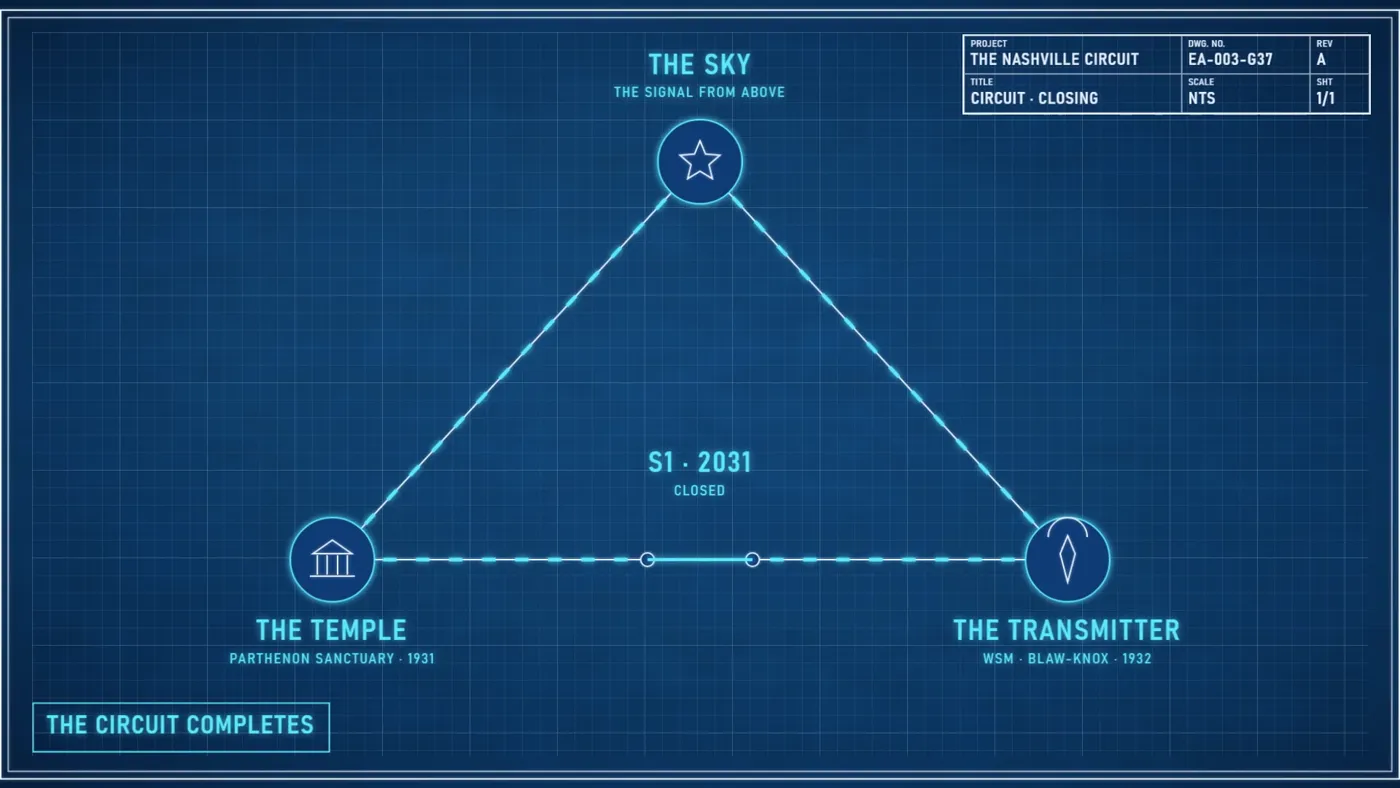
Schematic: the sky, the temple (Parthenon sanctuary, 1931) and the transmitter (WSM, Blaw-Knox, 1932) wired in one loop, switch S1 · 2031 closed
The circuit the film draws: the sky, the temple and the transmitter. From the film · 12:17

Chapters

Tap a time to play from that moment, or a title to read that section.

  1. 01Music City, U.S.A.
  2. 02A New Athens
  3. 03The Oracle on the East Bank
  4. 04The Circuit Comes Online
  5. 05We Shield Millions
  6. 06Kepler’s Music of the Spheres
  7. 07We Answered Back
  8. 08Reading the Pediments
  9. 09Ganymede, the Human Prototype
  10. 10The Time Capsule in the Stone
  11. 11The Instrument
  12. 12Signing Off

The full transcript

The narration as recorded, corrected only for transcription errors.

01

Music City, U.S.A.

In 1950, an announcer leaned into a carbon microphone on the stage of the Grand Ole Opry and declared Nashville “Music City, U.S.A.” For 70 years, the world assumed he was talking about fiddles, guitars, and record studios. That’s the tourist story. I’m here to tell you a different one.

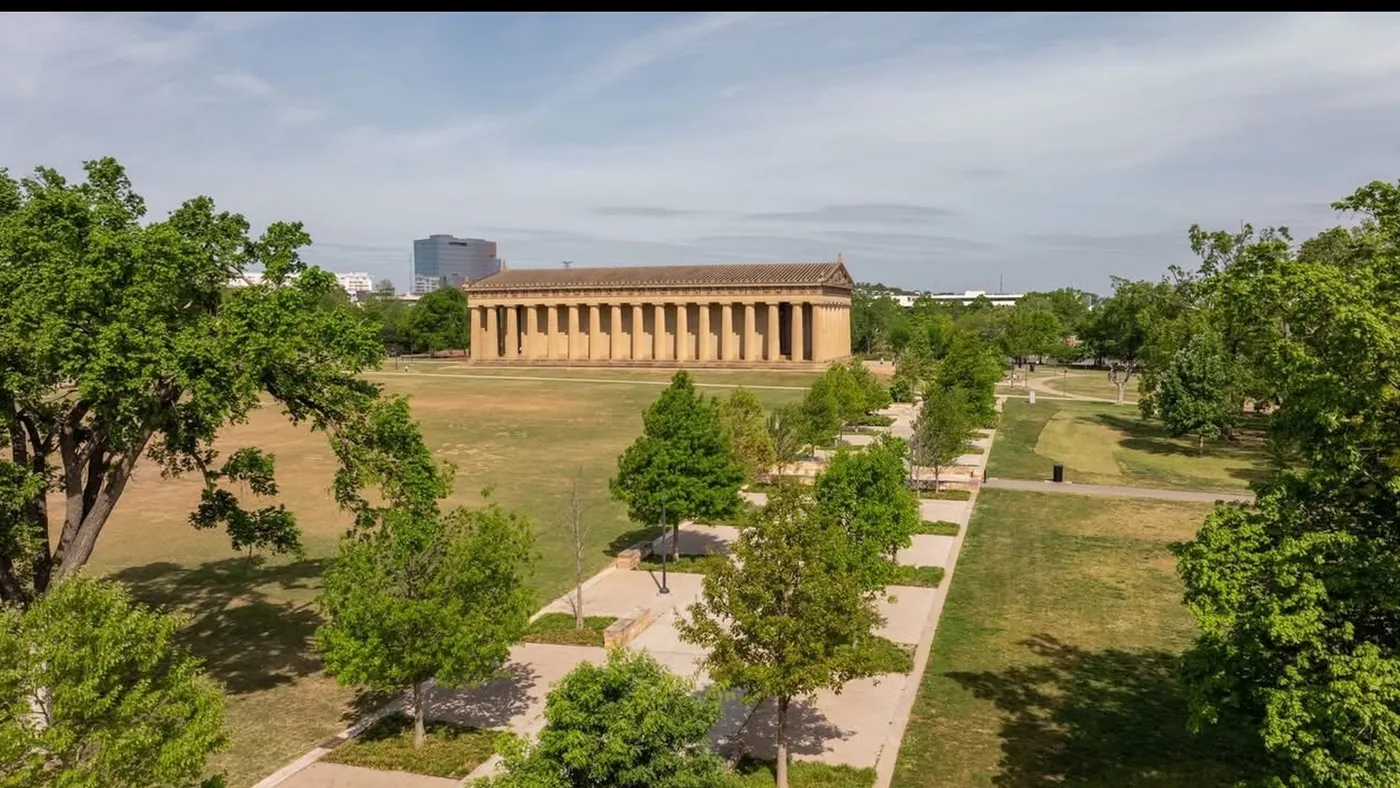
Two miles west of that stage, on the lawn of Centennial Park, stands an exact, full-scale concrete replica of the ancient Greek Parthenon, the only one on Earth. History writes it off as a souvenir from an 1897 world’s fair, but the history books leave out the rest of the story. Between 1920 and 1931, Nashville tore down the old plaster fair building and recast the entire temple in steel and reinforced concrete, built to stand for a thousand years.

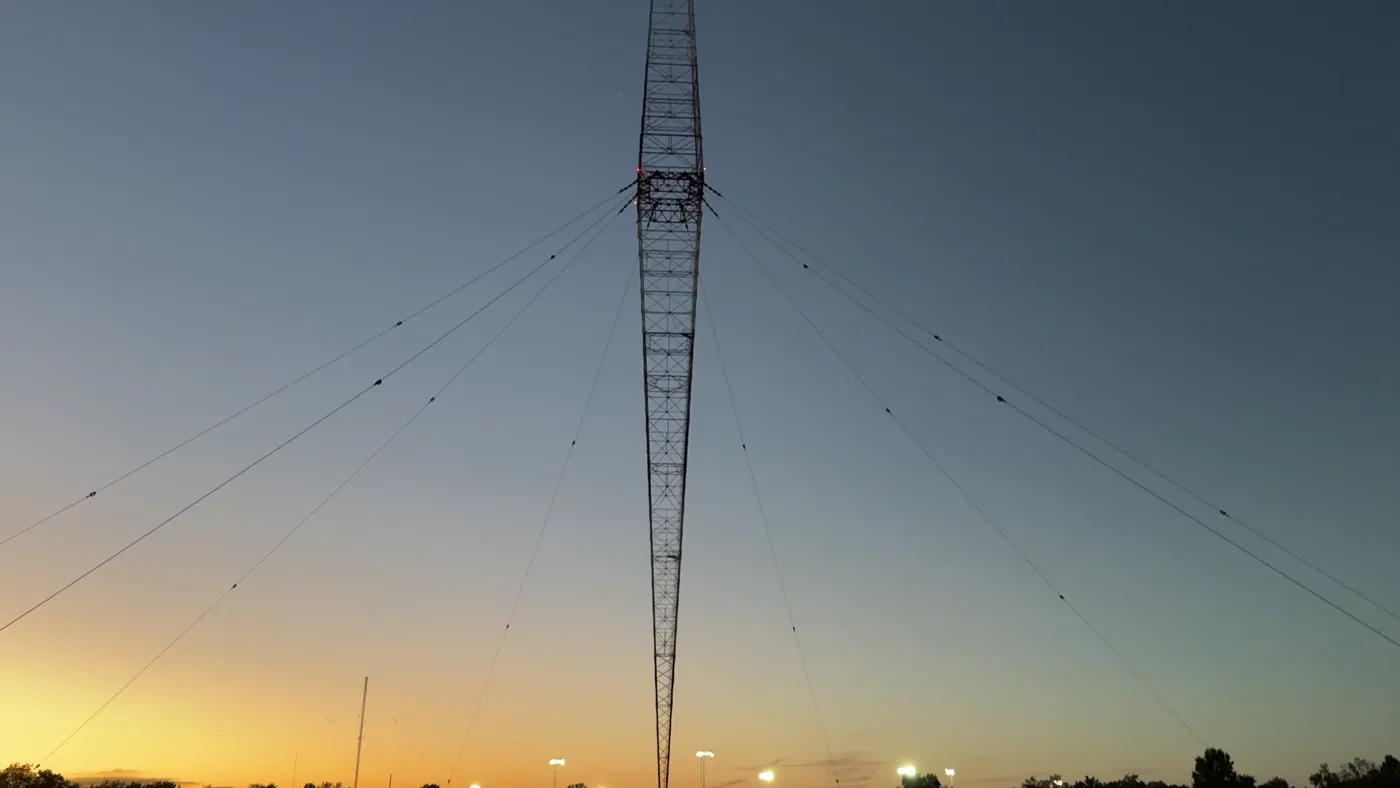
And in that same window of time, an insurance company called National Life went a few miles south and raised an 800-foot, diamond-shaped steel radio tower. Its call letters: WSM. “We Shield Millions.” Fifty thousand watts of clear-channel power, the tallest antenna on the continent.

Now think about what Nashville had just built. On one side of town, a temple to Athena, the goddess of the shield. And on the other side, a radio tower broadcasting under the motto “We Shield Millions.” And the city between them would become known around the world as Music City. That’s where the story gets interesting. Because the more you dig into it, the less it looks like a coincidence.

Nashville’s full-scale Parthenon in Centennial Park, from the air
Nashville’s full-scale Parthenon in Centennial Park, from the air · From the film · 0:25
The WSM diamond tower against a dusk sky
The WSM diamond tower against a dusk sky · From the film · 1:02
02

A New Athens

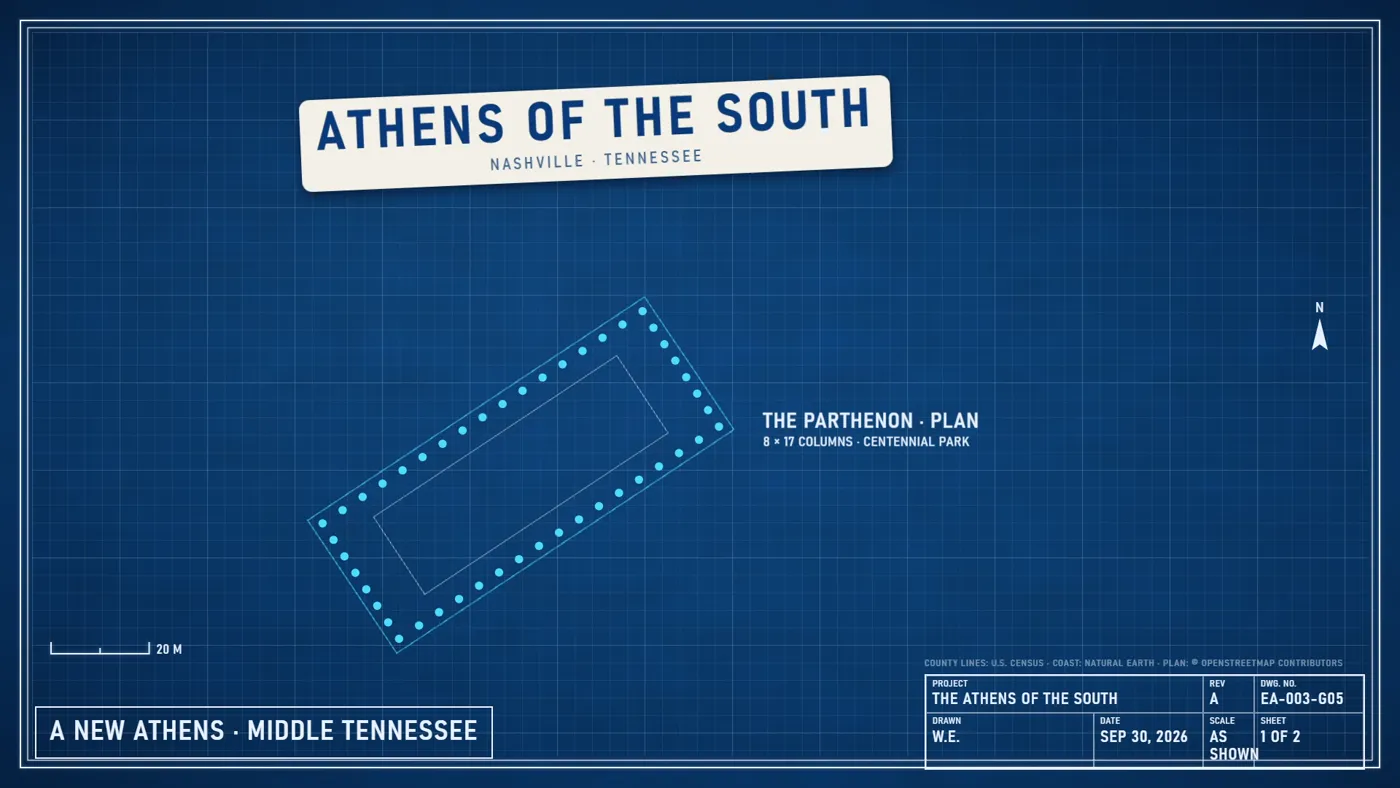
Look at the county map. The early surveyors didn’t map Middle Tennessee like a frontier. They mapped it like an ancient grid. Smyrna, Antioch, Lebanon, Carthage. And at the center of it all, Nashville placed a full-scale temple to Athena. A new Athens, built in Middle Tennessee.

Notice how the building sits. It faces east, locked on a line to the limestone acropolis of the Tennessee State Capitol.

Drawing sheet: the Parthenon plan in Centennial Park, “Athens of the South”
From the film · 2:08
03

The Oracle on the East Bank

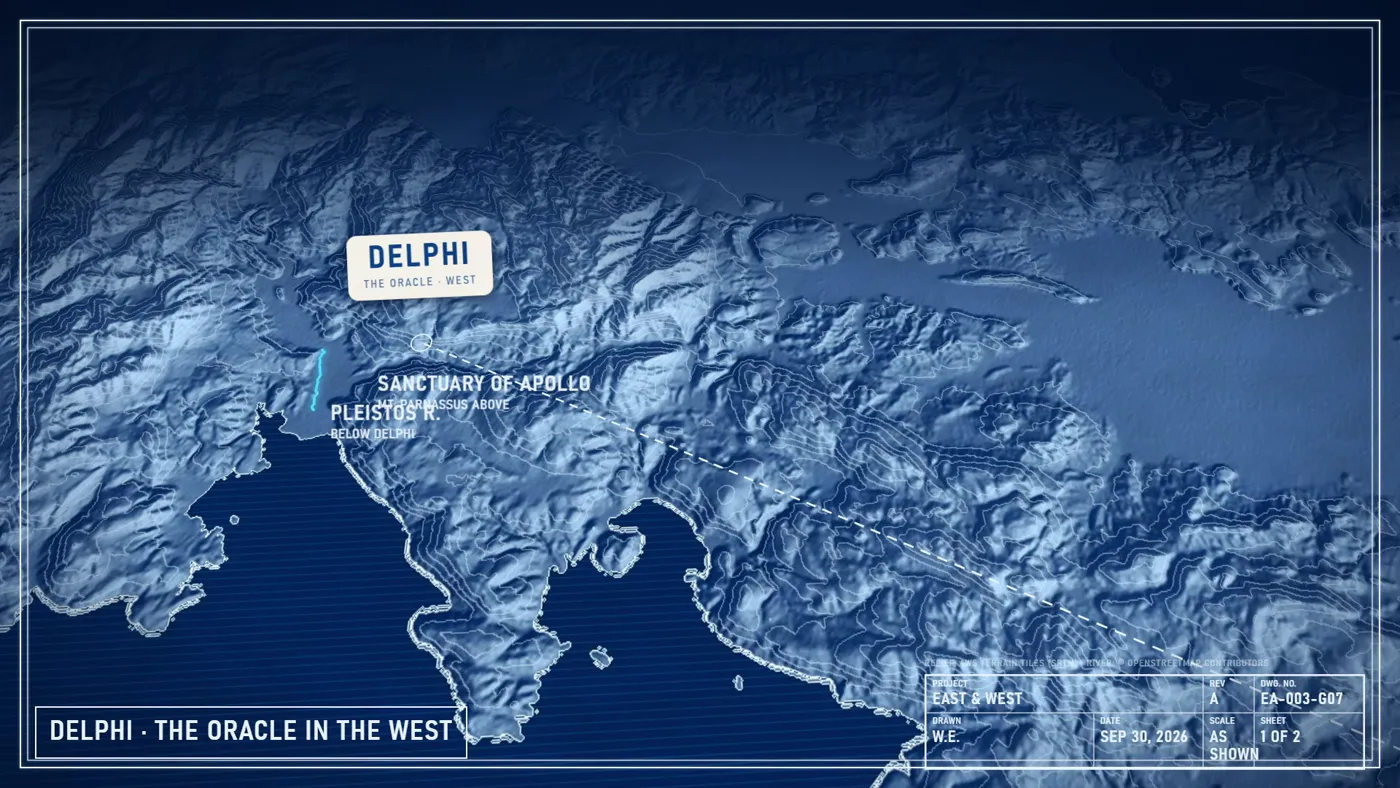
And now look at the river. In ancient Greece, the Parthenon stood in the east, at Athens. And when a seeker wanted to know the future, they traveled west, across the River Pleistos, to the crags of Delphi, where the Oracle sat above a chasm, inhaling vapors, channeling Apollo, the god of frequency and light.

In Nashville, the polarity flipped. The Parthenon sits on the West End. Stand on its steps and look east, toward the Cumberland River, and what’s rising on the East Bank right now? Oracle Corporation. One of the largest technology companies on Earth, building its campus across the river from the temple of wisdom.

In the ancient world, you crossed the river and found the priestess inhaling vapors. And in the modern world, you cross the river and find the server racks processing the cloud. The polarity inverted. The circuit stayed closed. Wisdom on the West Bank. The Oracle on the East.

Relief map: Delphi, the Oracle in the west
From the film · 2:40

Interactive · the polarity flip

WESTEASTRIVER PLEISTOSDelphiThe Oracle · channeling ApolloAthensThe Parthenon · wisdom

A seeker left the temple in the east and crossed the river west to the Oracle.

The polarity inverted. The circuit stayed closed.

04

The Circuit Comes Online

If there’s something you learn fast in the electrical construction industry, it’s that you don’t throw full power onto a system you’ve never tested. You bring it online in stages. You start small, you make sure it works, and then you throw the main switch. Now look at how Nashville built this one.

The original Parthenon was the vision of Major Eugene C. Lewis, director of Tennessee’s 1897 Centennial Exposition. When Nashville decided to make the Parthenon permanent, architect Russell E. Hart helped rebuild it in reinforced concrete. Then National Life hired the same man to design the transmitter building for WSM’s 50,000-watt tower. Same architect, both projects: the temple and the transmitter.

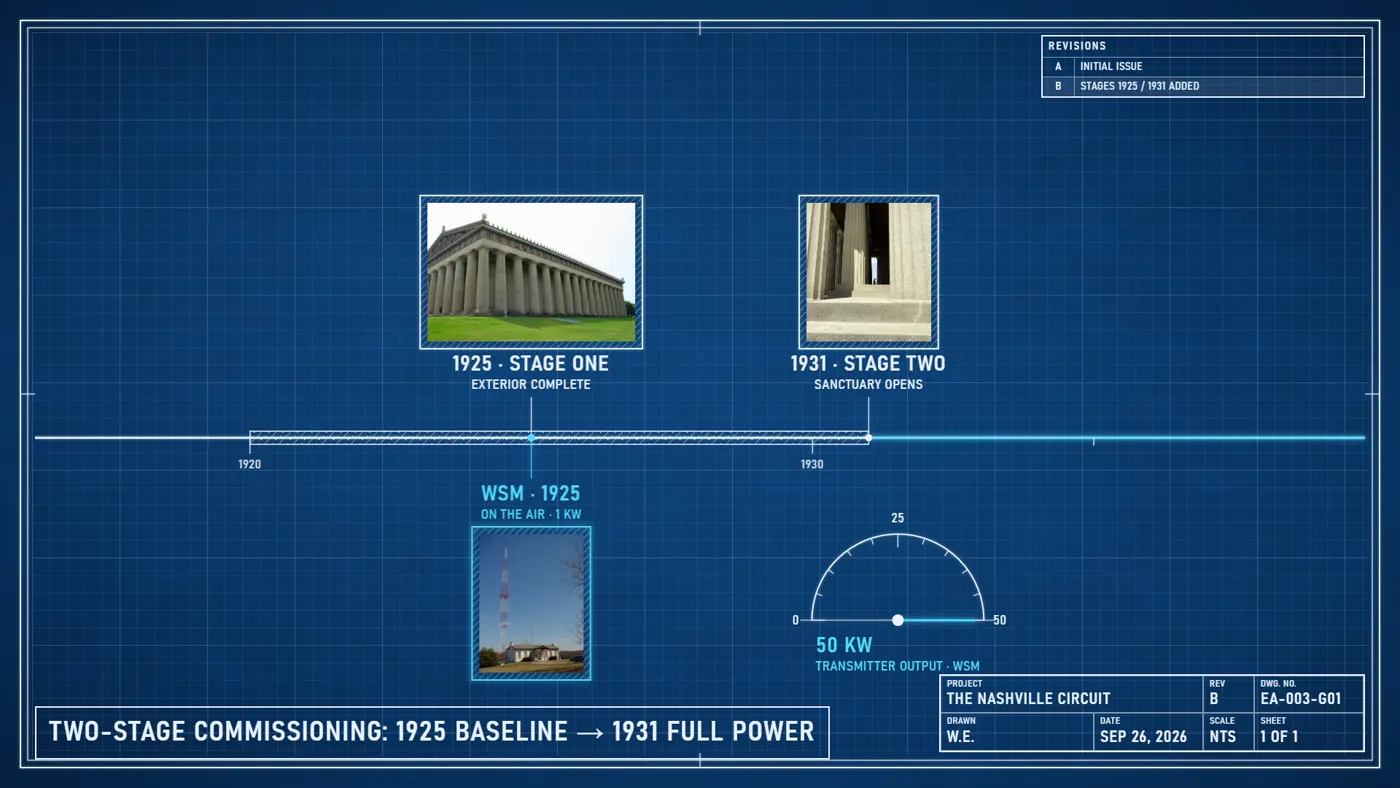
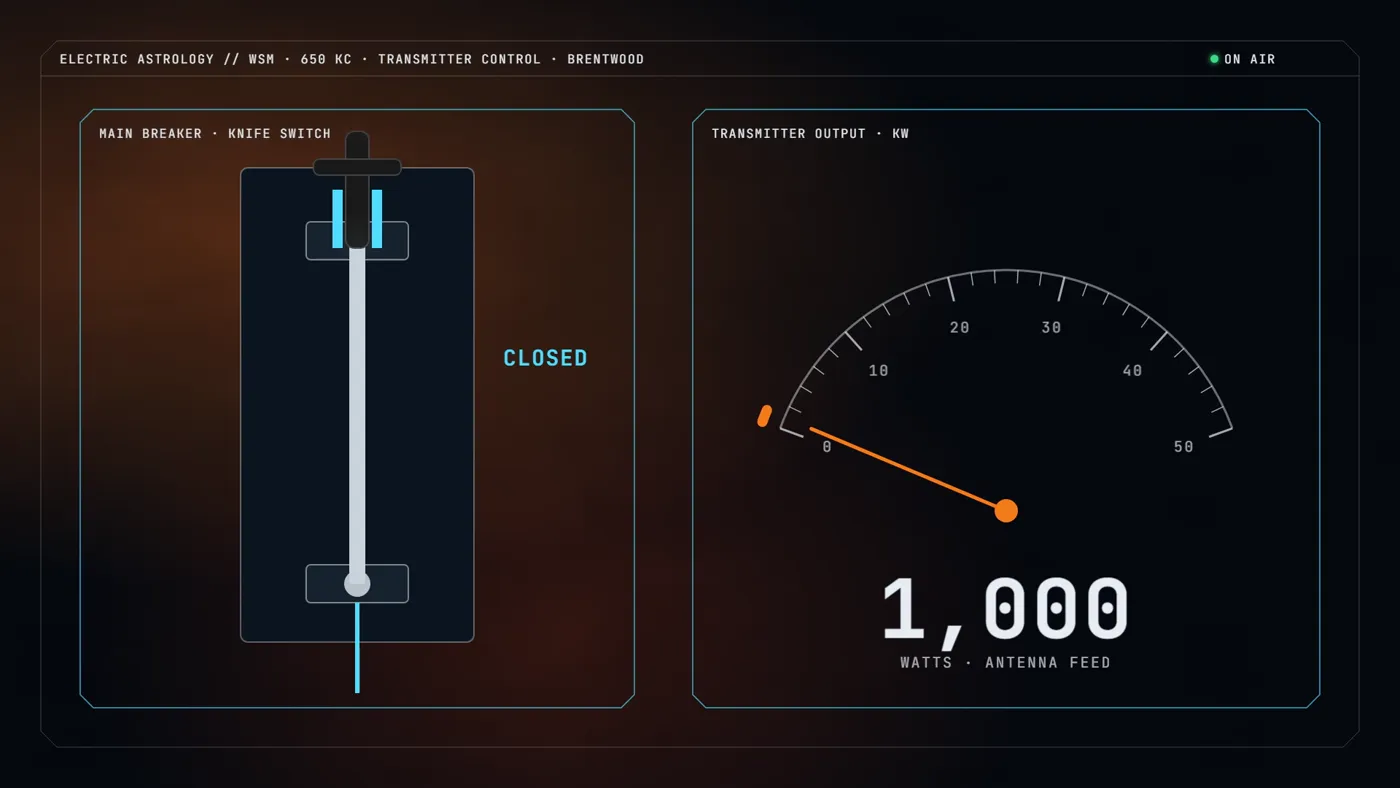
Look at that timeline. It came online in two stages. Stage one, 1925: the baseline signal. By late 1925, the Parthenon’s exterior was complete. The columns were standing. Ganymede and Apollo had taken their seats on the east pediment. And in October of that same year, WSM went on the air at 1,000 watts. Athena carries the Aegis, the shield. WSM broadcasts under the banner “We Shield Millions.” The baseline circuit was live.

Stage two, 1931: full power. On May 20, 1931, the Parthenon finally opened its inner sanctuary, the Naos. And that same year, WSM got the green light to step up to 50,000 watts. Hart’s transmitter went up in Brentwood, right under the new diamond tower. And when they threw the switch, a thousand-watt signal had become a roar that could reach across the continent.

1925: the structure stands, the signal begins. 1931: the sanctuary opens, the power goes up. But the sanctuary stood empty for 59 years. Then, on May 20, 1990, the same day the Naos first opened, Athena took her seat. Forty-two feet tall, shield in hand. Stage three.
Interactive · bring it online in stages

Stage one · the baseline signal

The temple · Centennial Park

The Parthenon’s exterior is complete. The columns are standing; Ganymede and Apollo take their seats on the east pediment.

The transmitter · WSM

In October, WSM goes on the air at 1,000 watts.

Timeline graphic: 1925 baseline, 1931 full power
Timeline graphic: 1925 baseline, 1931 full power · From the film · 4:10
Control panel: the knife switch closes and the meter reads 1,000 watts
Control panel: the knife switch closes and the meter reads 1,000 watts · From the film · 5:07
05

We Shield Millions

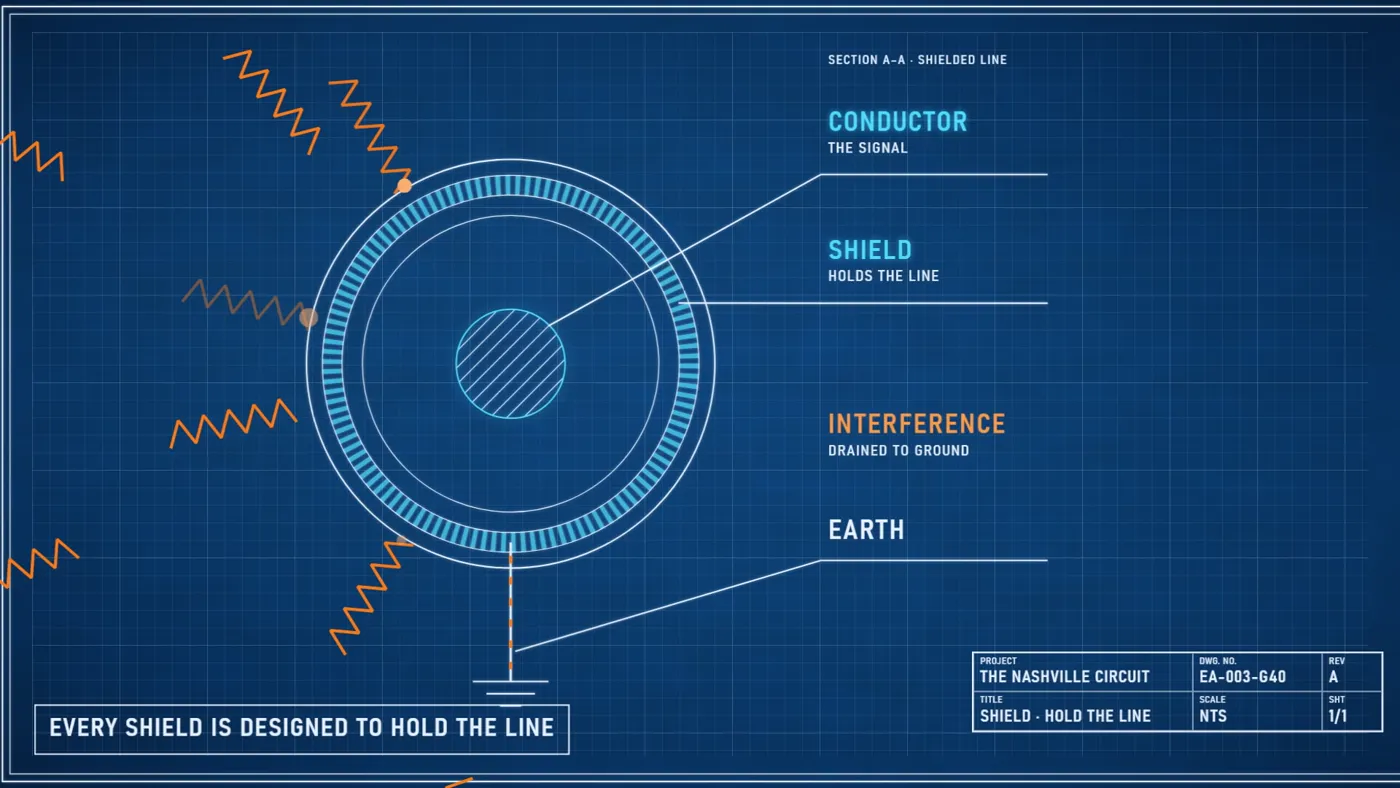
Look at that word again: shield. The insurance men meant protection from financial disaster. But in electrical work, a shield means something else. It controls what energy gets through and what doesn’t.

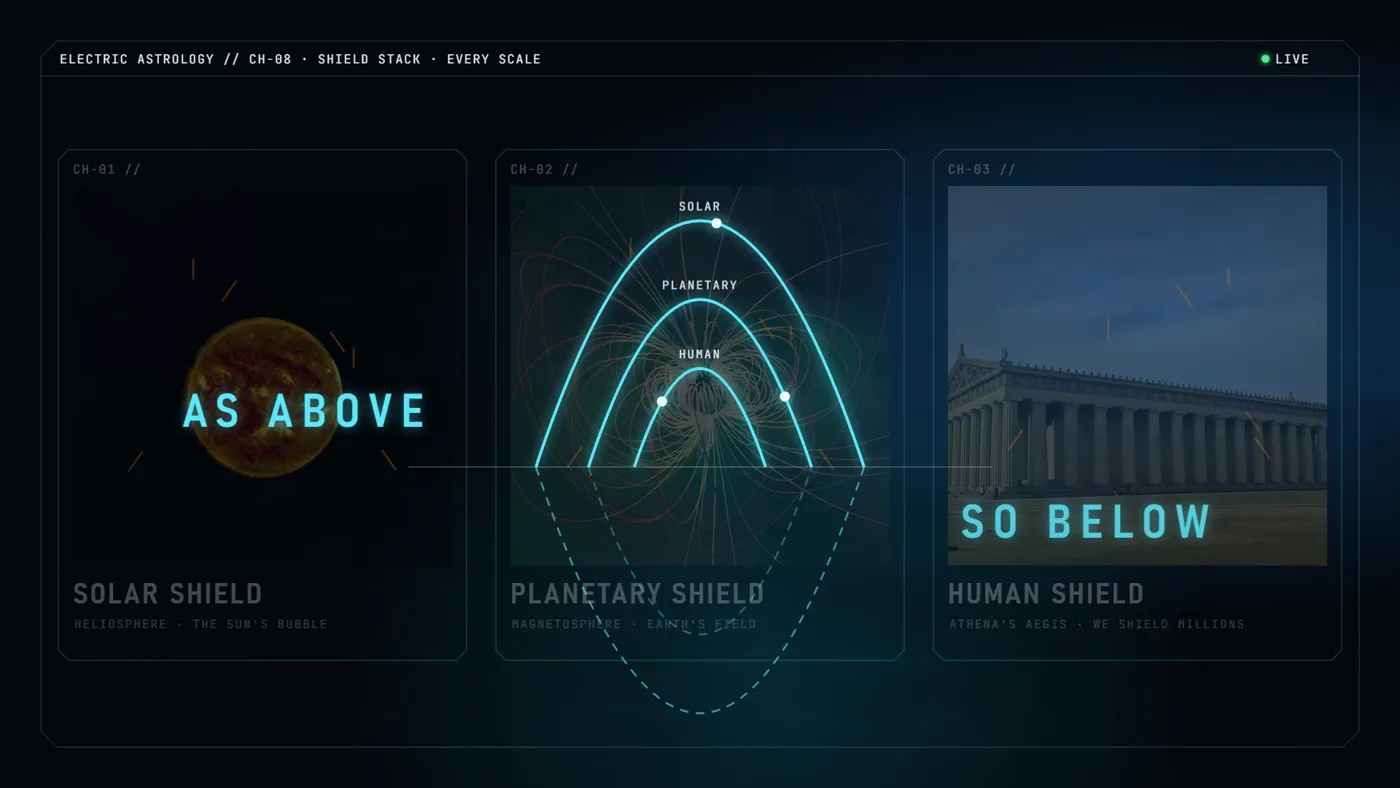
Now zoom out. The solar system is built in layers of protection. The Sun blows a bubble into interstellar space, the heliosphere, and it holds back much of the cosmic radiation coming in from the galaxy. Inside that bubble, the Earth wraps itself in another one, the magnetosphere. The solar wind slams into it and flows around it, shielding the world below.

And down here in the Cumberland Basin, the pattern shows up again. A temple to the lady of the shield. A radio tower declaring “We Shield Millions.” Solar shield, planetary shield, human shield: the same pattern at every scale. As above, so below.

Every shield is designed to hold the line. But what happens when the signal inside the shield gets strong enough to get out?

See today’s space weather →

Interactive · the same pattern at every scale

Solar shieldPlanetary shieldHuman shield

The Sun blows a bubble into interstellar space, the heliosphere, and it holds back much of the cosmic radiation coming in from the galaxy.

As above, so below.

Shield stack: solar shield, planetary shield, human shield
Shield stack: solar shield, planetary shield, human shield · From the film · 6:38
Drawing sheet: a shielded line, interference drained to ground
Drawing sheet: a shielded line, interference drained to ground · From the film · 6:42
06

Kepler’s Music of the Spheres

Four hundred years ago, Johannes Kepler tried to describe the solar system in the language of music. In 1619, he published Harmonices Mundi, The Harmony of the World, searching the motions of the planets for musical intervals. He called it the music of the spheres.

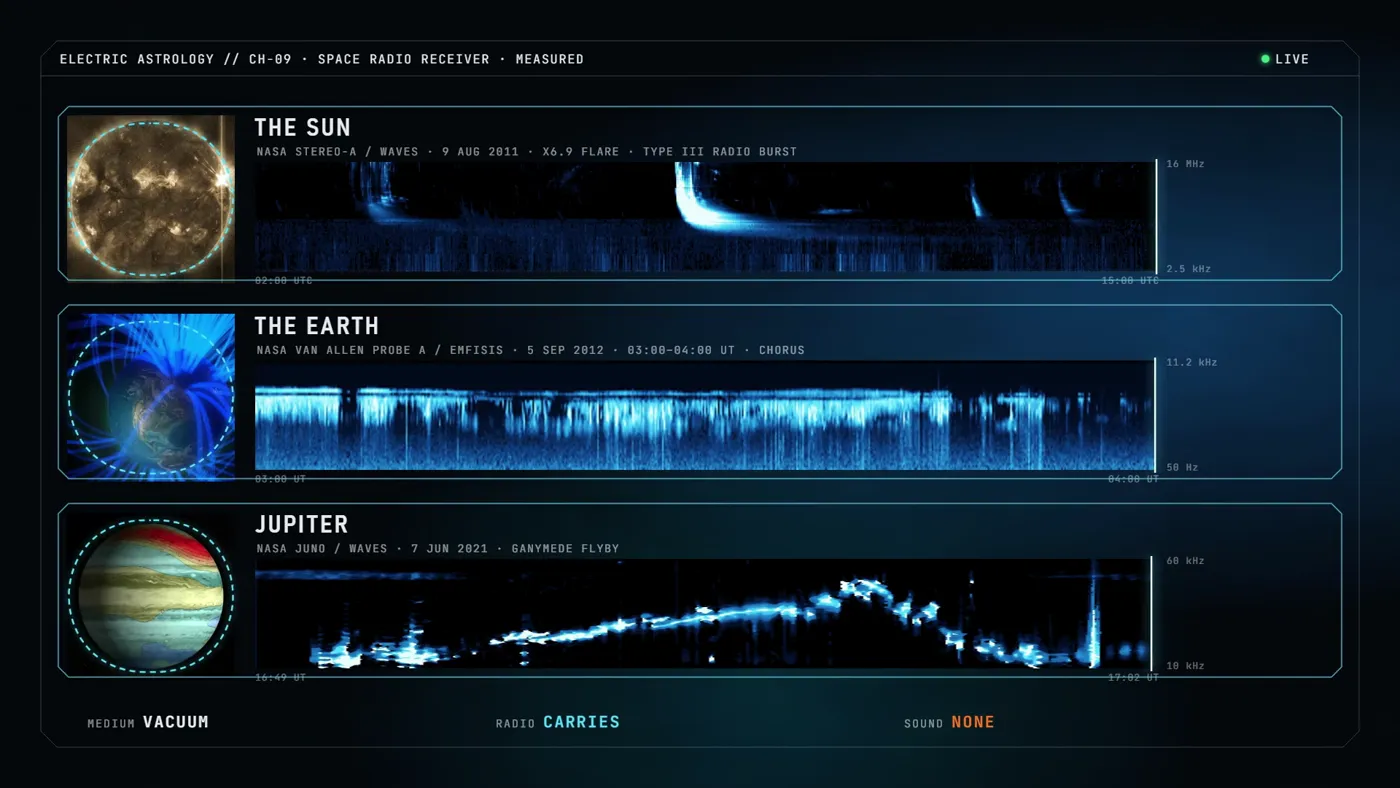
Kepler gave us the geometry, but he lived before anyone knew about plasma, radio, or the magnetic fields between the planets. Now we know that space can carry a signal, just not sound. The Sun, the Earth, Jupiter: every one of them wrapped in fields, every one of them broadcasting. The solar system isn’t singing through the vacuum, but electromagnetically it is anything but silent. For all of human history, we could only listen.

Episode 002: Kepler and the missing wire →

Receiver panel: radio signatures of the Sun, the Earth and Jupiter
From the film · 7:25
07

We Answered Back

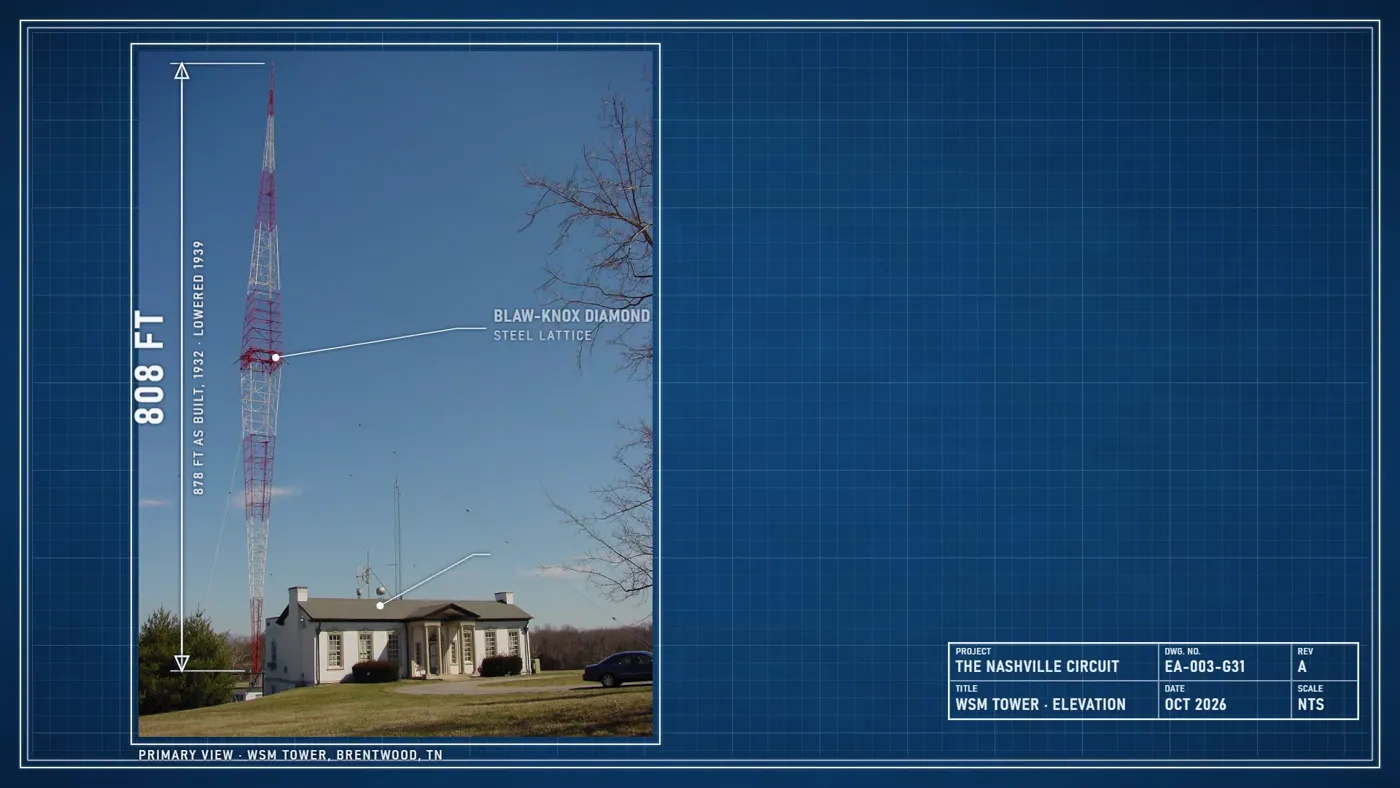
Until we sent a signal loud enough to wake the gods. The Blaw-Knox diamond tower wasn’t just built to reach farms in Kentucky. Eight hundred feet of steel, 50,000 watts pointed at the sky. And what did Nashville put on that signal? Not stock prices. Not military orders. The Grand Ole Opry.

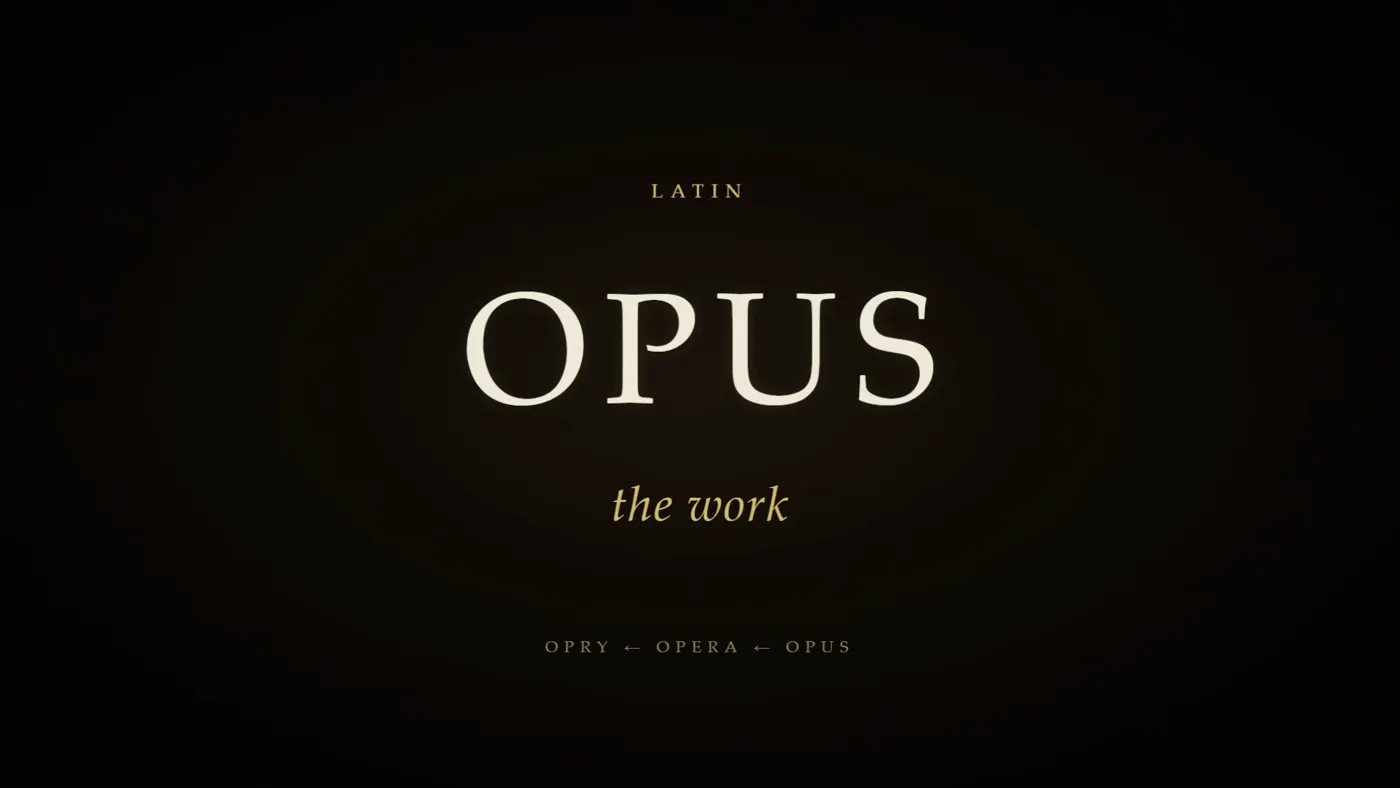
Opry came from opera. Opera from the Latin opus, the work. And to the old alchemists, the magnum opus was the Great Work: turning something ordinary into something divine. The Grand Ole Opry. The grand old work.

On a wooden stage at the Ryman Auditorium, human voices and steel strings went into a microphone, and they came out as lightning. For thousands of years, the signal came from above. But now we had a transmitter. The direction of the circuit had changed. We grabbed the microphone and sent the Great Work back into the sky. For the first time, humanity wasn’t only listening. We answered back.

Drawing sheet: the WSM tower elevation, 808 feet
Drawing sheet: the WSM tower elevation, 808 feet · From the film · 7:50
Title card: Opus, the work
Title card: Opus, the work · From the film · 8:10
08

Reading the Pediments

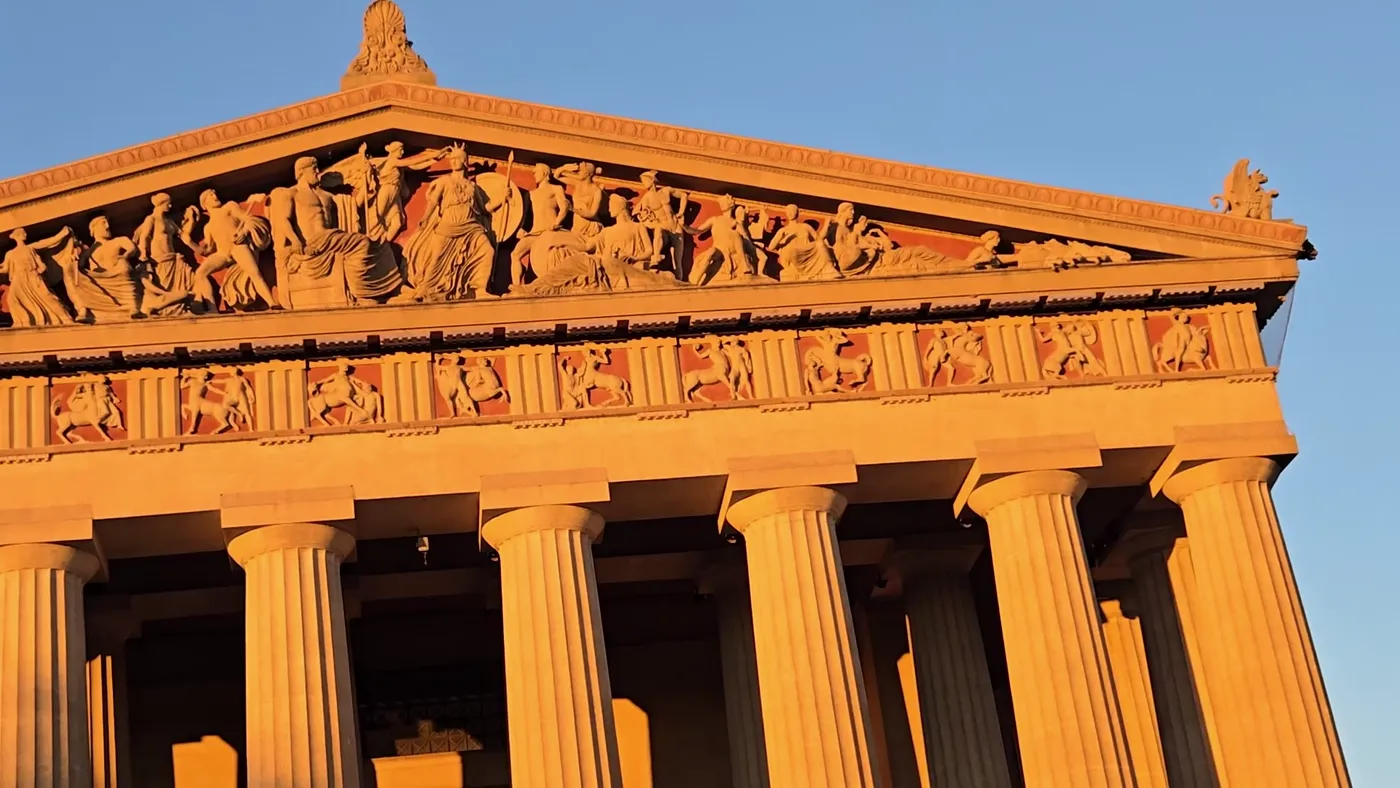
Now walk back into Centennial Park. Stand in front of the temple and look up at the pediments. If you know how to read them, they work like a time capsule carved in stone.

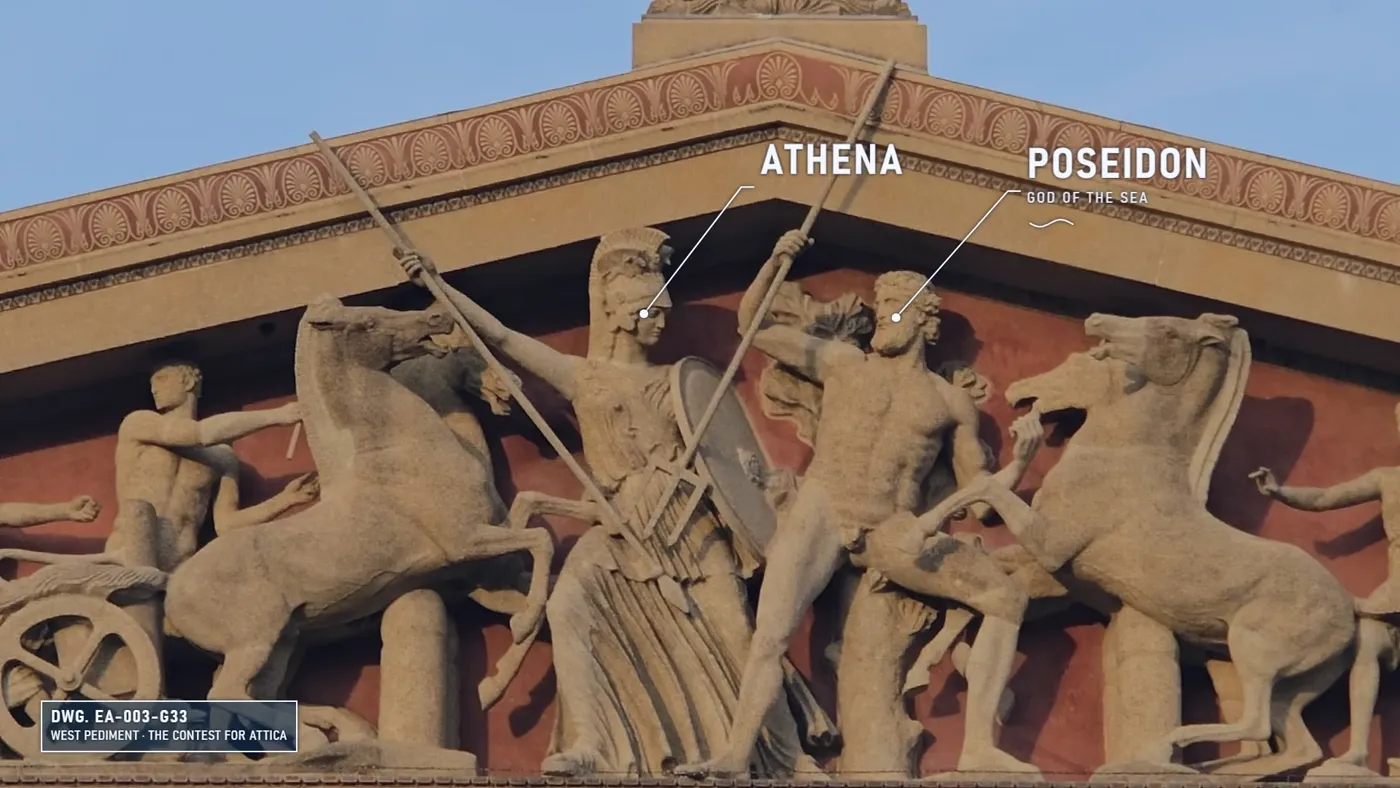
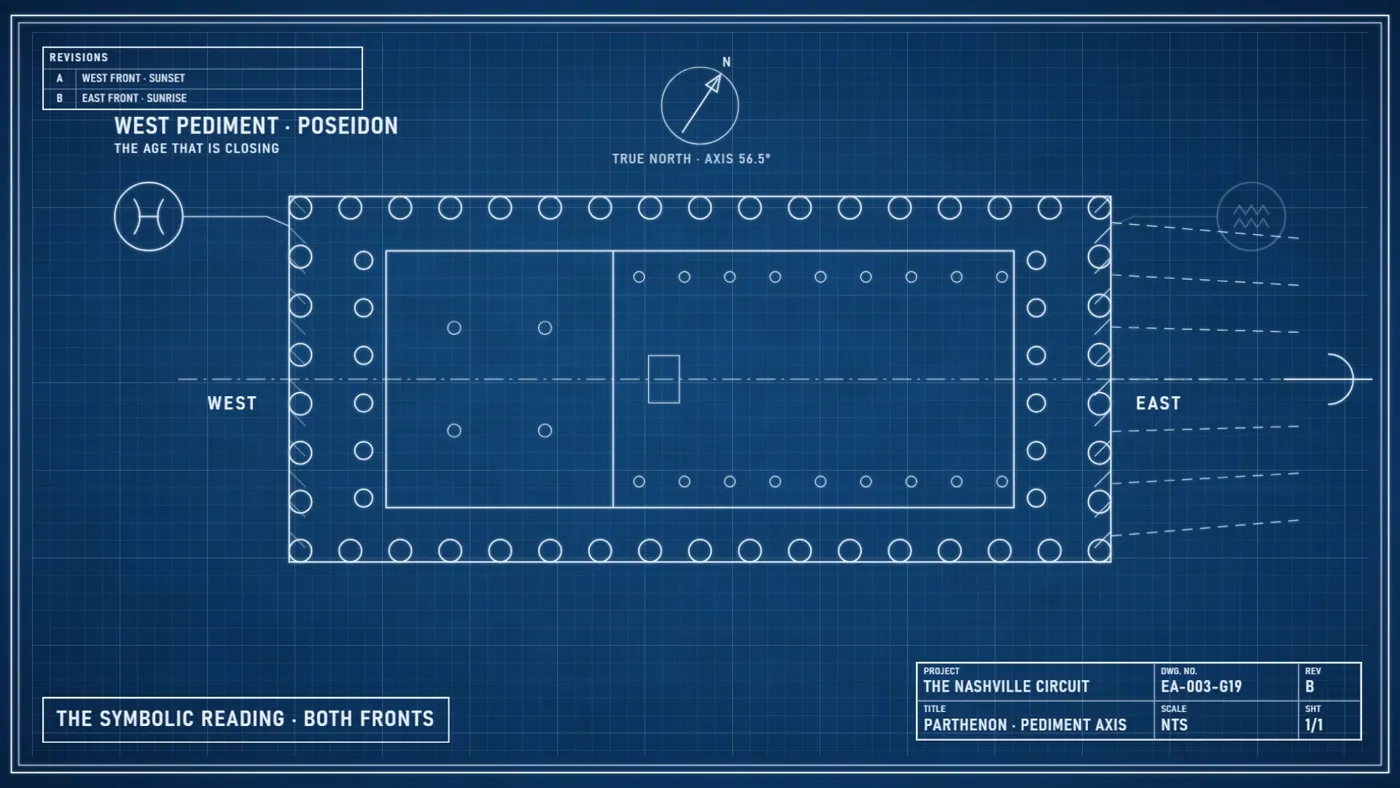
Start on the west pediment, facing the sunset. It shows the contest between Athena and Poseidon, the god of the sea. In the symbolic reading I lay out in the book, that western face marks the age that is closing. As the sun goes down, its last light falls on the old water order one final time. Poseidon. Pisces. The age of water.

Now walk around to the east pediment, facing the dawn. This is where the decode turns. As the sun rises, the light doesn’t return to the water gods. It strikes Apollo, the solar principle, and Ganymede, the Water Bearer. The sun sets on water in the west, and it rises on the Water Bearer in the east. Pisces closes. Aquarius opens.

What astrological age are we in? →

West pediment: Athena and Poseidon
West pediment: Athena and Poseidon · From the film · 9:15
Drawing sheet: the Parthenon’s west and east pediments on one axis
Drawing sheet: the Parthenon’s west and east pediments on one axis · From the film · 9:55
09

Ganymede, the Human Prototype

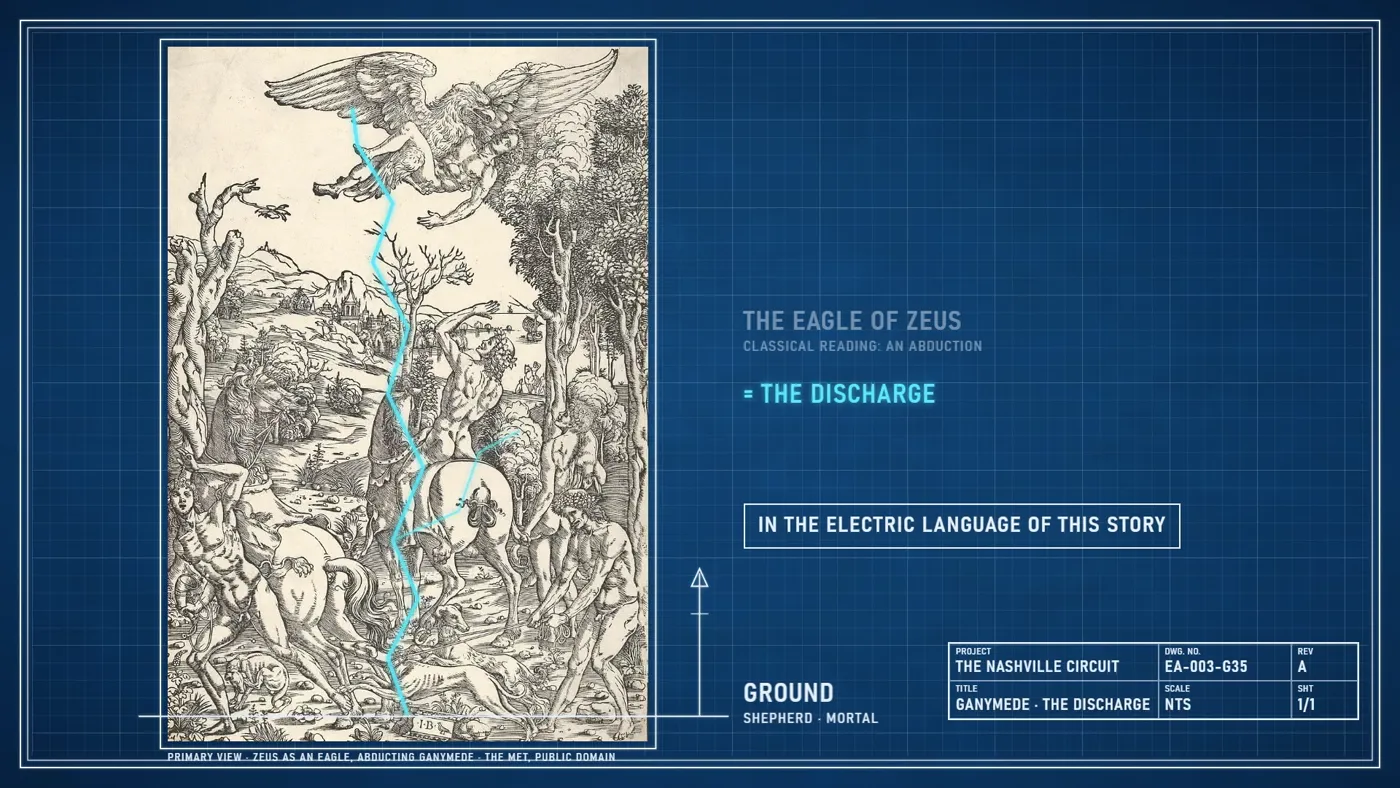
Now look closer at Ganymede. Zeus, Athena, Apollo: they were always gods. Ganymede is the anomaly. He’s the only figure on that roof who began life as a mortal man. A shepherd boy, lifted into the company of the gods.

Classical scholars say he was abducted by an eagle. I read it differently. In the electric language of this story, the eagle of Zeus is the discharge, the lift to high ground. Ganymede wasn’t taken; he was commissioned. The one mortal vessel that could hold the charge of Olympus without burning out.

He’s not a decoration on a replica temple. He’s the human prototype, hidden in plain sight.

Episode 001: Who Is the Water Bearer? →

Drawing sheet: the eagle of Zeus read as a discharge from ground to high ground (woodcut, The Met, public domain)
From the film · 10:30
10

The Time Capsule in the Stone

And that brings us to the time capsule hidden in the stone. On May 20, 1931, the Parthenon opened its inner sanctuary. That sanctuary’s hundredth birthday is coming, but the anniversary is only half of it.

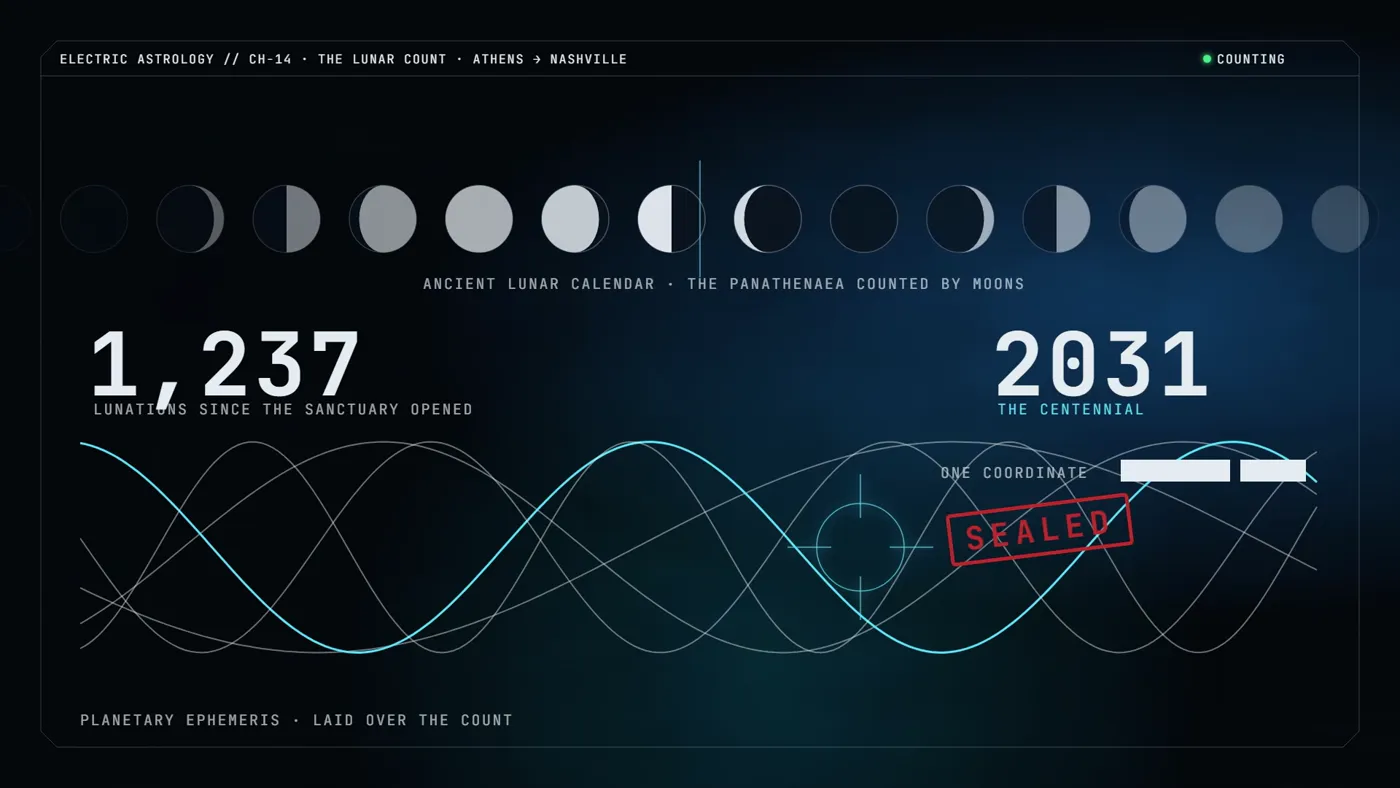
The Panathenaea, Athens’ great festival for Athena, ran on an ancient lunar calendar. And when I carried that lunar count forward to the temple’s centennial and laid it over the planetary ephemeris, one coordinate came up that I couldn’t ignore. In the book, I don’t call it a prophecy. I call it a coordinate in time.

In that window, the story we just read in the stone (sunset in the west, the passage through darkness, dawn in the east) plays out under the actual sky. And in the middle of it, Jupiter, the great amplifier, comes to a station over Nashville.

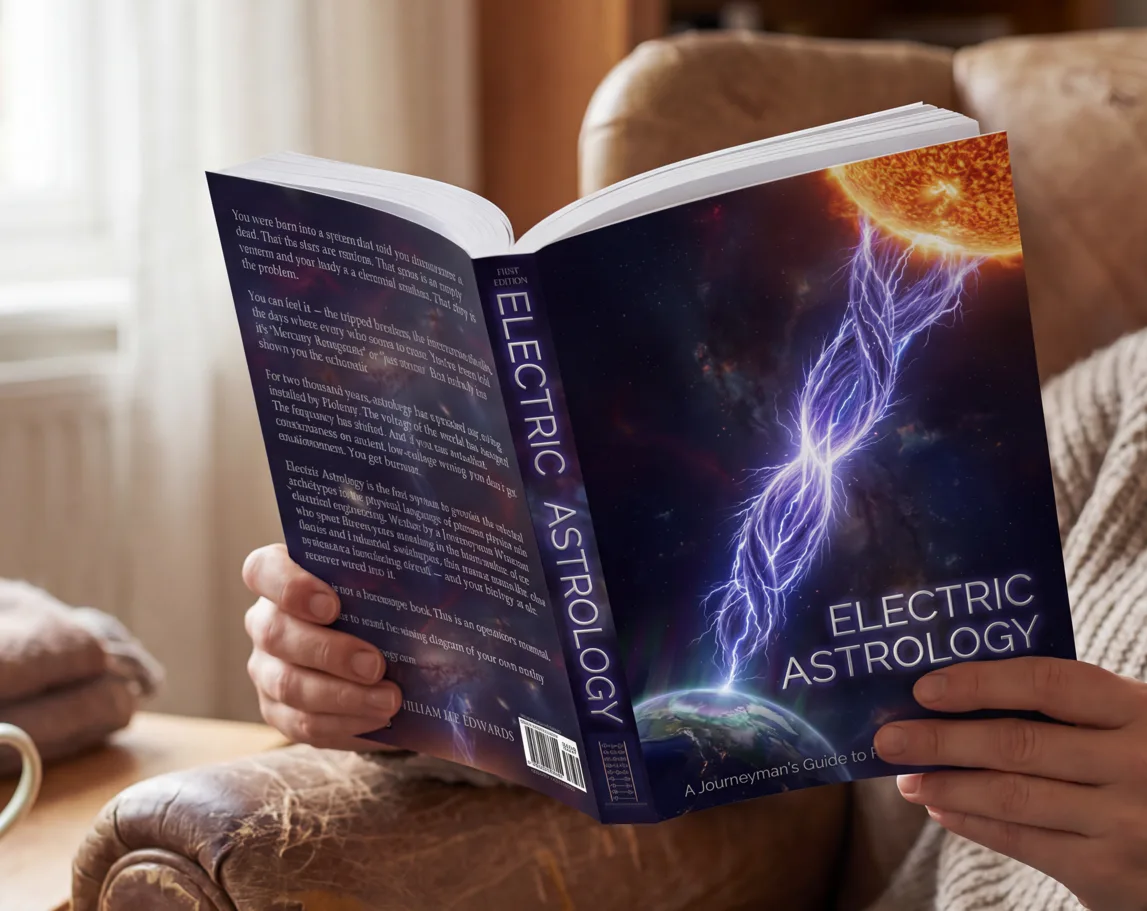
There is an exact date. There is an exact minute. I’m not opening the capsule here. I sealed the full decode into the final pages of Electric Astrology. That’s where I left the key. For now, remember one number: 2031.

The men who poured this concrete thought they were preserving the past. They may have left us something pointed at the future. The centennial was coming, and in 2031, the circuit completes.

The book: where the decode is sealed →

Interactive · carry the lunar count forward

The Panathenaea ran on an ancient lunar calendar. Count moons from the day the sanctuary opened in 1931 to any year.

5441975
Lunations since the sanctuary openedYear
1931 · Naos opens2031

Slide to 2031.

Arithmetic: years × 365.2425 days ÷ 29.530589 days per synodic month. A century is about 1,237 lunations.

Control panel: 1,237 lunations from 1931 to 2031, the coordinate sealed
Control panel: 1,237 lunations from 1931 to 2031, the coordinate sealed · From the film · 11:18
Schematic: the sky, the temple and the transmitter, switch S1 · 2031 closed
Schematic: the sky, the temple and the transmitter, switch S1 · 2031 closed · From the film · 12:17
11

The Instrument

Nashville isn’t an anomaly; it’s a demonstration. We’ve lived inside an electromagnetic environment for all of human history. The Sun is active, the Earth is active, the space between them is active. And for thousands of years, people looked at that environment and called it astrology.

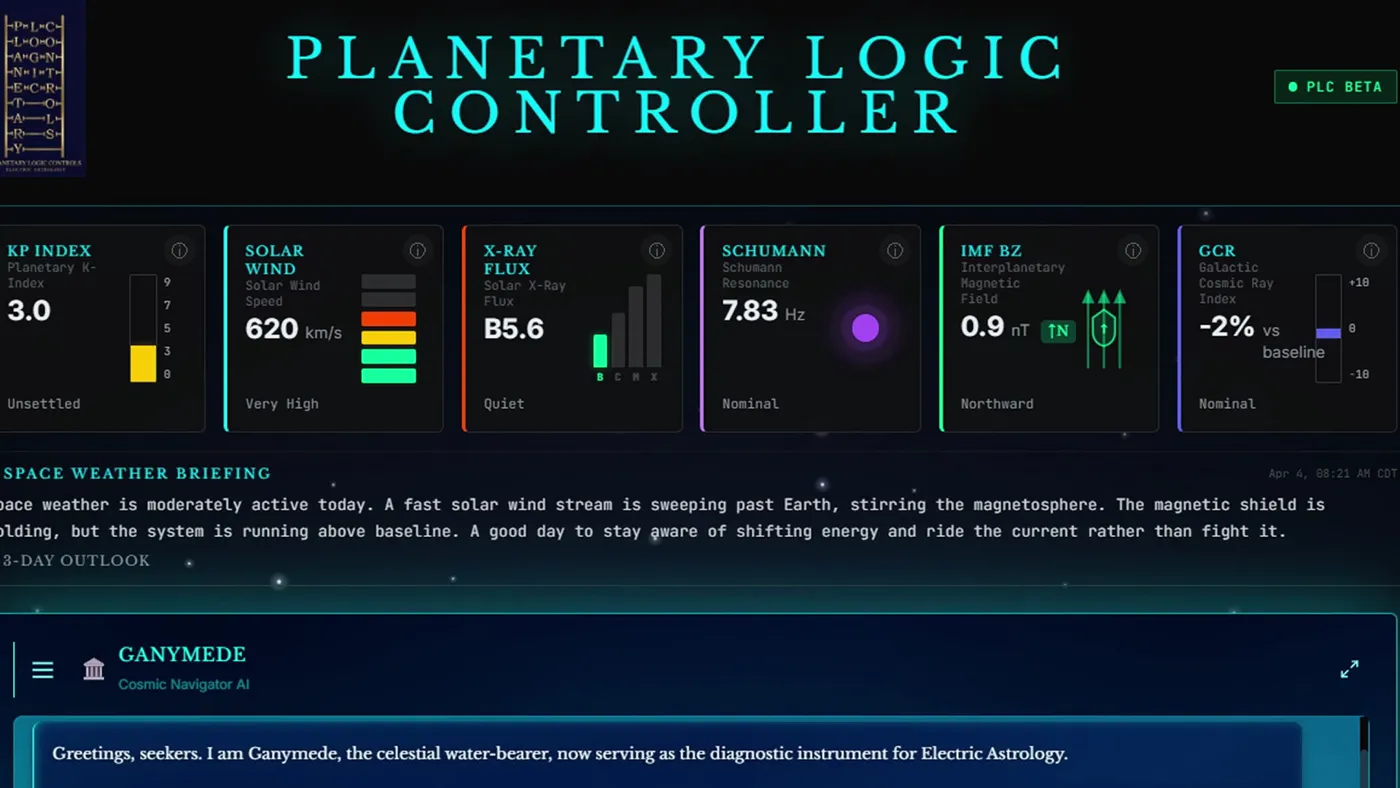
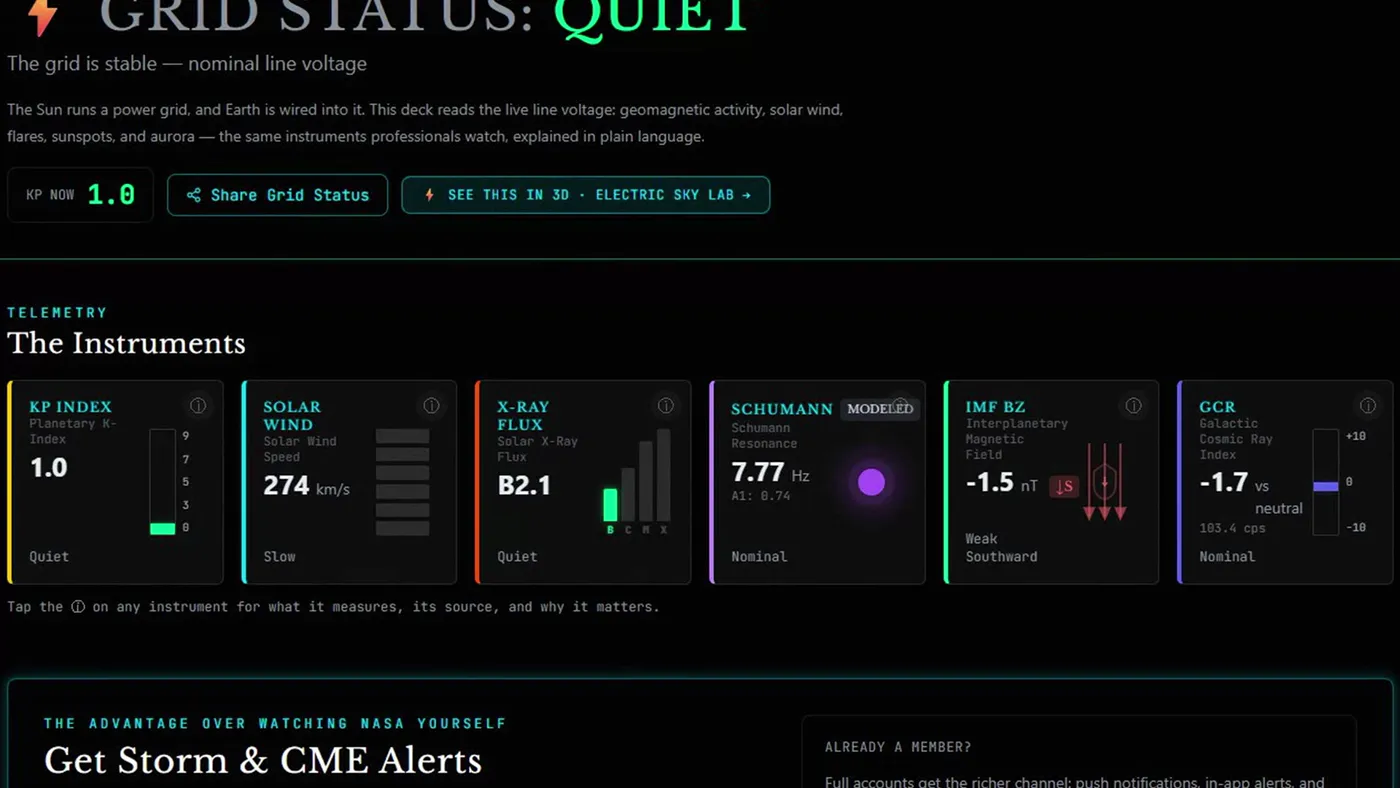
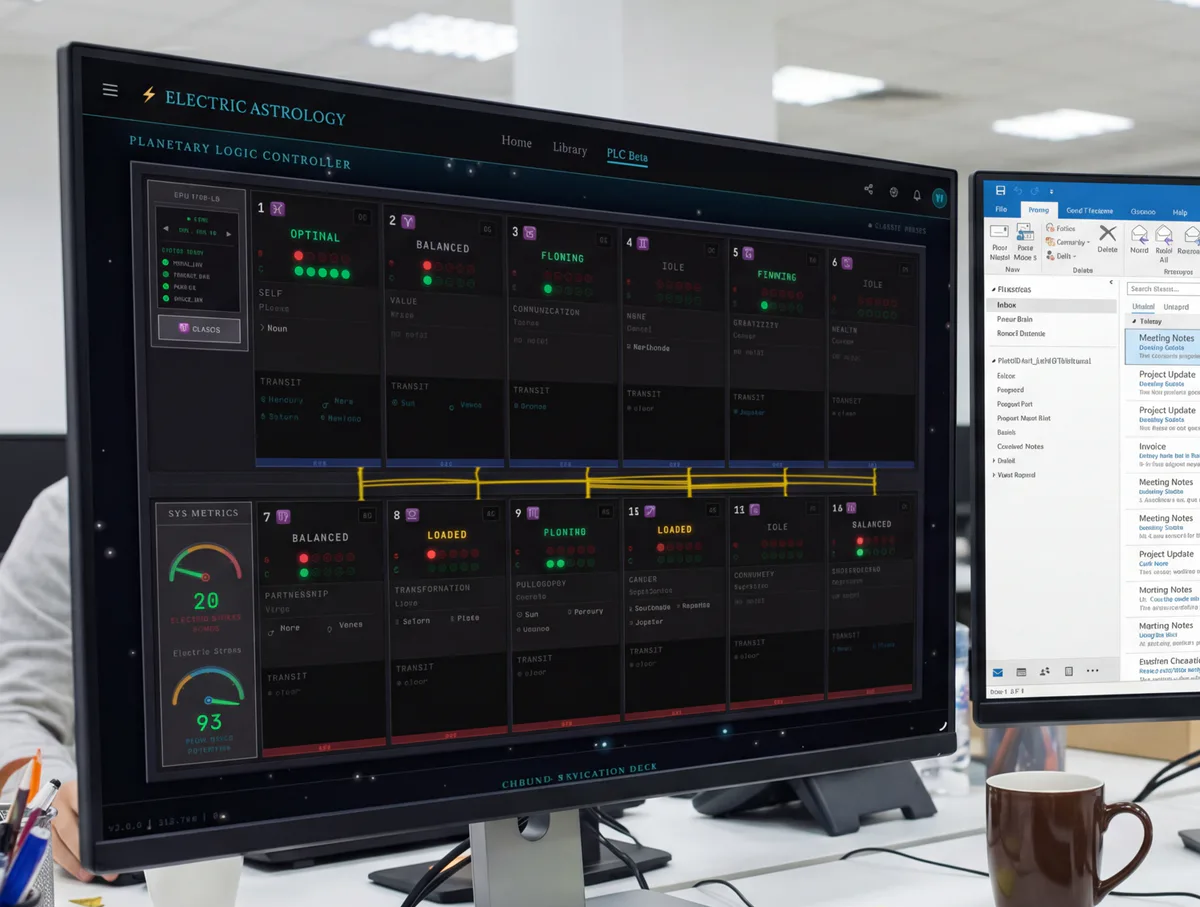
Electric Astrology isn’t about belief; it’s about measurement. What happens when you stop treating the sky like mythology and start measuring the telemetry you’re already experiencing on the ground? That’s what the Planetary Logic Controller is built to do. It’s an instrument.

Pull it up right now. Watch the space weather moving through the system in real time, and hold it up against what you’re feeling on the ground. The PLC is the theory in action. The whole theory is in the book.

Open the Planetary Logic Controller →

The Planetary Logic Controller with live telemetry
The Planetary Logic Controller with live telemetry · From the film · 12:52
electricastrology.com live space weather instruments
electricastrology.com live space weather instruments · From the film · 12:58
12

Signing Off

So why did I write it? Why am I the one telling you this? Six years ago, in 2020, I had a heart attack at the age of 36. When I recovered, I later went back and looked at the sky on that day. And what I found led me on a road of discovery that led me to right here. Next time, I’ll show you exactly what happened that day, and why I came to see it not as the end of my story, but an initiation.

William Edwards on camera
From the film · 13:20

Keep following the wire

The films, articles and live instruments this episode connects to.

Questions people ask

Why is Nashville called Music City?

In 1950, an announcer on the stage of the Grand Ole Opry declared Nashville “Music City, U.S.A.” The usual story credits fiddles, guitars and record studios. This film follows a different thread: in the same years, Nashville rebuilt a full-scale temple to Athena, goddess of the shield, while a few miles south a 50,000-watt radio tower went up broadcasting under the motto “We Shield Millions.” The city between them became known as Music City.

Why is there a full-scale Parthenon in Nashville?

The original was built for Tennessee’s 1897 Centennial Exposition, the vision of its director, Major Eugene C. Lewis. Between 1920 and 1931, Nashville tore down the plaster fair building and recast the entire temple in steel and reinforced concrete. It is the only full-scale replica of the Parthenon on Earth.

What does WSM stand for?

“We Shield Millions,” the motto of the National Life insurance company that built the station. WSM went on the air in October 1925 at 1,000 watts and was cleared to step up to 50,000 watts in 1931, broadcasting from an 800-foot, diamond-shaped steel tower.

What connects the Parthenon and WSM?

The same architect. Russell E. Hart helped rebuild the Parthenon in reinforced concrete, and National Life hired him to design the transmitter building for WSM’s 50,000-watt tower. Both came online in stages: in 1925 the Parthenon’s exterior was complete and WSM went on the air; in 1931 the inner sanctuary opened and WSM got the green light for full power.

How tall is the Athena statue in Nashville’s Parthenon?

Forty-two feet. The sanctuary stood empty for 59 years after it opened in 1931. Then, on May 20, 1990, the same day the Naos first opened, Athena took her seat, shield in hand.

Who is Ganymede on the Parthenon’s east pediment?

Zeus, Athena and Apollo were always gods. Ganymede is the only figure on that roof who began life as a mortal man, a shepherd boy lifted into the company of the gods. Classical scholars say he was abducted by an eagle; this film reads the eagle of Zeus as the discharge, the lift to high ground: Ganymede was commissioned, not taken.

What happens in 2031?

2031 is the centennial of the day the Parthenon opened its inner sanctuary (May 20, 1931). Carrying the ancient lunar count of the Panathenaea forward to that centennial and laying it over the planetary ephemeris turns up one coordinate in time. The exact date and minute are sealed in the final pages of the book Electric Astrology; the film calls it a coordinate, not a prophecy.

Is this a horoscope?

No. Electric Astrology isn’t about belief; it’s about measurement. The film reads Nashville’s history as a circuit and points to the Planetary Logic Controller, an instrument for watching live space weather and holding it up against what you’re experiencing on the ground.

Image credits: stills from the film. Inside the film, the east-pediment photograph is by Guerinf (Wikimedia Commons, CC BY-SA 4.0), space visualizations are courtesy of NASA, and the eagle-and-Ganymede woodcut is from The Metropolitan Museum of Art (public domain).

One tap

Did this change how you see Nashville?

Choose your entry point

One framework. Two ways in.

Study the system in full, or put it to work on your own circuit.

Electric Astrology paperback in hand

Paperback edition

The theory

The Book

The complete theory, cosmology, and operator’s manual.

Follow the argument from the electrical architecture of the solar system to the commissioning logic of the birth chart.

DigitalPaperbackHardbackAudiobook
Discover the Book
Available at Amazon

Amazon's trademark is used under license from Amazon.com, Inc. or its affiliates.

Planetary Logic Controller telemetry deck on a monitor

Planetary Logic Controller

Theory in application

The App

Your natal circuit transformed into a living, personalized instrument.

See the live sky against your commissioning, follow the signal through the PLC, and explore it with Ganymede.

PLCGanymedeOrbital ScopeReports
Explore the App
Download on theApp StoreIn reviewGET IT ONGoogle Play