Electric Universe · The film
What does the Electric Universe have to do with astrology?
The short answer
If the sky is electric, and the ancients were watching it, then astrology, the oldest system we have for reading the sky, was built by people watching an electric sky. The Electric Universe stands on real measurements: Birkeland’s currents, Alfvén’s plasma physics, the three-million-amp circuit between Jupiter and its moon Io.
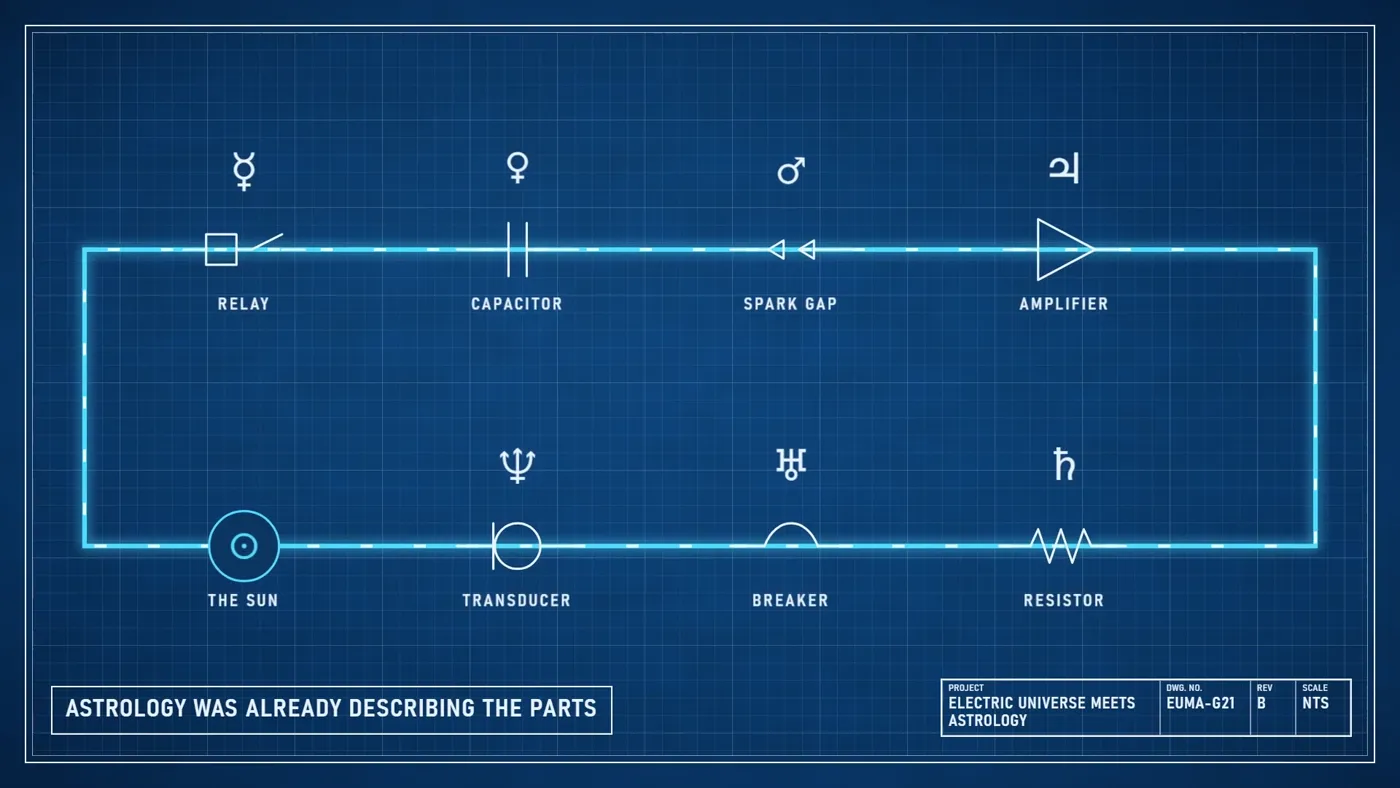
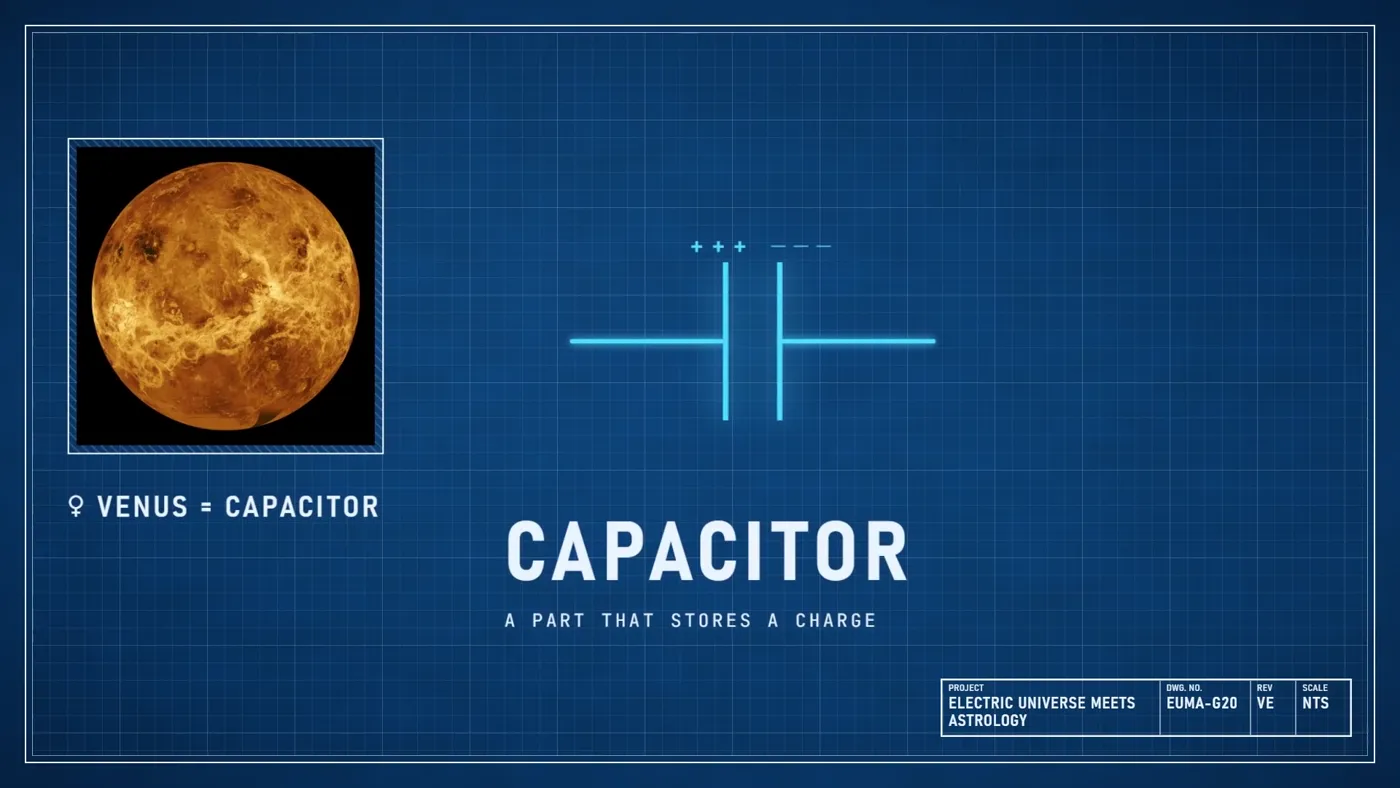
Put the two side by side and the planets’ magnetic fields map to what astrology has always said about them. Measured, each planet behaves like a part in a control panel: Mercury the relay, Venus the capacitor, Mars the spark gap, Jupiter the amplifier, Saturn the resistor, Uranus the breaker, Neptune the transducer.
- What were they looking at?
- Birkeland’s “crazy” idea about the Northern Lights
- Plasma, the fourth state of matter
- Alfvén’s Nobel Prize: same rules, bigger scale
- Jupiter and Io: a 3-million-amp circuit
- Rock carvings and lab plasma
- The thunderbolt of the gods
- 2016: “We live in an electric universe”
- If the sky is electric, what is astrology?
- When astrology was the most serious science
- The zodiac was everywhere
- The same planet gods in every culture
- Mercury: the relay
- Venus: the capacitor
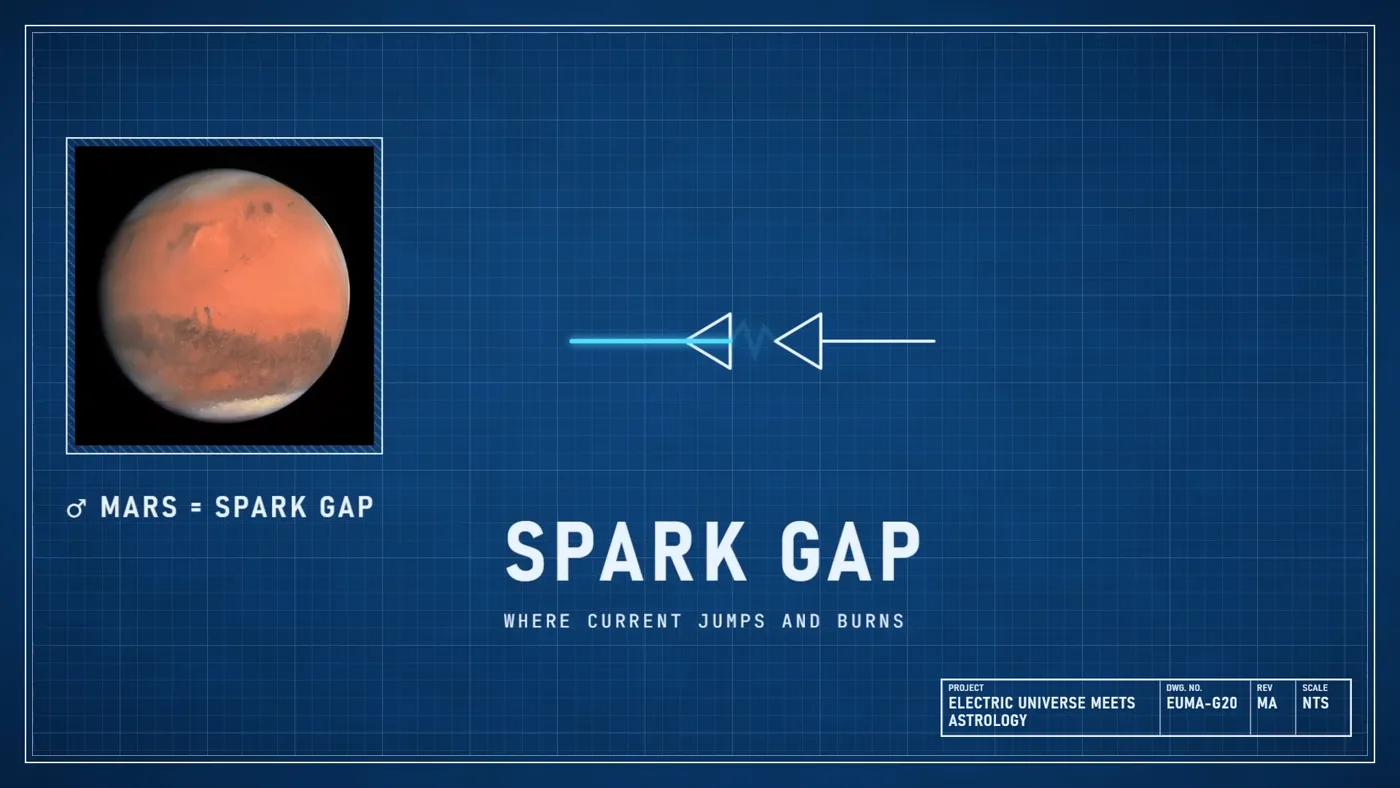
- Mars: the spark gap
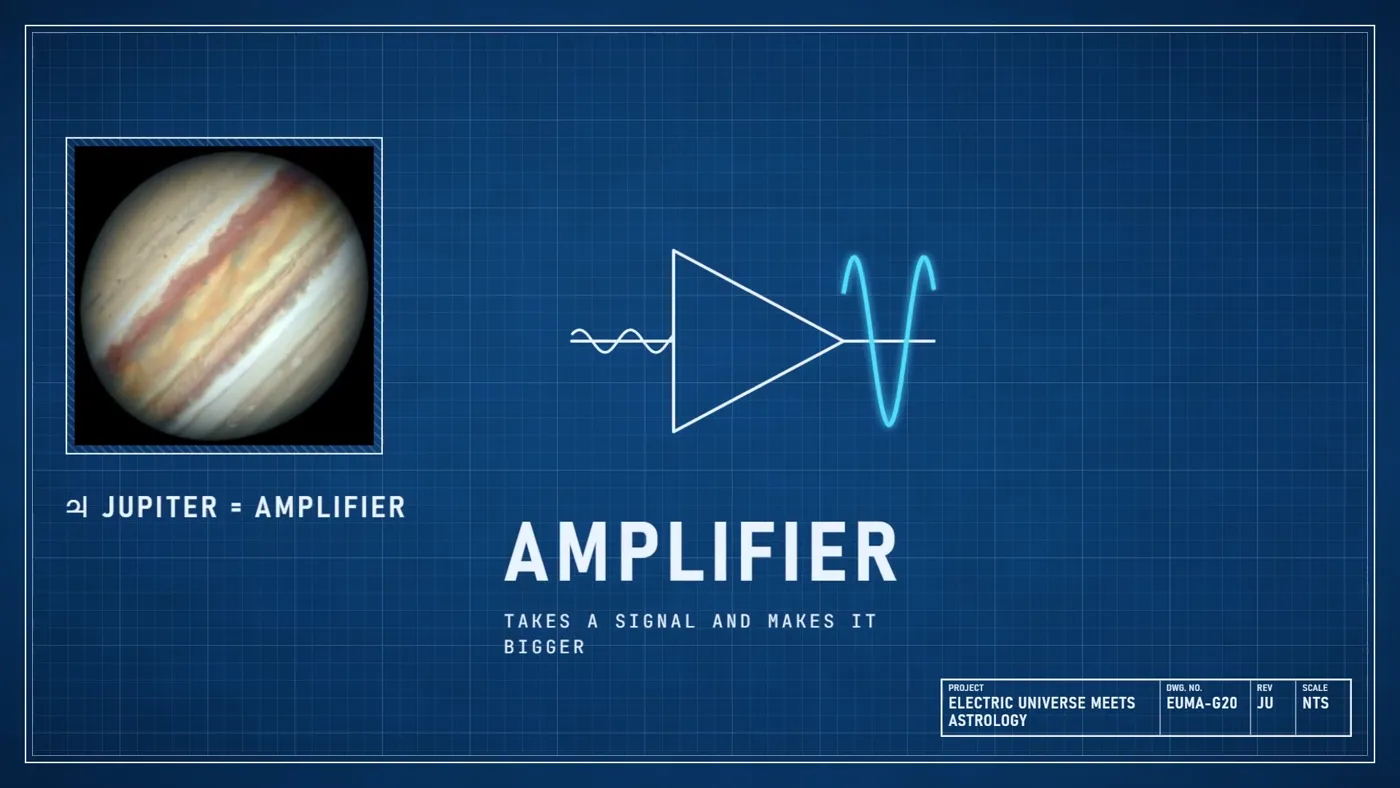
- Jupiter: the amplifier
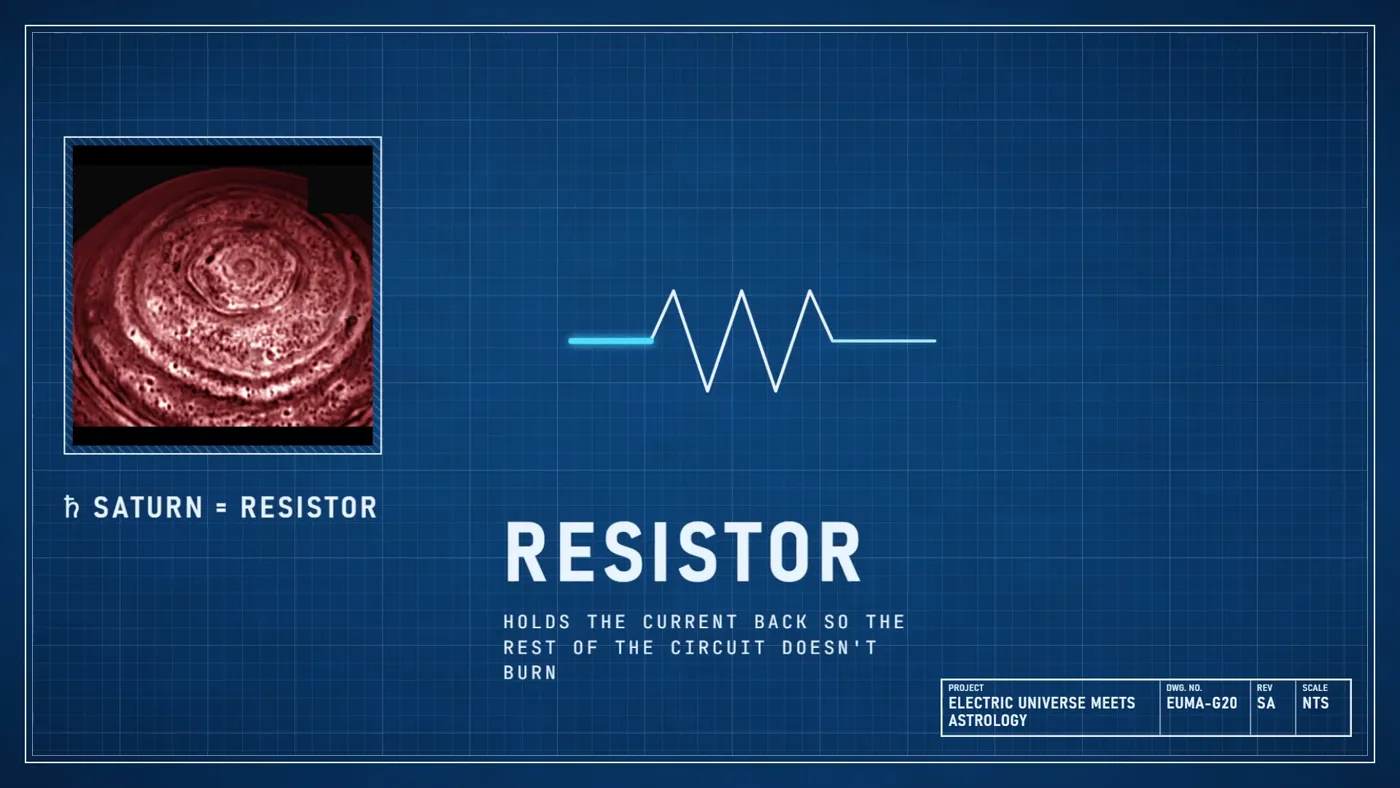
- Saturn: the resistor
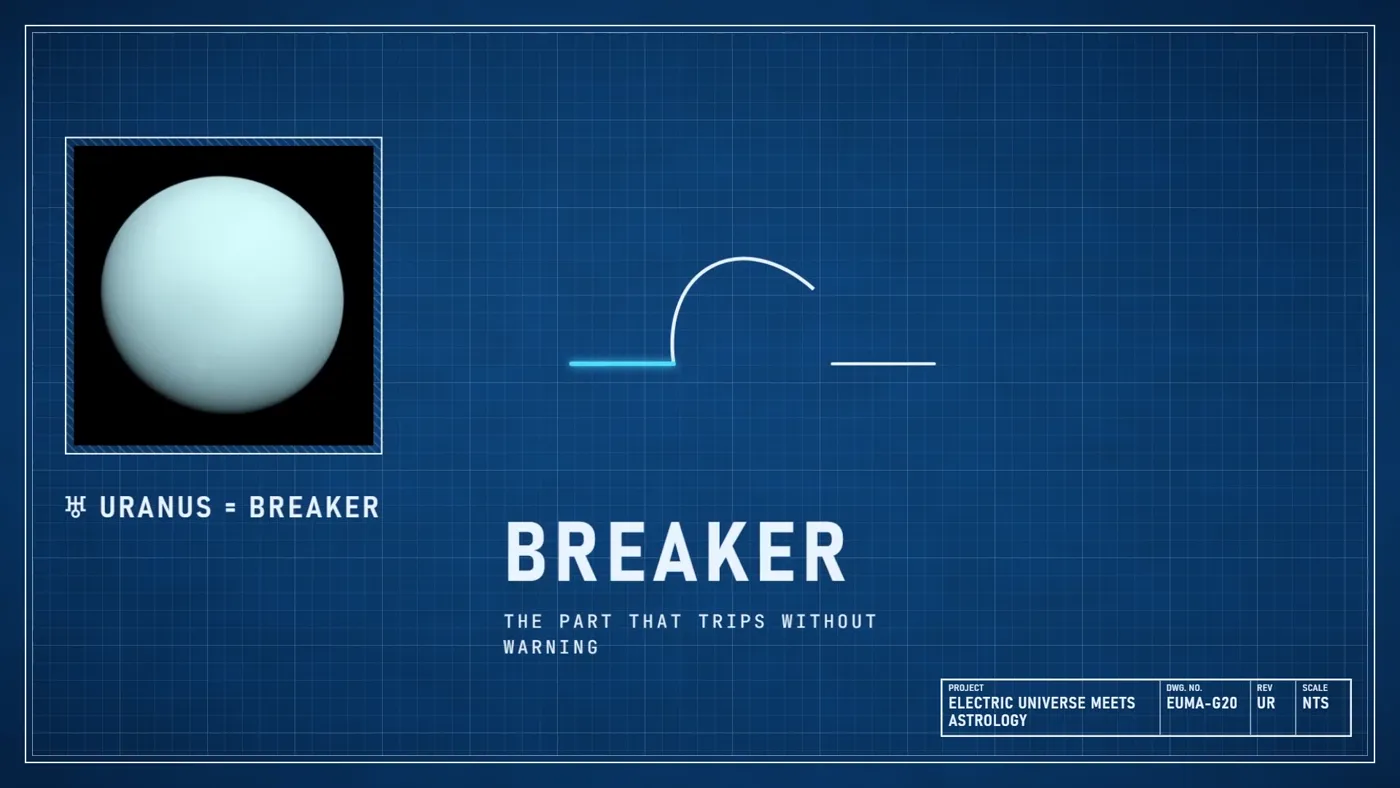
- Uranus: the breaker
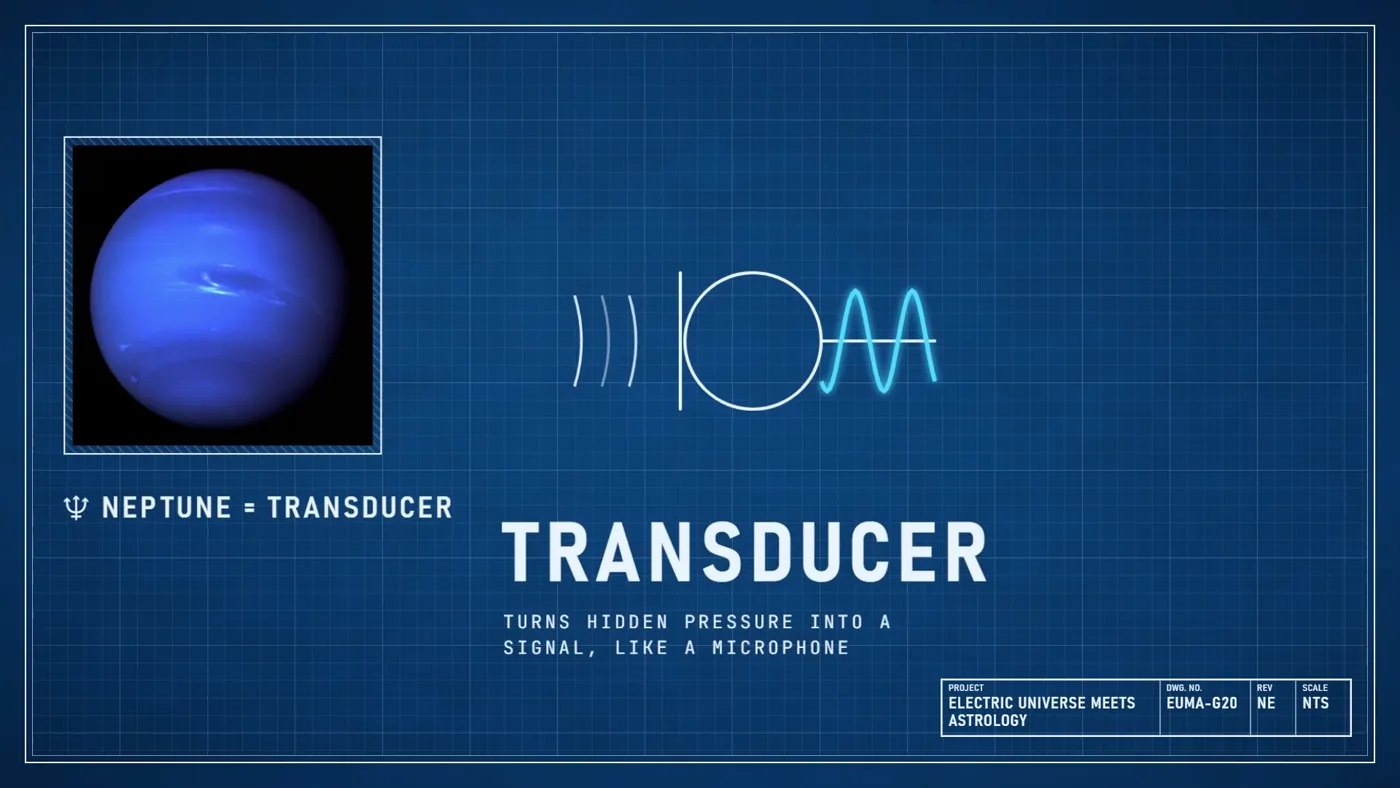
- Neptune: the transducer
- Gemini: the symbol nobody explained
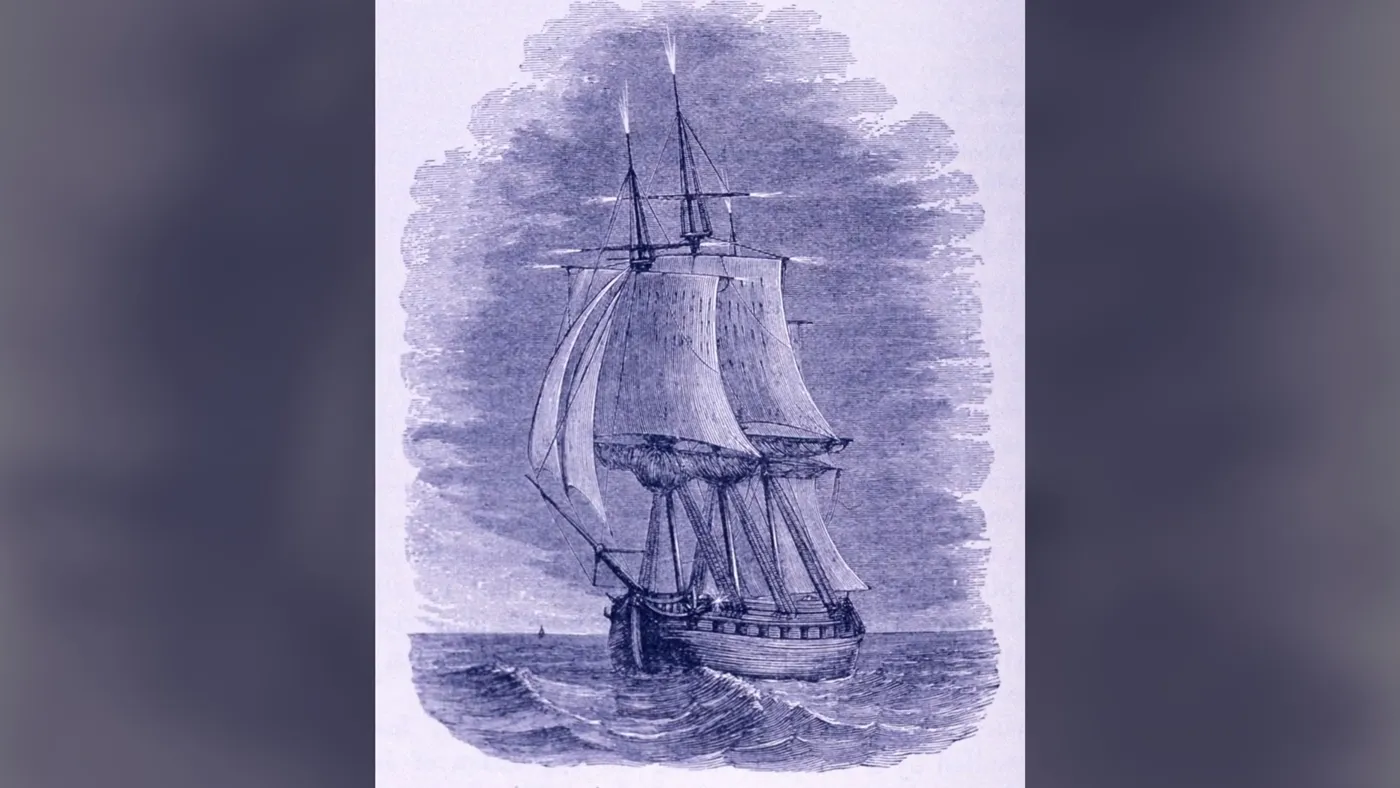
- St. Elmo’s fire and the twins
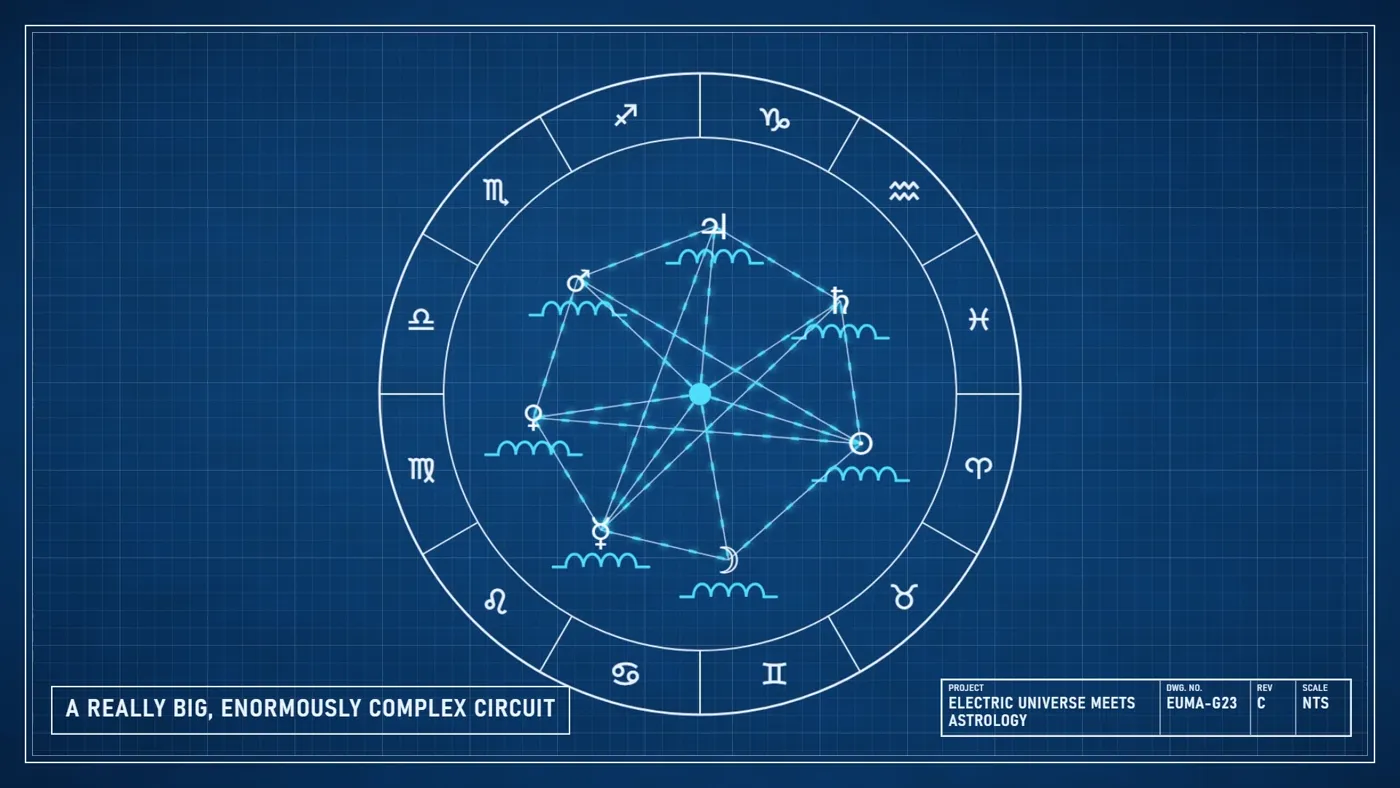
- Maybe astrology is a circuit
- I built an instrument to test it
- Bios: the other half
- The app, the book, and come along
The finding
Do the planets’ magnetic fields match astrology?
Every culture gave the same points of light the same personalities. “This is where my trade comes in,” says William Edwards, who spent his career in the electrical trade. “When you measure these planets, they don’t just look like gods. They behave like parts.” Pick a planet.
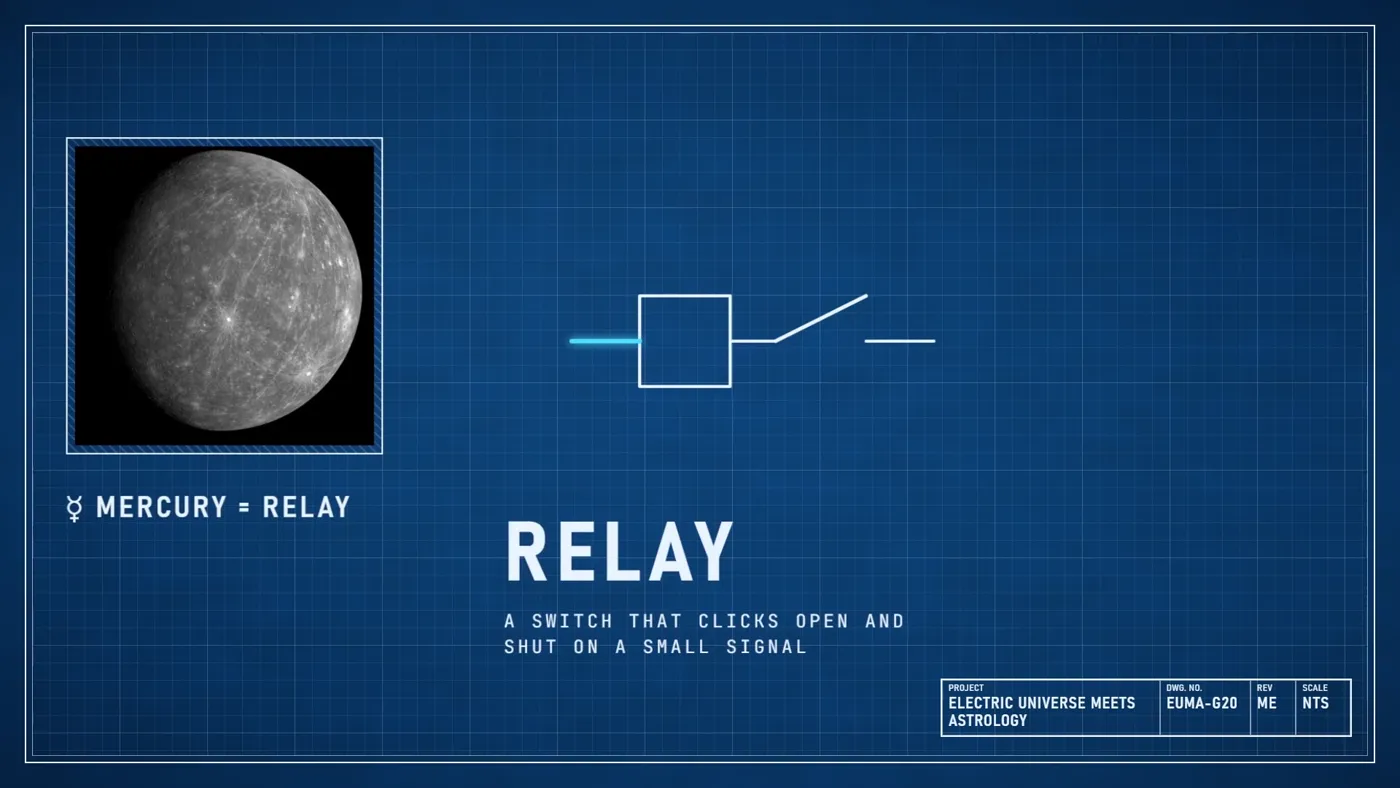
☿︎ Mercury = Relay
- Measured
- Its small magnetic field gets torn open and snapped shut by the solar wind, over and over.[7]
- Astrology called it
- The messenger. Quick and twitchy.
- In a control panel
- Relay. A switch that clicks open and shut on a small signal.
The instrument · the Electric Astrology app
I built an instrument to test it.
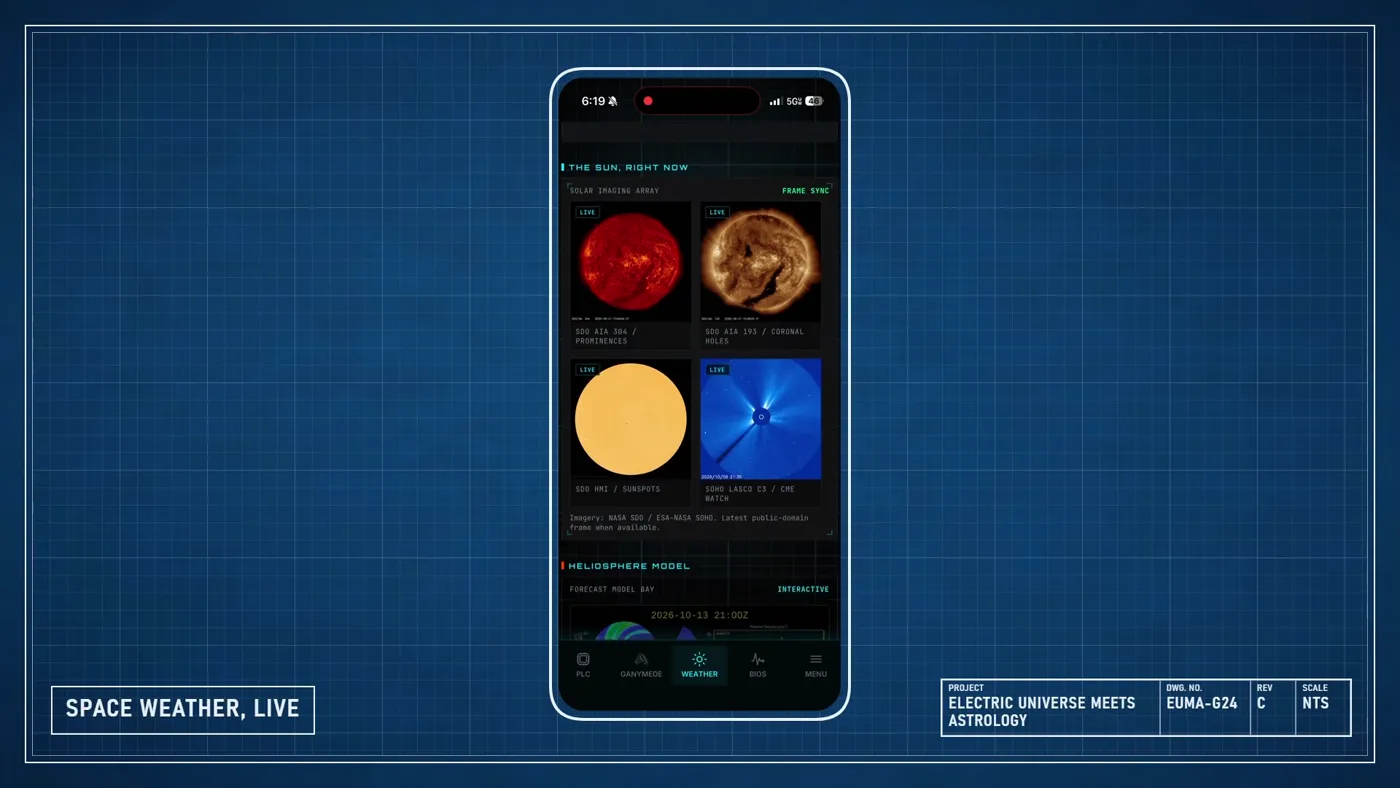
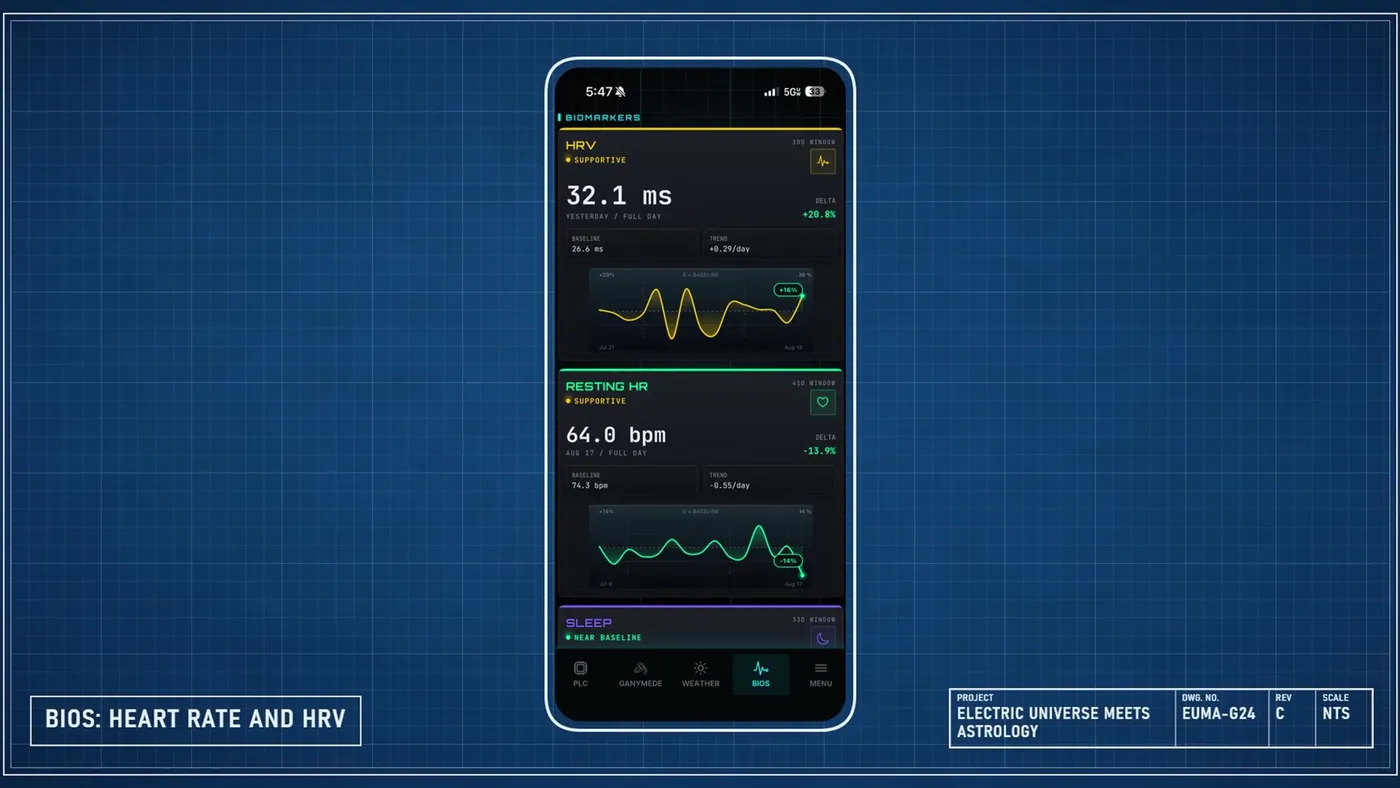
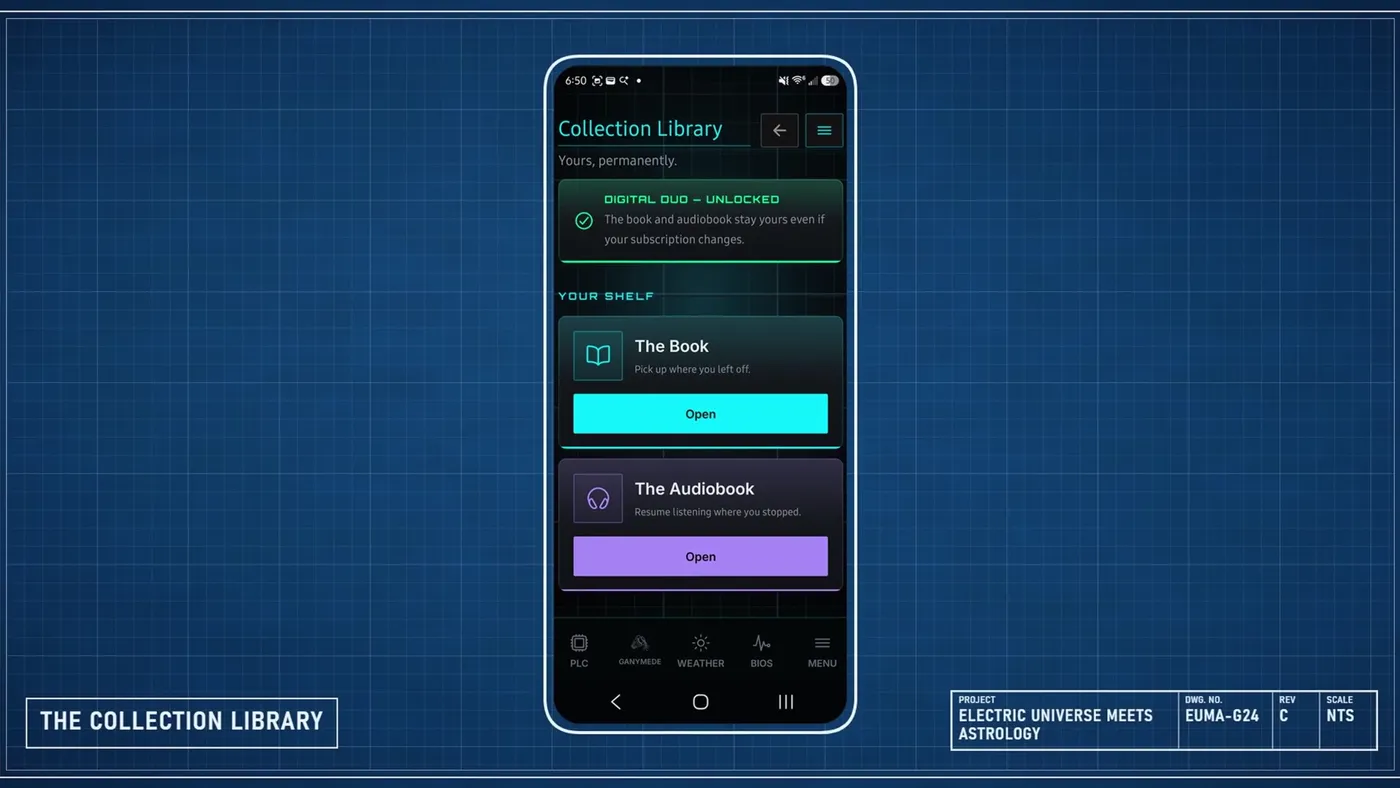
The positions of the planets, the Moon and the Sun, and the live space weather hitting the Earth, lined up against what astrology has said for thousands of years. Its other half, Bios, reads your heart rate, sleep and nervous system from your own watch or ring and lines them up against the storms coming off the Sun. The book is in there too, in the app’s own reader and as the audiobook.


The physics
What is the Electric Universe?
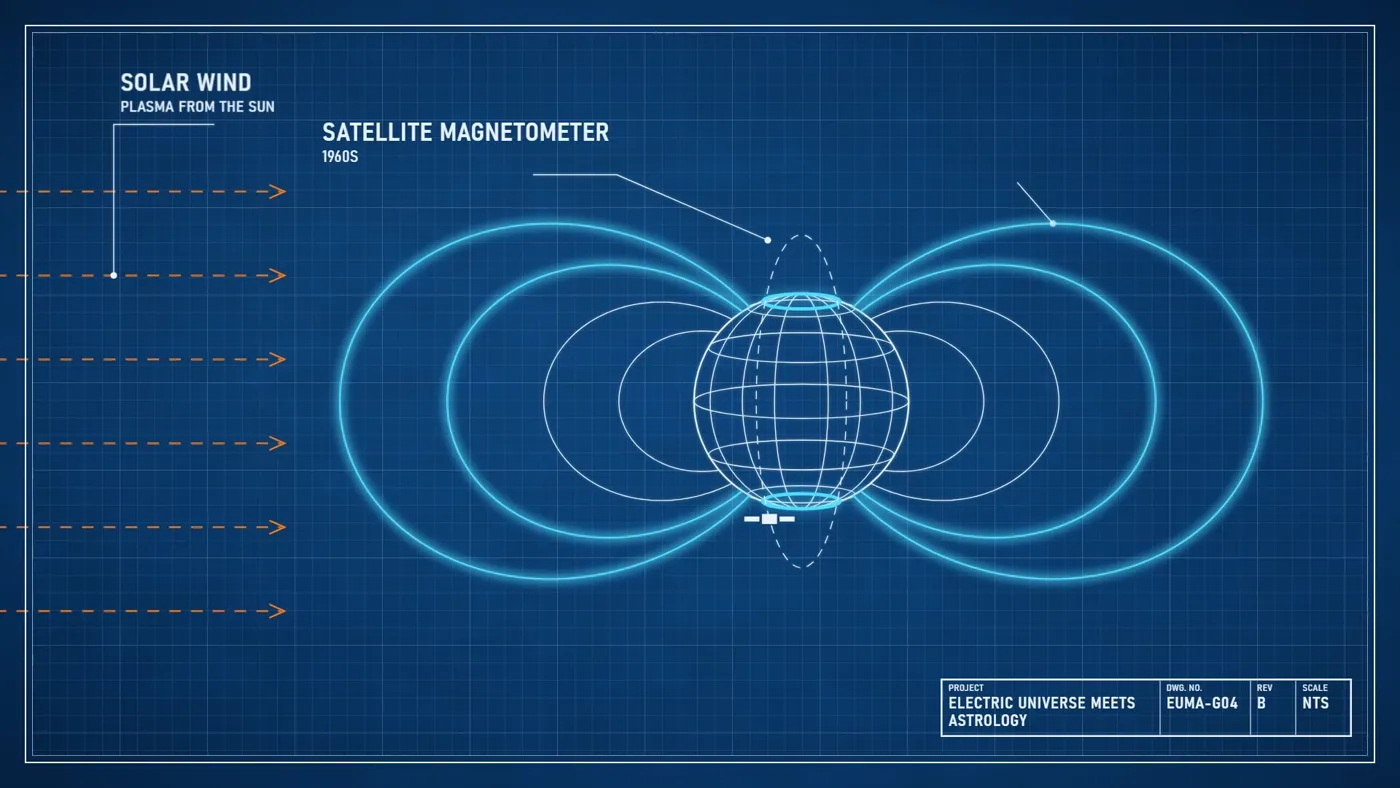
The idea that the sky runs on the same rules as a circuit: current, plasma and magnetic fields, at every scale. It starts with the northern lights. Over a hundred years ago, the Norwegian physicist Kristian Birkeland said they were electric, currents pouring in from space and running down the Earth’s magnetic field into the poles. Most of the scientific world waved him off. About sixty years later, satellites picked up those currents, right where he said they’d be[1][2]. They are called Birkeland currents now.
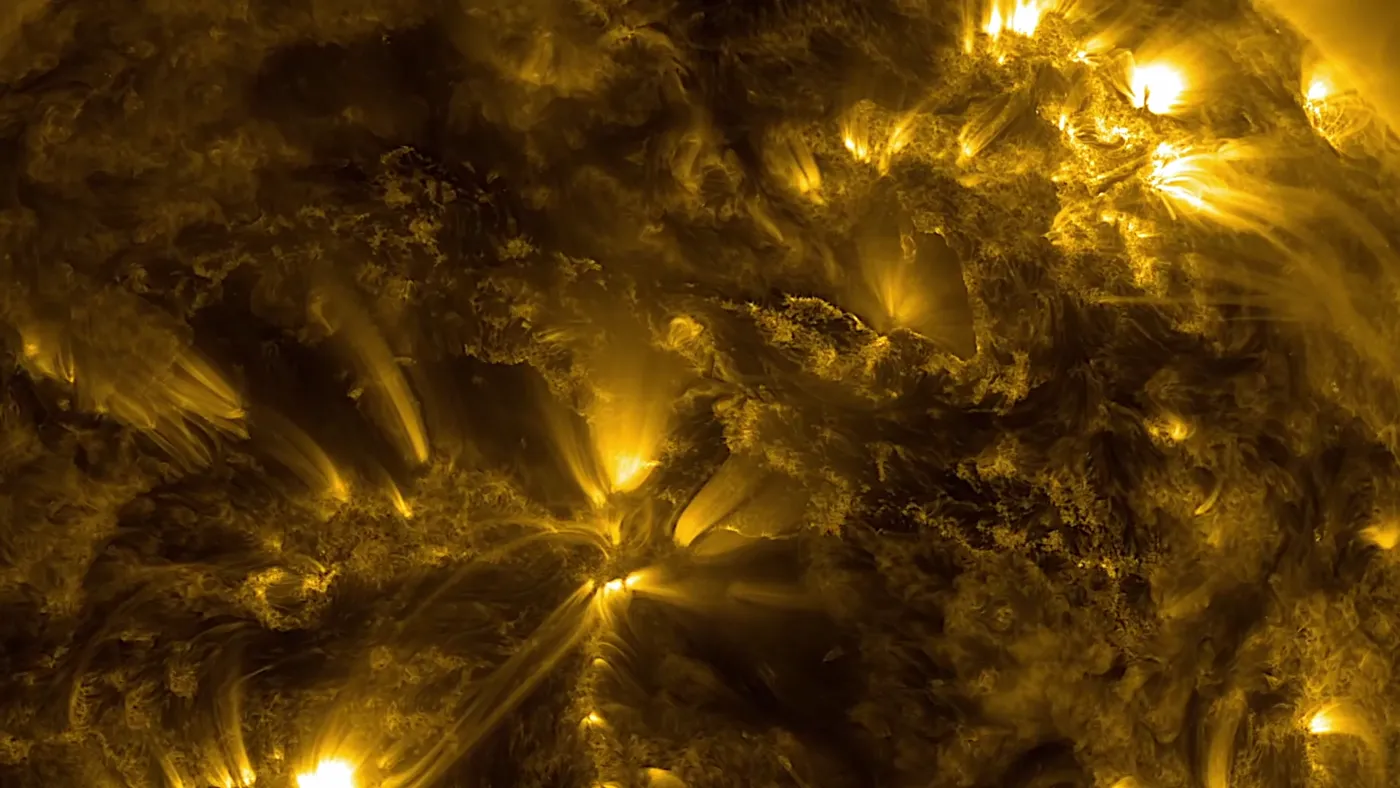
Almost everything that shines in the night sky is plasma, the fourth state of matter: a gas energized enough to carry electricity. The Swedish physicist Hannes Alfvén won the Nobel Prize for working out how plasma moves through magnetic fields[3], and spent the rest of his life arguing that what plasma does in a lab, it does across the whole universe. Same rules, bigger scale.
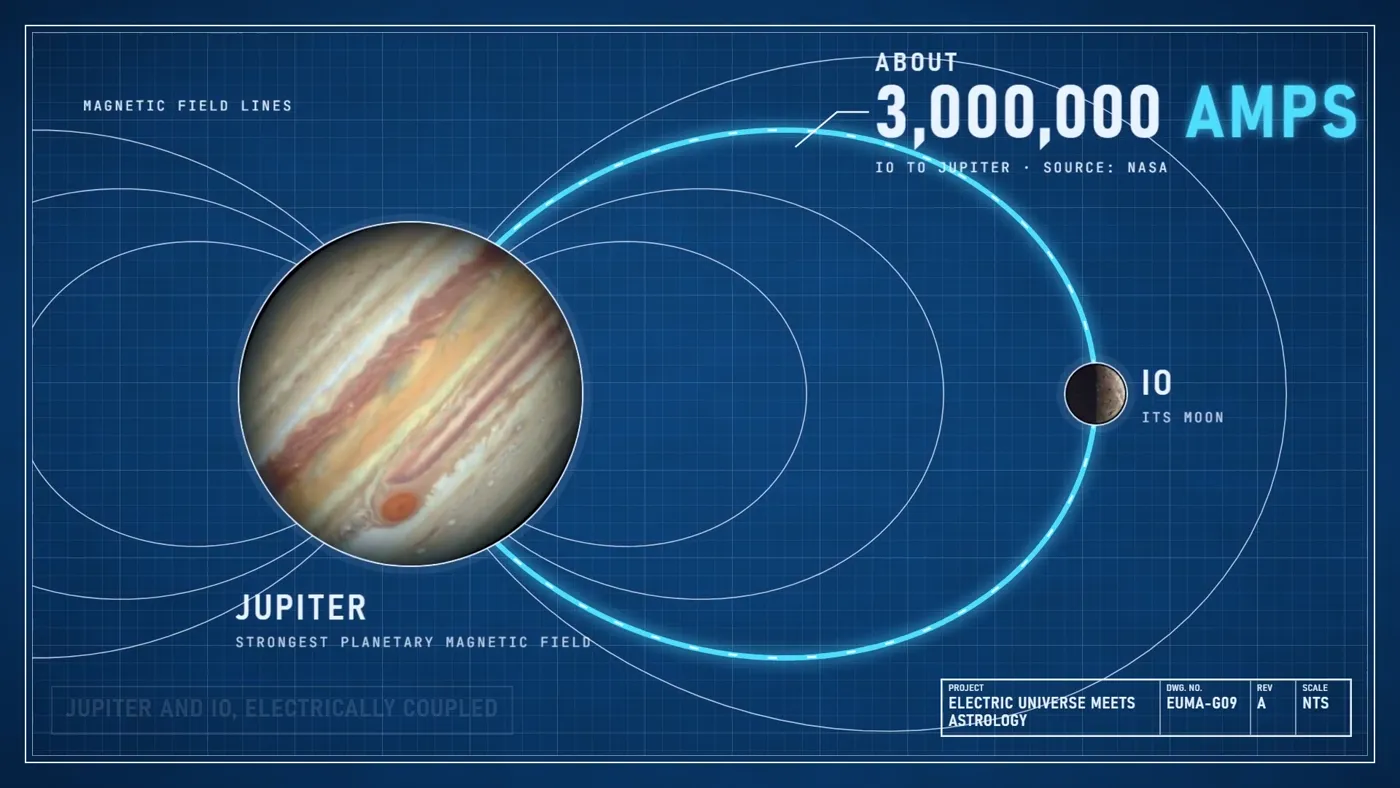
It doesn’t stop at the Sun. Jupiter’s moon Io drags through Jupiter’s magnetic field and drives a current of about three million amps between them[4]. Hubble can see where it lands: a bright spot in Jupiter’s aurora that follows Io around the planet.
The myths
What did the ancients see in the sky?
All over the world, people who never met carved the same strange figures into stone. Anthony Peratt, a plasma physicist at Los Alamos National Laboratory, gathered rock carvings from all over the world and laid them next to photographs of high-current plasma in the lab. The same shapes kept turning up, in stone, half a world apart[5].
Others went back to the myths. Immanuel Velikovsky, then David Talbott and Dwardu Cardona, read the oldest stories of the gods as eyewitness accounts. Not fairy tales. Reports of what people actually saw in the sky.
“Planets gathered in close congregation, as if alive, engaging each other electrically.”
Look at what the gods carried. In Greece, Zeus throws the thunderbolt. In India, the god Indra carries the vajra, the thunderbolt that became a sacred object across Tibet. Different peoples, the same strange object, and it doesn’t look like a zigzag of lightning at all. And the gods who threw them had names you already know. Jupiter. Mars. Venus. Saturn. The planets were the gods.
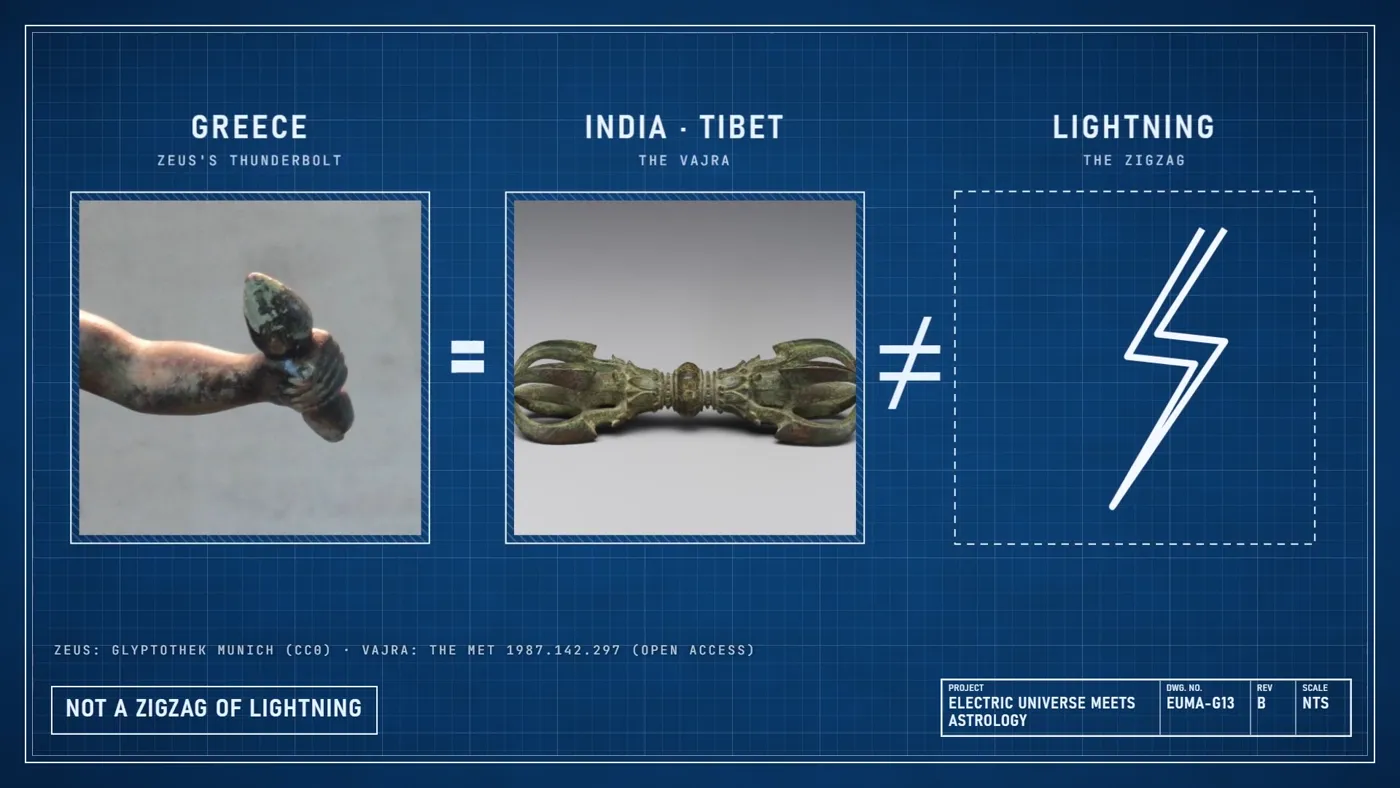
“So, bedrock fact, the cosmic thunderbolt never looks like lightning.”
“The phenomenal thunderbolt of the planetary gods is the link between our human story and the science of the electric universe.”
The turn
Was astrology built by people watching an electric sky?
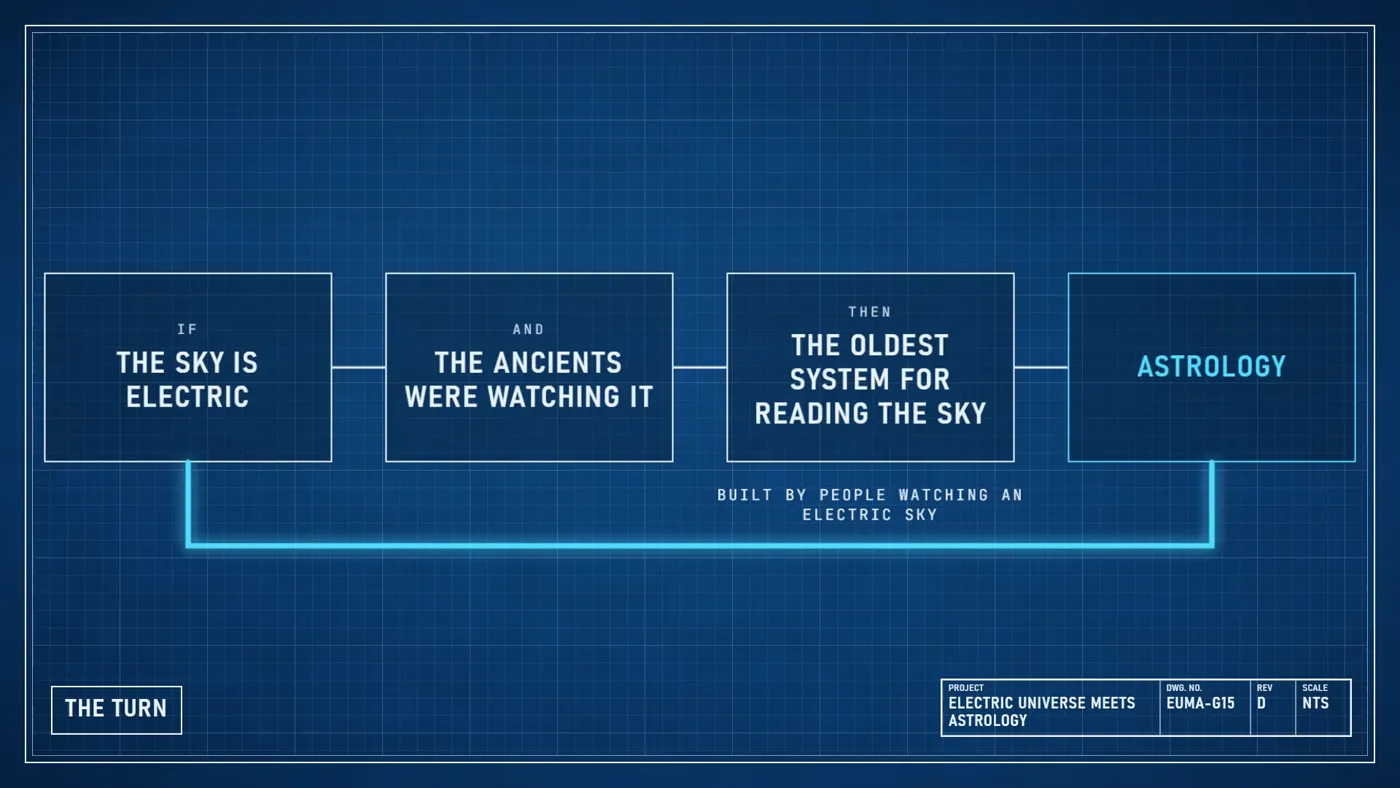
That is the question it took William Edwards years to see. If the sky is electric, and the ancients were watching it, then the oldest system we have for reading the sky was built by people watching an electric sky. That system is astrology.
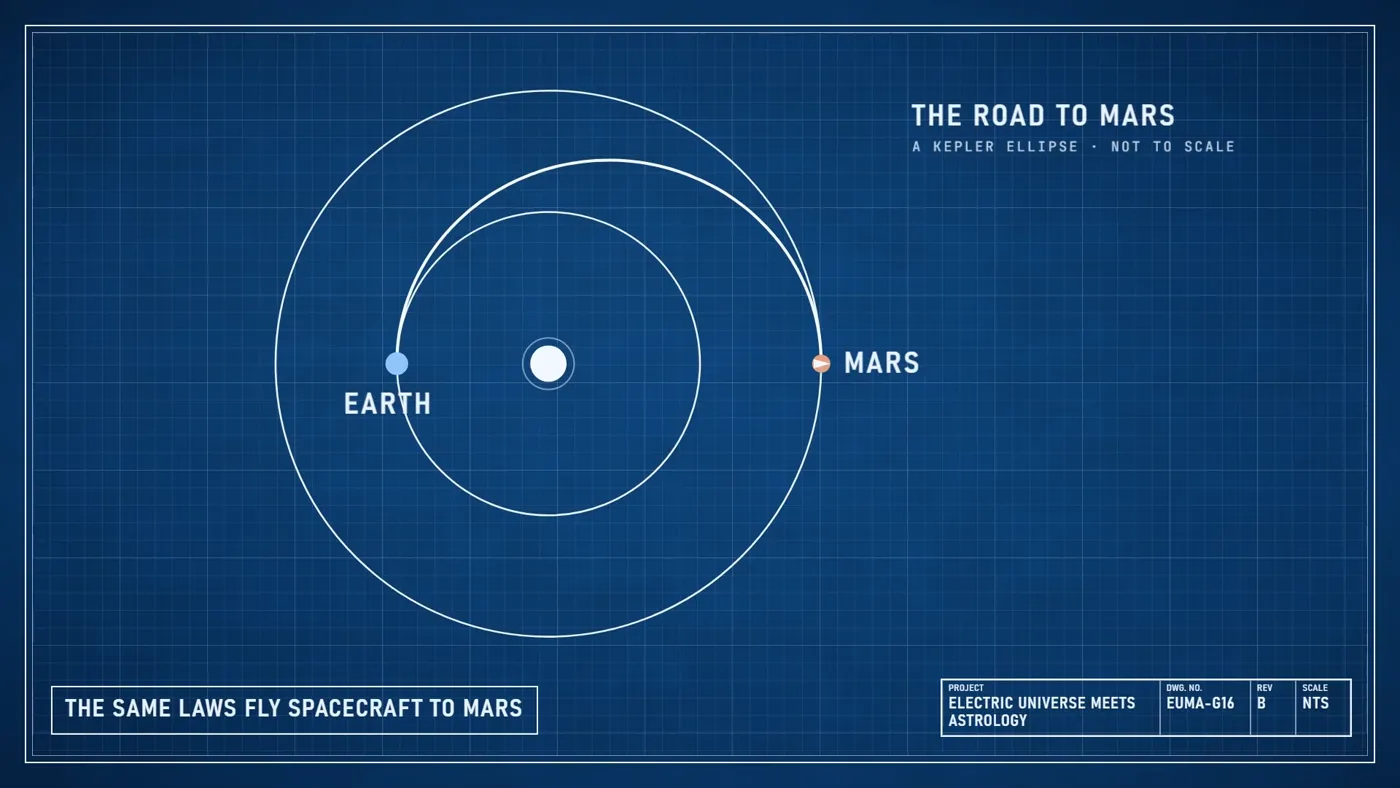
Before it was a column in the newspaper, astrology was the most serious science on Earth. In Babylon, scholars watched the planets every night and kept the records for centuries. Two thousand years later, Johannes Kepler worked out the laws of how planets move, the same laws we still use to fly spacecraft to Mars, and he also cast horoscopes and wrote a book on the foundations of astrology[6]. To him, the math and the meaning were the same circuit.
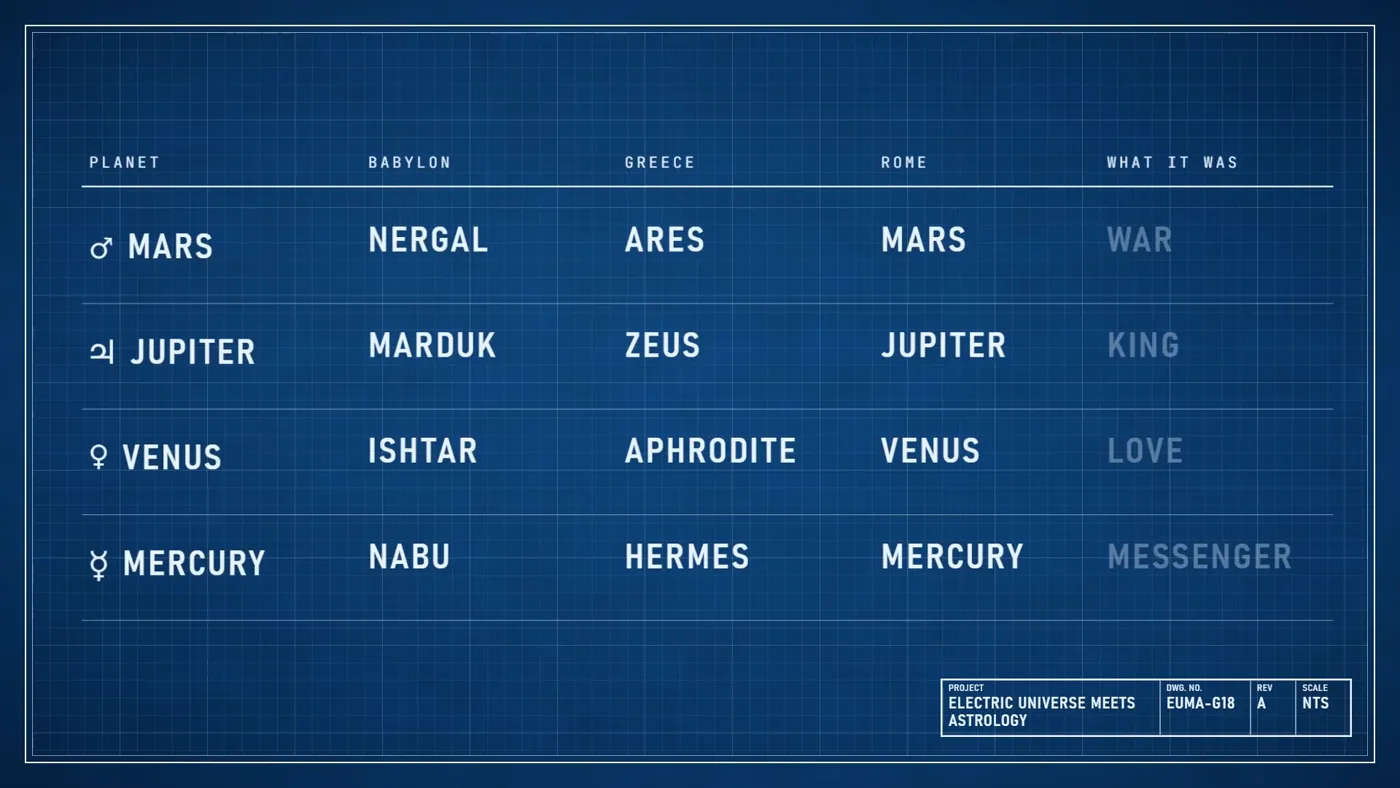
And every culture gave the same points of light the same personalities. Mars was Nergal in Babylon, Ares in Greece, Mars in Rome: war. Jupiter was Marduk, then Zeus, then Jupiter: always the king. Different languages, different empires, the same characters. Why would they all agree about tiny dots of light?
The open question
Why are the Gemini twins tied to St. Elmo’s fire?
“Astrologically, the cosmic twins find their most popular expression in the constellation of Gemini. Of course, this story itself is never explained.”
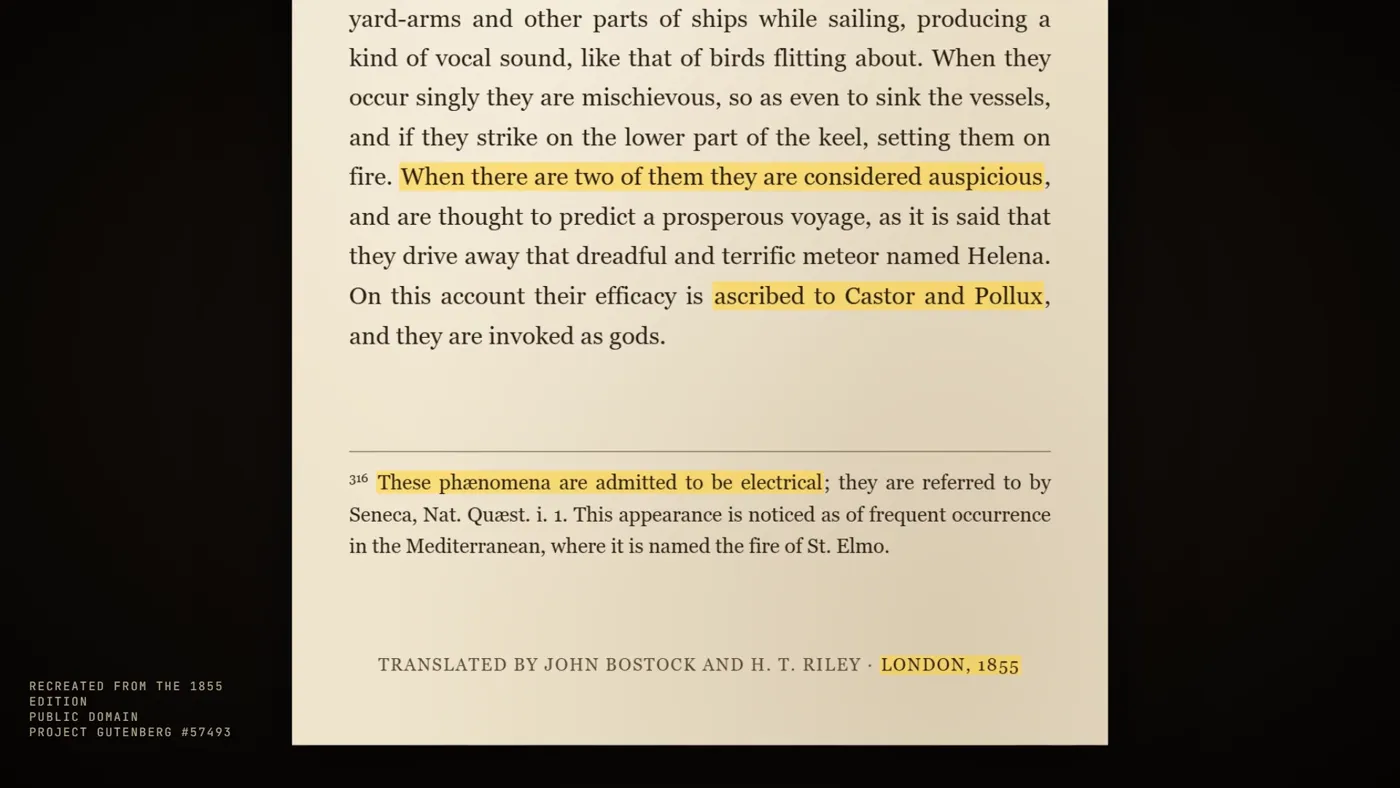
So ask. Gemini is the twins, Castor and Pollux, two bright stars side by side in the winter sky. The Greeks and Romans made them the protectors of sailors, because sailors could see them, right there in the storm. Almost two thousand years ago, Pliny the Elder wrote it down: in a storm, lights like stars would settle on a ship’s masts. One light alone was a bad sign. Two lights meant a safe voyage, and those two were Castor and Pollux[16].
Today those lights are called St. Elmo’s fire: plasma, a glowing electrical discharge pulled out of the air by the charge in a storm[17]. Even Pliny’s English translators added a note in 1855: these lights are electrical. So for the sailors of Greece and Rome, the twins of the zodiac were two flames of electric fire. Is that where the symbol came from? Not known yet. But nobody was even asking.
Keep following the wire
The films, live instruments and the book this one connects to.
Questions people ask
What does the Electric Universe have to do with astrology?
If the sky is electric, and the ancients were watching it, then the oldest system we have for reading the sky was built by people watching an electric sky. That system is astrology. In the film, William Edwards lays the two side by side: every culture gave the same planets the same personalities, and when you measure those planets, they behave like the parts in a control panel. Astrology never asked where its symbols came from, and the Electric Universe never asked what astrology was for.
Do the planets’ magnetic fields match their astrological meanings?
In the film, each planet’s measured magnetic behavior lines up with what astrology called it. Mercury’s small field gets torn open and snapped shut by the solar wind: the quick messenger, a relay. Venus has no shield and holds on to the solar wind: attraction, a capacitor. Mars lost its shield and was scarred red: war, a spark gap. Jupiter has the strongest field and the loudest radio voice: the king, an amplifier. Saturn’s field lines up with its spin to within a hundredth of a degree: order and limits, a resistor. Uranus’s field is knocked almost sixty degrees sideways: electricity and sudden change, a breaker. Neptune gives off more than twice the energy it gets from the Sun: the hidden made felt, a transducer.
What is the Electric Universe?
The idea that space runs on electricity: currents, plasma and magnetic fields, at every scale. It stands on real measurements. Kristian Birkeland said the northern lights were currents pouring in from space, and satellites found those currents about sixty years later. Hannes Alfvén won the Nobel Prize for working out how plasma moves through magnetic fields and argued that what plasma does in a lab, it does across the whole universe. Jupiter’s moon Io drives a current of about three million amps. Wal Thornhill and David Talbott of the Thunderbolts Project carried the idea into the oldest stories of the gods.
Who was Kristian Birkeland?
A Norwegian physicist who, over a hundred years ago, said the northern lights were electric: currents pouring in from space and running down the Earth’s magnetic field into the poles. He built a little magnetized Earth inside a vacuum box, fired electricity at it, and it lit up with its own aurora around its poles. Most of the scientific world waved him off. About sixty years later, satellites picked up currents running along the Earth’s magnetic field, right where he said they’d be. They are called Birkeland currents now.
What did Anthony Peratt find in ancient rock carvings?
Anthony Peratt, a plasma physicist at Los Alamos National Laboratory, gathered rock carvings from all over the world and laid them next to photographs of high-current plasma in the lab. The same shapes kept turning up, in stone, half a world apart. He published it in IEEE Transactions on Plasma Science in 2003.
Why did the ancient gods carry thunderbolts?
In Greece, Zeus throws the thunderbolt. In India, the god Indra carries the vajra, the thunderbolt that became a sacred object across Tibet. Different peoples, the same strange object, and it doesn’t look like a zigzag of lightning. The gods who threw them had names you already know: Jupiter, Mars, Venus, Saturn. The planets were the gods. Wal Thornhill called the thunderbolt of the planetary gods the link between our human story and the science of the Electric Universe.
Why are the Gemini twins linked to St. Elmo’s fire?
Gemini is the twins, Castor and Pollux, and the Greeks and Romans made them the protectors of sailors. Almost two thousand years ago, Pliny the Elder wrote that in a storm, lights like stars would settle on a ship’s masts: one light alone was a bad sign, two meant a safe voyage, and those two were Castor and Pollux. Today those lights are called St. Elmo’s fire, a glowing electrical discharge, and Pliny’s English translators noted back in 1855 that they are electrical. Whether that is where the Gemini symbol came from is still an open question.
Was astrology ever a science?
For most of human history, nothing was more serious than the sky. In Babylon, scholars watched the planets every night and kept records for centuries. Two thousand years later, Johannes Kepler worked out the laws of planetary motion that still fly spacecraft to Mars, and he also cast horoscopes and wrote a book on the foundations of astrology. To him, the math and the meaning were the same circuit.
What is the instrument in the film?
The Electric Astrology app, on iPhone and Android. It lines up the positions of the planets, the Moon and the Sun, and the live space weather hitting the Earth, against what astrology has said for thousands of years. Its other half, Bios, reads your heart rate, sleep and nervous system from your own watch or ring and lines them up against the storms coming off the Sun. The book is in the app too, in its own reader and as the audiobook.
Sources
- [1]Coxon, J. C. et al. (2016). Journal of Geophysical Research: Space Physics, §1: “Sixty years after they were proposed, the first measurements of these currents were made” (Zmuda et al., 1966).
- [2]NASA Goddard: Birkeland’s idea of currents from space into the polar regions, and the satellites that confirmed them.
- [3]NobelPrize.org: Hannes Alfvén, Nobel Prize in Physics 1970, for his work in magnetohydrodynamics and plasma physics.
- [4]NASA, Io facts: Io “can develop 400,000 volts across itself and create an electric current of 3 million amperes.”
- [5]Peratt, A. L. (2003). Characteristics for the occurrence of a high-current, Z-pinch aurora as recorded in antiquity. IEEE Transactions on Plasma Science 31(6): 1192–1214.
- [6]University of Cambridge, Department of History and Philosophy of Science: Kepler and astrology (his calendars, horoscopes and De Fundamentis Astrologiae Certioribus, 1601).
- [7]NASA, Mercury facts: a magnetic field about 1% as strong as Earth’s, which the solar wind twists into “magnetic tornadoes.”
- [8]NASA, Venus facts: no internally generated magnetic field, an induced one from the solar wind, and surface pressure about 93 times Earth’s.
- [9]NASA: MAVEN reveals most of Mars’ atmosphere was lost to space.
- [10]NASA: “After the Sun, Jupiter has by far the strongest and biggest magnetic field in the solar system.”
- [11]Kurth, W. S. et al. (2017). The Juno Waves investigation. Space Science Reviews: Jupiter is the source of the strongest planetary radio emissions in the solar system.
- [12]Cao, H. et al. Cassini Grand Finale magnetometer results: Saturn’s magnetic field is tilted less than 0.007 degrees from its spin axis.
- [13]NASA History: Voyager 2 at Uranus, January 1986. The magnetic field is tilted 59 degrees from the spin axis and offset from the planet’s center by about one-third.
- [14]NASA, Neptune facts: the solar system’s windiest world, with a magnetic field tipped about 47 degrees.
- [15]Encyclopaedia Britannica, Neptune: it emits more than twice the energy it receives from the Sun.
- [16]Pliny the Elder, Natural History, Book II, ch. 37, tr. John Bostock and H. T. Riley (London, 1855), with the translators’ note: “These phænomena are admitted to be electrical.” Public domain, Project Gutenberg #57493.
- [17]American Meteorological Society, Glossary of Meteorology: St. Elmo’s fire, “corona or point discharges that occur when the environmental electric field is high.”
Quoted in the film · The Thunderbolts Project
Read in William Edwards’s voice in the film, with the speaker’s name on screen.
- David Talbott, Discourses on an Alien Sky #1: When Planets Were the Gods (2015) ↗
- David Talbott, The Cosmic Thunderbolt (TeslaTech 2011) ↗
- Wal Thornhill, The Elegant Simplicity of the Electric Universe (EU2016 keynote) ↗
- David Talbott, Discourses on an Alien Sky #18: The Myth of the Heavenly Twins (2015) ↗
Images on this page are frames from the film. Planet and space images: NASA, ESA and the Hubble, Cassini, Voyager and Magellan missions. Every image and clip in the film, with its author and license, is credited in the film’s pinned comment on YouTube.
The full transcript
The narration, chapter by chapter, as the film speaks it. Tap a time to play the film from that moment.
What were they looking at?
All over the world, people who never met carved the same strange figures into stone.
They put lightning in the hands of their gods.
And they divided the sky into twelve signs that millions of people still read every morning.
What were they looking at?
Hi, my name is Will. I’m not a physicist, and I’m not an astrologer. I spent my career in the electrical trade, and I never could leave it at work.
Current. Circuits. Magnetic fields. That was my world. And for the last ten years, I’ve been pulling on one thread. What if the sky runs on the same rules? Let me show you where it starts.

Birkeland’s “crazy” idea about the Northern Lights
Start with the Northern Lights.
Over a hundred years ago, a Norwegian physicist named Kristian Birkeland had an idea about them that most of his colleagues thought was crazy. He thought the lights were electric: currents pouring in from space and running down the Earth’s magnetic field into the poles.
So he built one. A little magnetized Earth, hanging inside a vacuum box. He fired electricity at it, and the little Earth lit up with its own aurora, ringed around its poles, just like the real thing.
Most of the scientific world waved him off. Space was supposed to be empty. Then, about sixty years later, satellites flew over the poles, and their instruments picked up currents running along the Earth’s magnetic field, right where he said they’d be.
They’re called Birkeland currents now.
Remember that. The first man who looked at the sky and saw a circuit was right.
Plasma, the fourth state of matter
Here’s the part they don’t spend much time on in school. Almost everything that shines in the night sky isn’t a solid, a liquid or a gas. It’s a fourth state of matter. Plasma.
Plasma is what you get when a gas is energized enough to carry electricity. The glow inside a plasma ball. A neon sign. A bolt of lightning.
And the Sun.
Alfvén’s Nobel Prize: same rules, bigger scale
A Swedish physicist named Hannes Alfvén won the Nobel Prize for working out how plasma moves through magnetic fields. He spent the rest of his life arguing that what plasma does in a lab, it does across the whole universe. Filaments. Currents. Circuits. Same rules, bigger scale.
And the Sun, the heart of every horoscope, is a ball of it.
Jupiter and Io: a 3-million-amp circuit
It doesn’t stop at the Sun.
Jupiter has the strongest magnetic field of any planet. Its moon Io drags through that field and drives a current of about three million amps between them.
You can see where it lands. When the Hubble telescope looks at Jupiter’s aurora in ultraviolet light, there’s a bright spot that follows Io around the planet. The moon’s footprint, burned into the sky of its king.
Remember that name. Jupiter. The Greeks had another one for him.
Rock carvings and lab plasma
So if the sky is full of current now, what did it look like to people thousands of years ago, with no city lights and nothing to do at night but watch it?
A plasma physicist at Los Alamos National Laboratory named Anthony Peratt went looking. He gathered rock carvings from all over the world and laid them next to photographs of high-current plasma in the lab. The same shapes kept turning up, in stone, half a world apart.
Others went back to the myths. Immanuel Velikovsky, then David Talbott and Dwardu Cardona, read the oldest stories of the gods as eyewitness accounts. Not fairy tales. Reports of what people actually saw in the sky.
David Talbott, quoted“Planets gathered in close congregation, as if alive, engaging each other electrically.”
The thunderbolt of the gods
Look at what the gods carried. In Greece, Zeus throws the thunderbolt. In India, the god Indra carries the vajra, the thunderbolt that became a sacred object across Tibet. Different peoples, the same strange object. And it doesn’t look like a zigzag of lightning at all.
David Talbott, quoted“So, bedrock fact, the cosmic thunderbolt never looks like lightning.”
And the gods who threw them had names you already know. Jupiter. Mars. Venus. Saturn. The planets were the gods.
Wal Thornhill, quoted“The phenomenal thunderbolt of the planetary gods is the link between our human story and the science of the electric universe.”
That’s Wal Thornhill, a physicist who spent his life putting those two stories together.
2016: “We live in an electric universe”
I found all of this by accident. In 2016, I was deep into Nassim Haramein’s videos. Black holes, the Schwarzschild proton, all of it. I was hooked, until I wasn’t.
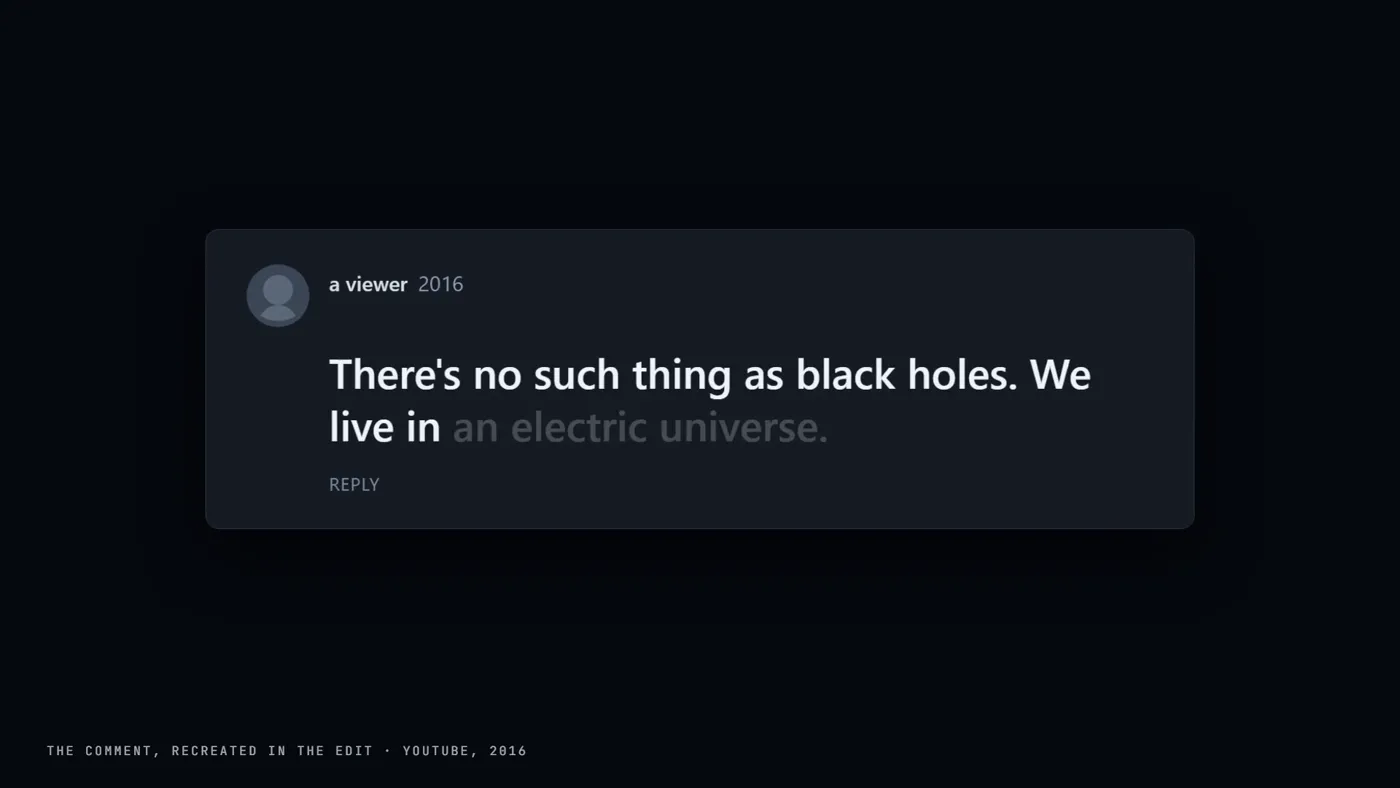
Then, under one of his videos, somebody had left a comment.
The comment“There’s no such thing as black holes. We live in an electric universe.”
My first thought was, what kind of hubris does it take to type that? You’re telling me the black hole guy is wrong?
Then I looked it up. That one comment kept me from getting sucked into a black hole of my own. I’ve been following the circuit ever since.
If the sky is electric, what is astrology?
So if you’ve come this far, here’s the question it took me years to see.
If the sky is electric, and the ancients were watching it, then the oldest system we have for reading the sky was built by people watching an electric sky.
That system is astrology.
When astrology was the most serious science
Before it was a column in the newspaper, astrology was the most serious science on Earth.
In Babylon, scholars watched the planets every night and wrote down what they saw. Where Jupiter rose. When Venus disappeared. What happened in the kingdom afterward. They kept those records for centuries.
Two thousand years later, Johannes Kepler worked out the laws of how planets move. The same laws we still use to fly spacecraft to Mars. Kepler also cast horoscopes, and wrote a book on the foundations of astrology.
He didn’t think he was doing two different jobs. To him, the math and the meaning were the same circuit.
The zodiac was everywhere
And it was everywhere. Egypt carved the zodiac into a temple ceiling.
The followers of Mithras ringed it around their god.
It’s laid into the floors of ancient synagogues.
Medieval doctors drew it on the human body, a sign for every part, and timed their treatments by where the Moon sat in it.
For most of human history, nothing was more serious than the sky.
The same planet gods in every culture
And here’s the strange part. Every culture gave the same points of light the same personalities.
In Babylon, Mars was Nergal, a god of war and plague. In Greece, it was Ares, the god of war. In Rome, Mars.
Jupiter was Marduk, the king of the gods. Then Zeus. Then Jupiter. Always the king.
The planet we call Venus was Ishtar in Babylon and Aphrodite in Greece. Love and desire. Mercury was Nabu the scribe, then Hermes the messenger.
Different languages. Different empires. The same characters. Why would they all agree about tiny dots of light?
Mercury: the relay
This is where my trade comes in. Because when you measure these planets, they don’t just look like gods. They behave like parts.
Mercury. Its small magnetic field gets torn open and snapped shut by the solar wind, over and over. Astrology called it the messenger, quick and twitchy. In a control panel, that’s a relay. A switch that clicks open and shut on a small signal.
Venus: the capacitor
Venus has no magnetic shield of its own. It wraps the solar wind around itself and holds on, under air pressure ninety times ours. Astrology called it attraction, holding on to what it draws in. That’s a capacitor. A part that stores a charge.
Mars: the spark gap
Mars lost its magnetic shield long ago. The solar wind stripped away much of its air, and what’s left is scarred and rusted red. Astrology called it war. The cut. That’s a spark gap. The place where current jumps and burns.
Jupiter: the amplifier
Jupiter has the strongest magnetic field of any planet, and after the Sun, it’s the loudest radio voice in our sky. Astrology called it the king. Growth. More of everything. That’s an amplifier. It takes a signal and makes it bigger.
Saturn: the resistor
Saturn’s magnetic field lines up with its spin to within a hundredth of a degree. No other planet comes close. Astrology called it order, limits, time. That’s a resistor. The part that holds the current back so the rest of the circuit doesn’t burn.
Uranus: the breaker
Uranus. Long before anyone measured it, modern astrologers made it the planet of electricity and sudden change. Then in 1986, Voyager 2 flew past and found its magnetic field knocked sideways, tilted almost sixty degrees and shoved off center. That’s a breaker. The part that trips without warning.
Neptune: the transducer
Neptune is so far out it should be frozen still. Instead, it has the fastest winds in the solar system, and it gives off more than twice the energy it gets from the Sun. Its magnetic field is tipped and off center too. Astrology called it dreams, illusion, the hidden made felt. That’s a transducer. A part that turns hidden pressure into a signal, like a microphone.
Long before anyone could measure any of it, astrology was already describing the parts.
Gemini: the symbol nobody explained
And some of its symbols have never been explained at all.
David Talbott, quoted“Astrologically, the cosmic twins find their most popular expression in the constellation of Gemini. Of course, this story itself is never explained.”
So let’s ask. Gemini is the twins, Castor and Pollux. Two bright stars, side by side in the winter sky. The Babylonians saw twins there too. They called them the Great Twins.
The Greeks and Romans gave the twins a job. They were the protectors of sailors, because sailors could see them, right there in the storm.
Almost two thousand years ago, the Roman writer Pliny the Elder wrote it down. In a storm, lights like stars would settle on a ship’s masts. One light alone was a bad sign. Two lights meant a safe voyage, and those two, he wrote, were Castor and Pollux.
St. Elmo’s fire and the twins
Today we have a name for those lights. St. Elmo’s fire. It’s plasma, a glowing electrical discharge pulled out of the air by the charge in a storm. Even Pliny’s English translators added a note, back in 1855: these lights are electrical.
So for the sailors of Greece and Rome, the twins of the zodiac were two flames of electric fire. Is that where the symbol came from? I don’t know yet. But nobody was even asking.
Maybe astrology is a circuit
Astrology never asked where its symbols came from. And the Electric Universe never asked what astrology was for.
There’s a reason the god of lightning sat at the top of the pantheon.
A few years ago, over lunch with my dad, an electrician and a lifelong student of astrology, we got to talking about the sky. And I said it out loud.
If space is really electric, and the planets are like electromagnets, maybe astrology is a really big, enormously complex circuit.
I built an instrument to test it
It sat with me, and it grew inside my mind for years. Then I built an instrument to test it: the positions of the planets, the Moon and the Sun, and the live space weather hitting the Earth, lined up against what astrology has said for thousands of years.
It showed real promise. There was really something there. And it’s taken over my life ever since.
Bios: the other half
But the sky is only half of it. For thousands of years, astrology has been trying to understand the connection between the sky above and the people below. As above, so below. So I built the other half of the instrument. It reads your heart rate, your sleep and your nervous system from your own watch or ring, and lines them up against the storms coming off the Sun. I call it Bios.
The app, the book, and come along
The whole instrument is the Electric Astrology app, on iPhone and Android. My book is in there too. You can read it in the app’s own reader, or listen to the audiobook.
I’m still pulling on this thread. It goes deep. If you want to see where it leads, come along.
One tap
Do the planets behave like the parts astrology describes?
Come along
Maybe astrology is a really big circuit.
The planets, the Moon and the Sun, the live space weather, and your own heart and sleep, lined up in one instrument. It’s in the Electric Astrology app on iPhone and Android, and the book is in there too.
Want the whole story on paper? Get the book →