Space Weather · The film
What does a geomagnetic storm do to your body?
The short answer
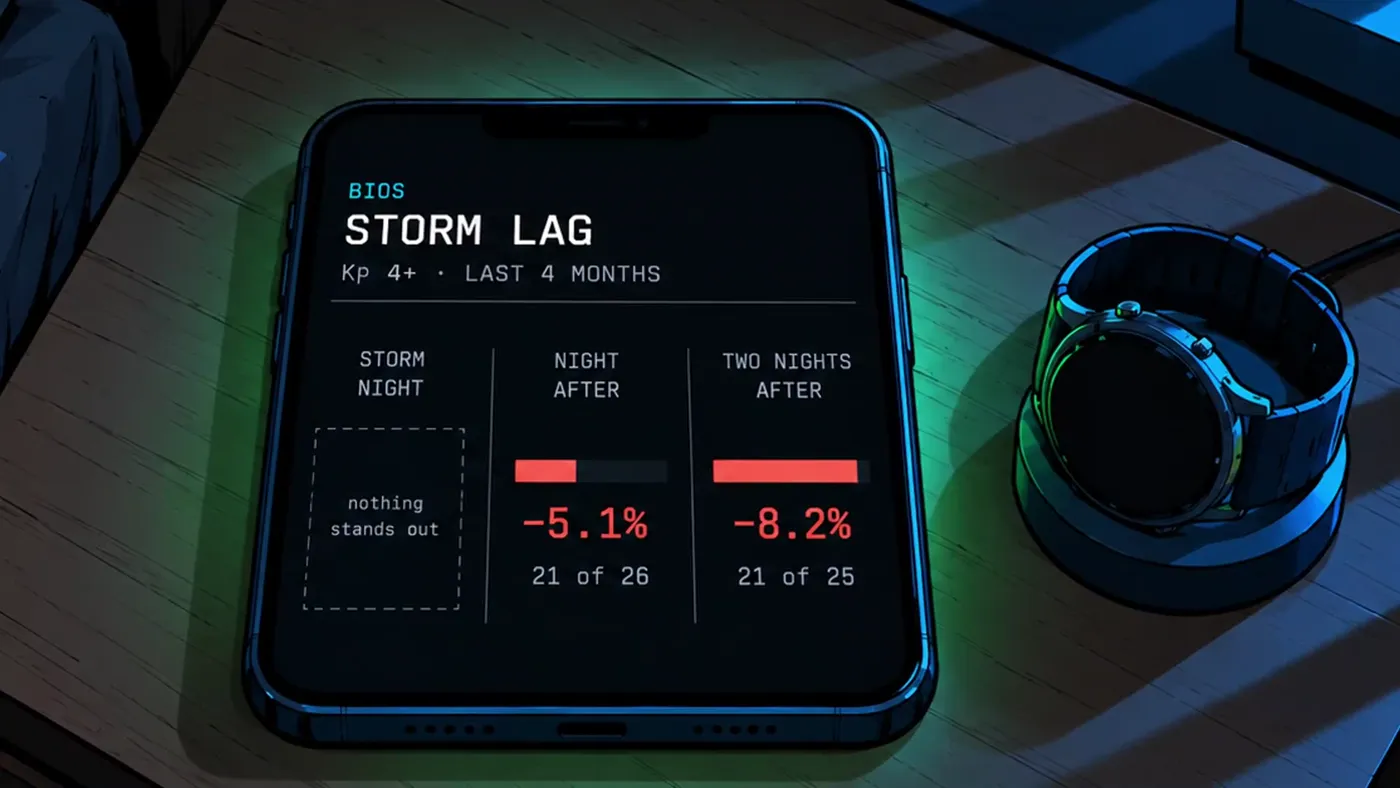
In William Edwards’s own watch data, the night a geomagnetic storm hits shows nothing. It’s the next two nights. Over the last four months Earth’s field hit Kp 4 or higher on 27 days. The night after, his sleep ran short on 21 of 26 nights, 5.1% under his own normal; two nights after, on 21 of 25, 8.2% under.
Published studies have tied storms to a drop in the brain’s alpha rhythm, lower heart rate variability and less of the sleep hormone melatonin, and others find little. Averages can hide who reacts, so the way to know what storms do to you is to put the meter on your own wiring.
Your two nights to watch
Want to see what those nights do to you? Bios, in the Electric Astrology app, lines up your own watch or ring data against every storm.
Get Bios →The measurement
What 27 storms did to one man’s sleep
“Here’s what a geomagnetic storm does to my body. Not a study. Mine.” William Edwards built Bios to line up his own sleep and heart against every storm. Over the last four months, the storm night itself was nothing special. The night after, and the night after that, were not.
Bios // Storm lag · ● William’s data
Kp 4+ days · last four months · his watch vs his own normal
How he measured it
- His body: his own watch, read by Bios in the Electric Astrology app through Apple Health (Health Connect on Android).
- His normal: each night is compared with his own rolling 30-day baseline, not with anyone else’s.
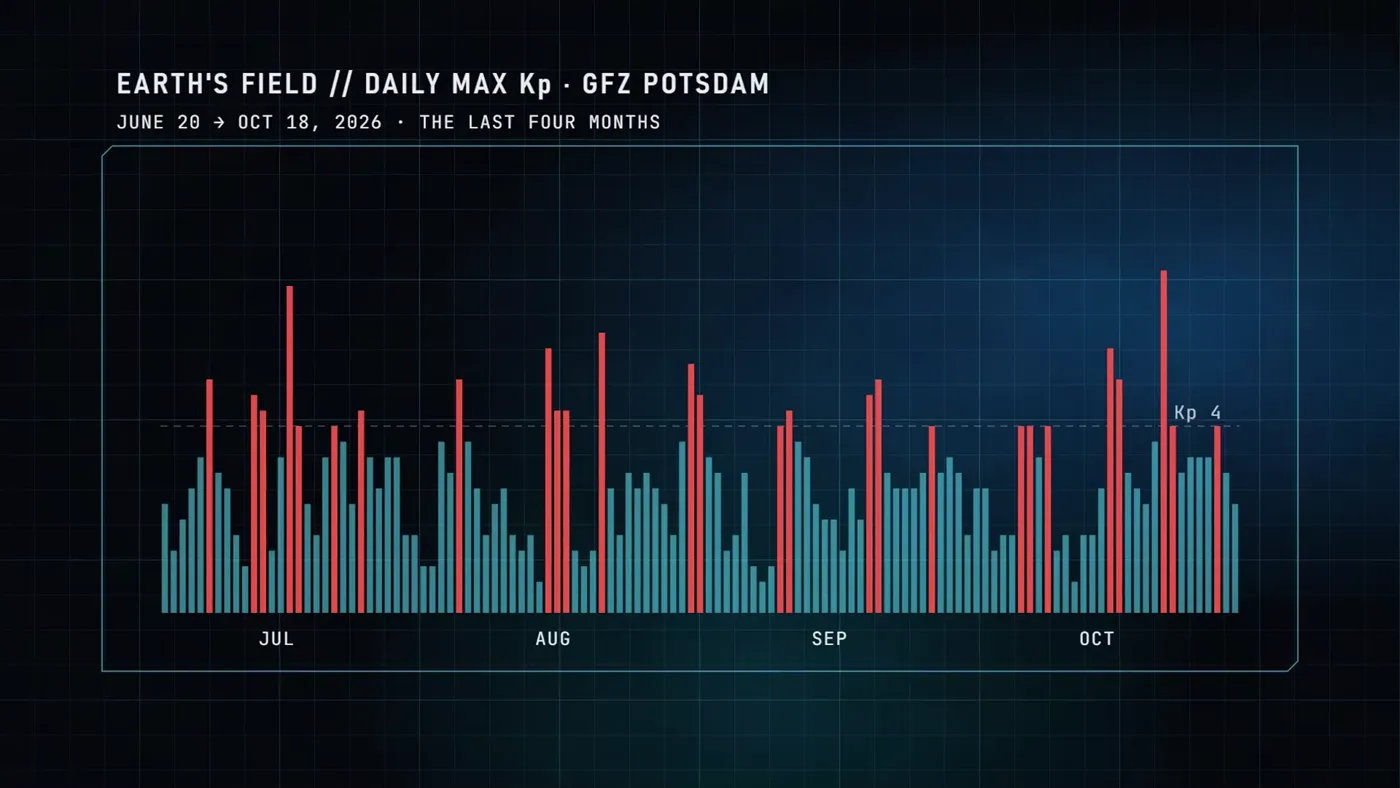
- The storms: Kp from GFZ Potsdam[6]. A storm day is a day (Universal Time) whose highest three-hour Kp reached 4 or more: 27 of them, June 20 – October 18, 2026.
- The nights: the night after starts the evening of the storm day; two nights after is the next one. His watch had a record for 26 and 25 of them.
- When: Bios’s pattern scan of October 18, 2026, the last 120 days.
Bios · in the Electric Astrology app
Find out if you hum or trip.
If you’ve got a watch or a ring that tracks your sleep, connect it to Bios in the Electric Astrology app, and it’ll start lining up your nights against every storm. Every storm adds another night to the record.


Works with any watch or ring that syncs sleep to Apple Health or Health Connect: Apple Watch, Oura, Whoop, Garmin, Fitbit.
What is a geomagnetic storm?
The Sun pushes on Earth’s magnetic field all the time. When a burst of charged particles from the Sun hits it, the field shakes. That’s a geomagnetic storm.
The Kp index scores the shaking, from 0 (calm) to 9 (extreme), every three hours, from magnetic observatories around the world. GFZ Potsdam keeps the official record and NOAA posts it live[7]. Four is where the field is getting shoved hard. Five is an official storm, what NOAA calls G1.
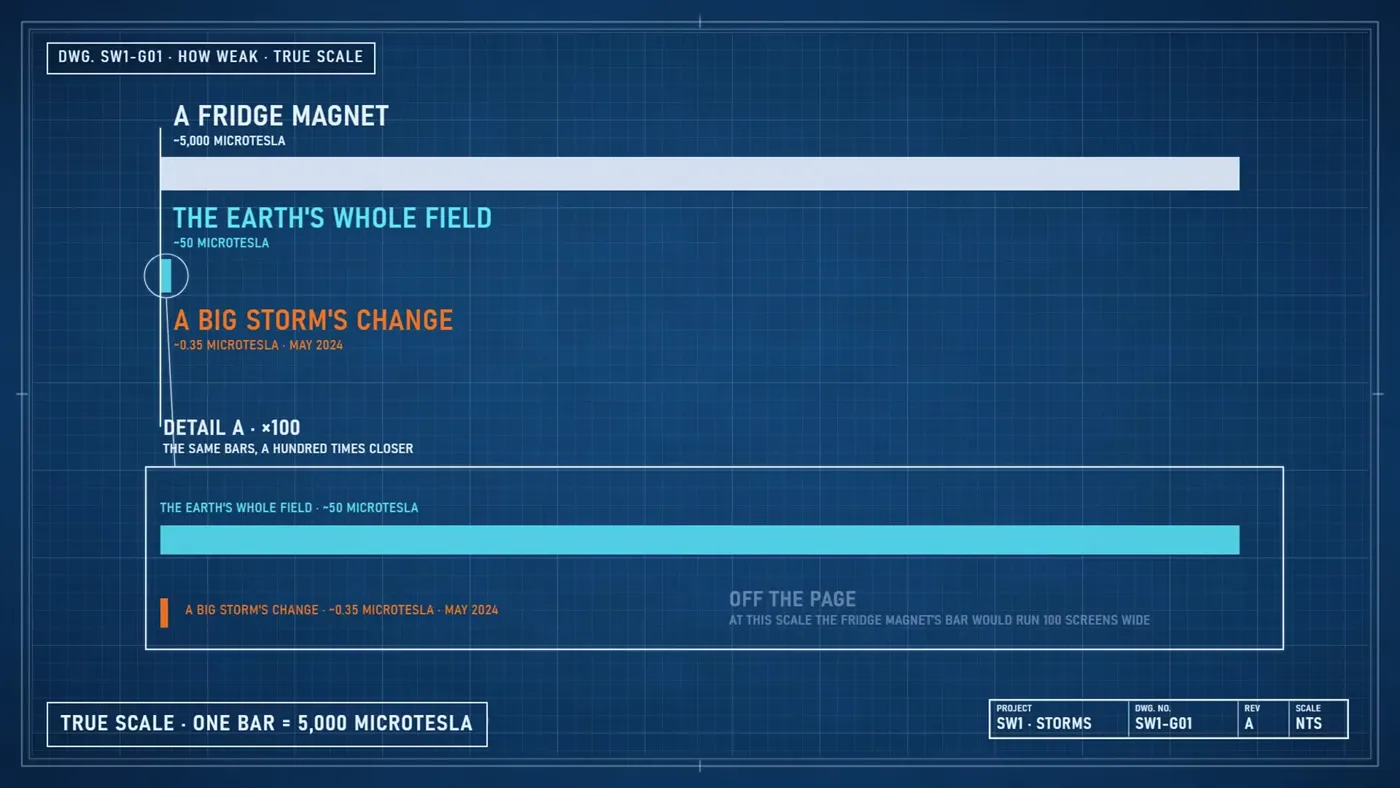
It’s a weak field. Earth’s magnetic field is about a hundred times weaker than the magnet holding your grocery list on the fridge, and down on the ground a big storm changes it by less than one percent. Which is exactly why the next question matters.
1
The Sun throws charged particles
A steady wind of them, and sometimes a big burst.
2
They hit Earth’s magnetic field
The field gets squeezed on the Sun side and shakes. That shaking is a geomagnetic storm.
3
The Kp index measures it
0 is calm, 9 is extreme, every three hours. Four is getting shoved hard. Five is a storm.
The studies
Does a geomagnetic storm affect your body?
On a job site, you don’t accept magic. Somebody tells you there’s voltage on a wire, you put a meter on it. So the first question is where, in a body, a signal that weak could even land.
Can your brain sense Earth’s magnetic field?
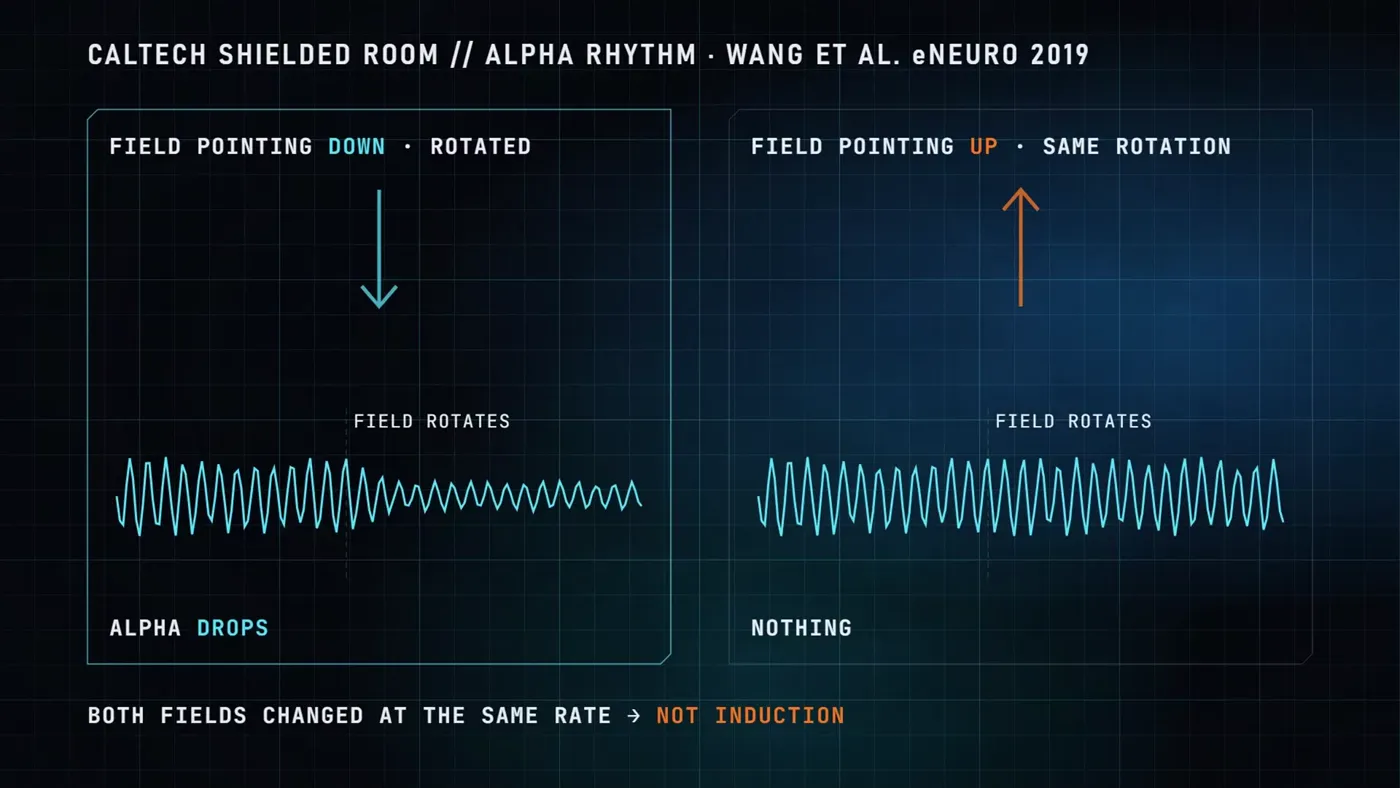
Somebody at Caltech asked the same question and built a room to answer it: a dark, quiet chamber, shielded from radio. People sat inside with their eyes closed while the researchers turned a magnetic field around them, about as strong as Earth’s.[1]
In some of those people, the brain wave of a resting mind, the alpha rhythm, dropped. But only when the field turned one way. Turned the other way: nothing. That detail matters. If the body were just acting like a coil of wire picking up current, the direction wouldn’t matter. The researchers say that rules out electrical induction. Something in there senses which way the field points, like a compass.
Thirty-six people were tested. Four responded so strongly the team brought them back weeks and months later to test them again. All four did it again. Is it biogenic magnetite, tiny magnetic crystals a Caltech scientist found in the human brain back in 1992[2]? Maybe.
Does a geomagnetic storm affect your heart?
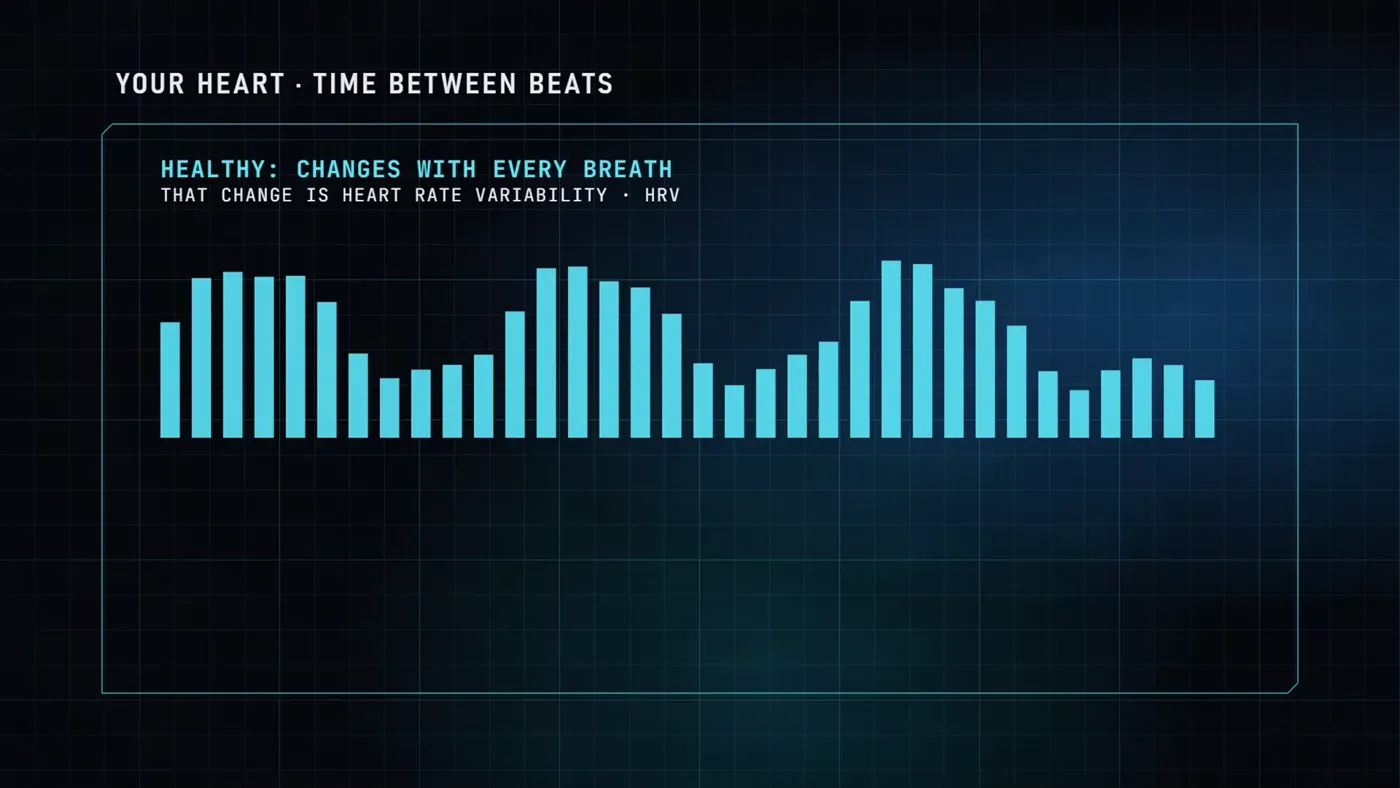
In the electrical trade, big motors run on variable frequency drives. A drive lets a motor speed up and slow down smooth, instead of slamming on and off at one speed. Your heart is a drive like that. A healthy heart doesn’t beat like a clock. It speeds up a little when you breathe in and slows down when you breathe out. Doctors call that heart rate variability, HRV: how much the time between your heartbeats changes. In a healthy heart, it changes a lot. A motor that can’t vary its speed is a motor that is about to burn out.
In Boston, researchers followed 809 older men. When the Kp index, the storm gauge, climbed, their HRV dropped.[3]
Can a geomagnetic storm affect your sleep?
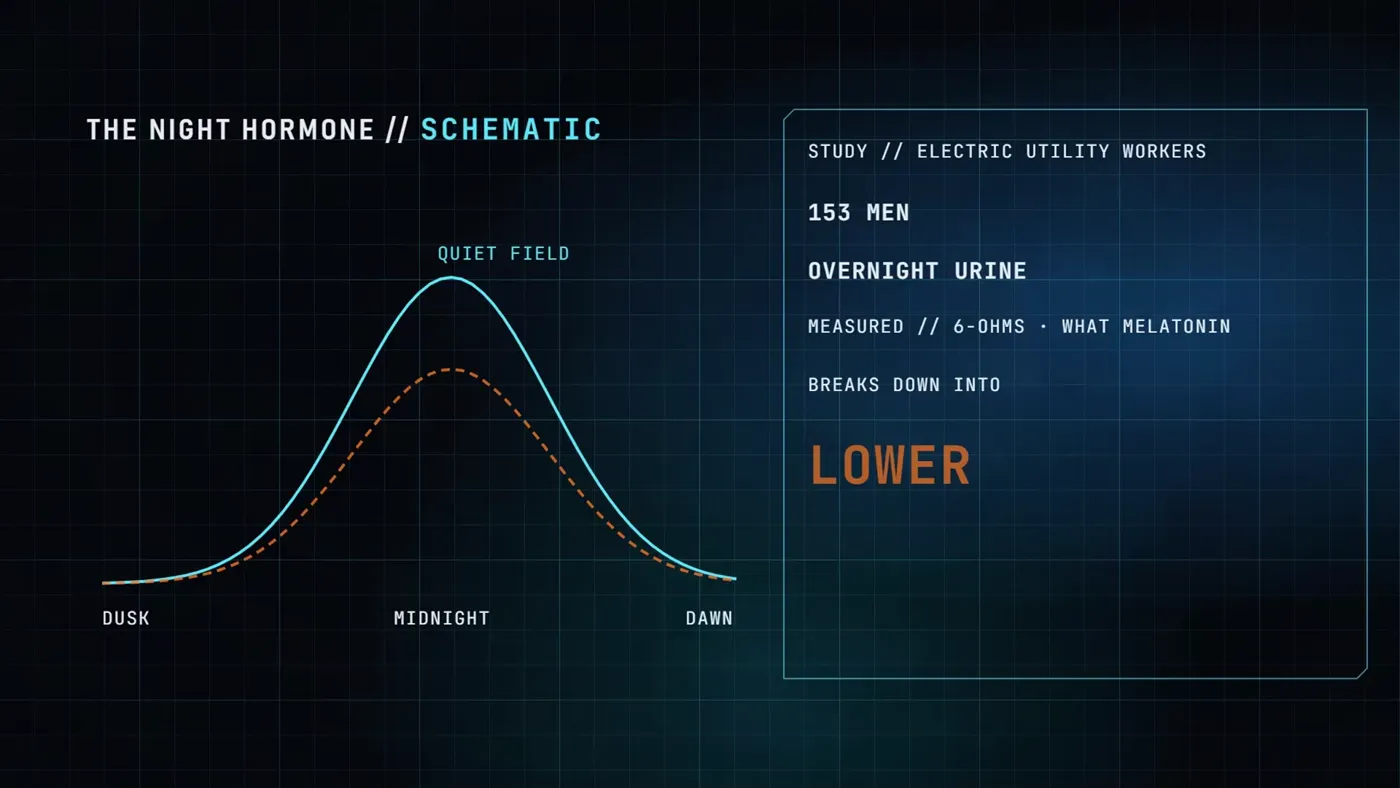
A study of 153 electric utility workers found that when geomagnetic activity went up, their melatonin, the sleep hormone, came in lower. And the strongest link was fifteen to thirty-three hours later.[4] Right about the next night.
That is the same lag in William Edwards’s own log: not the night of the storm, but the night after, and the night after that. “When a fault shows up a day or two after the event, you don’t write it off. You mark it, and you keep watching.”
Has any study found nothing?
Yes. For every study like Boston’s, there’s one that finds nothing. One team tracked twenty healthy people for a month, and once they cleaned up the statistics, most of the effects went away.[5]
Why do the studies disagree?
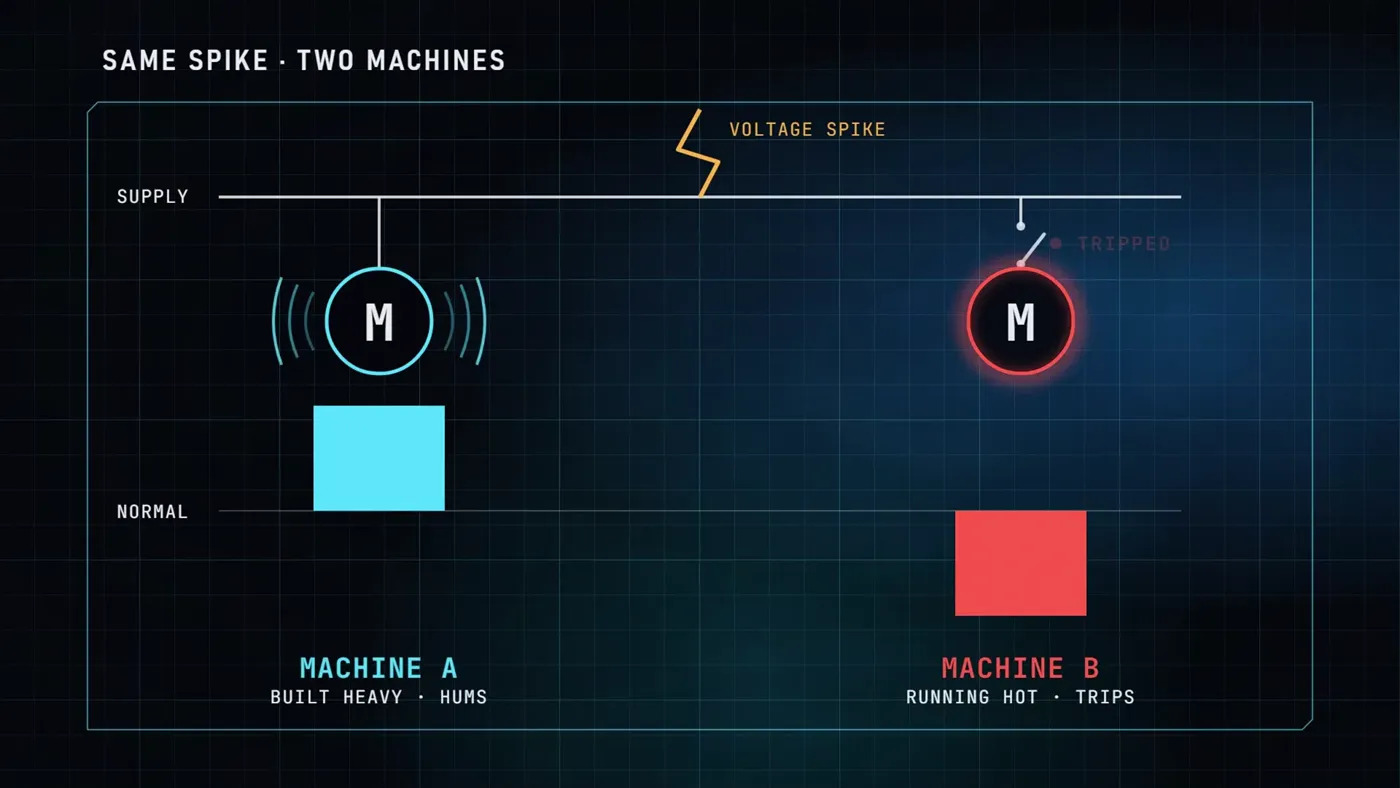
Hit two machines with the same voltage spike. One’s built heavy; it just hums. The other one’s already running hot, and it trips. Now average the two together, and on paper the spike did nothing.
That’s what happens when you average a hundred people. You can’t batch-test custom equipment. You have to commission it unit by unit. And every one of us is custom.
William Edwards’s hypothesis, and he calls it that: people with different Sun, Moon and rising signs, and people born at different points in the solar cycle, are built to react differently to the same sky. Testing it takes thousands of people logging their own data.
This page is one person’s measurement and published studies. It is not medical advice.
How to check it on yourself
You can’t find a loose wire in your own house by looking at your neighbor’s breaker panel. You have to put the meter on your own wiring. Over and over. For months.
- 1
Track your sleep every night.
Any watch or ring that records sleep into Apple Health or Health Connect will do. Your heart rate variability, if it records it, too.
- 2
Know your own normal.
Compare each night with your own baseline, not with anyone else’s. Your normal is the reference, not the average person’s.
- 3
Watch the Kp.
When it reaches four, mark the day. The Kp index page shows it live, and NOAA forecasts it three days out.
- 4
Watch the two nights after.
Not the night of. The night after, and the night after that. The live panel at the top of this page names them for you.
- 5
Keep going.
One storm and one bad week don’t prove anything. Every storm adds another night to the record.
That’s the head start the lag gives you. When the Kp climbs, you know which two nights to watch. The people around you might be dragging and not know why. You’ll know, and you can plan around it.
Bios · in the Electric Astrology app
Bios does steps two through five for you.
It reads your watch or ring, learns your own normal, and lines up every night against every storm, so the lag shows up on its own if it’s there. You’re not waiting for a university to fund a study. You are the study.
Works with any watch or ring that syncs sleep to Apple Health or Health Connect: Apple Watch, Oura, Whoop, Garmin, Fitbit.
Keep following the wire
The live instruments, films and the book this one connects to.
Questions people ask
What does a geomagnetic storm do to your body?
In William Edwards’ own data, the storm night itself shows nothing. Over four months, Earth’s field hit Kp 4 or higher on 27 days. The night after, his sleep ran short on 21 of 26 nights, about 5% under his own normal. Two nights after, it ran short on 21 of 25, about 8% under. In published studies, a Caltech lab saw the brain’s alpha rhythm drop when an Earth-strength field turned one way, a Boston study of 809 older men found heart rate variability dropped when the Kp index climbed, and a study of 153 electric utility workers found less of the sleep hormone melatonin. Other studies find little, and averaging people together can hide who reacts.
How long after a geomagnetic storm do you feel it?
In William’s log it isn’t the night of the storm. It’s the night after, and the night after that. A study of 153 electric utility workers found the same kind of delay: when geomagnetic activity went up, their melatonin, the sleep hormone, came in lower, and the strongest link was fifteen to thirty-three hours later. Right about the next night.
What Kp counts as a geomagnetic storm?
The Kp index runs from 0 to 9. Four is where the field is getting shoved hard. Five is an official storm, NOAA’s G1. William’s log counts every day the Kp reached 4 or higher.
Can a geomagnetic storm affect your sleep?
For William it did, with a lag. In the last four months, the night after a Kp 4+ day his sleep ran short on 21 of 26 nights (−5.1% against his own normal), and two nights after on 21 of 25 (−8.2%). A study of 153 electric utility workers found lower melatonin, the sleep hormone, when geomagnetic activity went up, strongest fifteen to thirty-three hours later.
Does a geomagnetic storm affect heart rate variability?
In Boston, researchers followed 809 older men, and when the Kp index climbed, their heart rate variability dropped. Heart rate variability is how much the time between your heartbeats changes; in a healthy heart it changes a lot. Another team tracked twenty healthy people for a month, and once they cleaned up the statistics, most of the effects went away.
Is Earth’s magnetic field strong enough to affect a person?
It is weak. Earth’s magnetic field is about a hundred times weaker than a fridge magnet, and down on the ground a big storm changes it by less than one percent. But at Caltech, people sitting in a shielded room showed a drop in the alpha rhythm, the brain wave of a resting mind, when an Earth-strength field turned one way and nothing when it turned the other. The researchers say that rules out electrical induction: something in the body can tell which way the field is pointing.
Why do studies on geomagnetic storms and health disagree?
Hit two machines with the same voltage spike. One is built heavy and just hums. The other is already running hot, and it trips. Average the two together and on paper the spike did nothing. That is what happens when a study averages a hundred people. Every one of us is custom equipment, so the test has to be run person by person.
How can I check what geomagnetic storms do to my own body?
Put the meter on your own wiring. If you have a watch or a ring that tracks your sleep, connect it to Bios in the Electric Astrology app. It reads Apple Health and Health Connect and lines up your nights against every storm, each one compared with your own normal. The next time the Kp reaches four, watch the two nights after it.
Sources
Every study in the film was opened and checked at its source.
- [1]Wang, C. X. et al. (2019). Transduction of the Geomagnetic Field as Evidenced from alpha-Band Activity in the Human Brain. eNeuro 6(2): ENEURO.0483-18.2019 (Caltech; 36 participants; the four strongest responders retested weeks or months later).
- [2]Kirschvink, J. L., Kobayashi-Kirschvink, A. & Woodford, B. J. (1992). Magnetite biomineralization in the human brain. PNAS 89(16): 7683–7687.
- [3]Zilli Vieira, C. L. et al. (2022). Geomagnetic disturbances reduce heart rate variability in the Normative Aging Study. Science of the Total Environment 839: 156235 (809 older men, Greater Boston).
- [4]Burch, J. B., Reif, J. S. & Yost, M. G. (2008). Geomagnetic activity and human melatonin metabolite excretion. Neuroscience Letters 438(1): 76–79 (153 male electric utility workers; largest differences 15–33 hours later).
- [5]Mattoni, M., Ahn, S., Fröhlich, C. & Fröhlich, F. (2020). Exploring the relationship between geomagnetic activity and human heart rate variability. European Journal of Applied Physiology 120(6): 1371–1381 (20 healthy people, 30 days).
- [6]Kp index: GFZ German Research Centre for Geosciences, Potsdam.
- [7]Live Kp and the 3-day Kp forecast: NOAA Space Weather Prediction Center.
- William Edwards’s own sleep data: Bios (Apple Health / Health Connect), the nights after Kp 4+ days against his own baseline, pattern scan of October 18, 2026.
Film images: frames from the film. Sun, Earth and magnetosphere footage: NASA. Some scenes in the film are illustrated or AI-generated.
The full transcript
The narration, chapter by chapter, as the film speaks it. Tap a time to play the film from that moment.
The Friday
Here's what a geomagnetic storm does to my body. Not a study. Mine. The night it hits? Nothing. It's the next two nights. I've got the numbers, and I'll show you how to get yours.
But it starts on a Friday. October 2nd, 2020. I'm thirty-six years old, and I'm driving myself to the hospital.
By that afternoon I've got two stents in my heart. One of them in the artery they call the widow-maker.
And it was 2020, so everybody had an answer for everything. For me it was genetics. Stress. Bad luck.
Nobody could answer the one thing I actually wanted to know.
Why that Friday?
I spent my career in the electrical trade. When a machine goes down on a job, "bad luck" isn't an answer.
So I went looking for the fault. It took me a few years, a book, and an app I had to build myself.
And this year, my own sleep started showing me a pattern. One I can test.

Why that Friday?
I wish I could tell you I had a revelation in that hospital and saw the big man in the sky. I didn't get a revelation. I got plumbing.
But once the plumbing was fixed, I couldn't let it go. Years of troubleshooting machines will do that. If the machine was defective, why did it fail on that specific Friday?
So I did what you do on a job. I pulled out the schematics and started tracing the circuit. I wanted to see if the sky matched the scars.
If you saw my film about the heart attack, you know what I found. The Monday the pain started, a geomagnetic storm was hitting Earth.
And that's where most people would stop. Storm, heart attack, spooky, done.
But one storm and one bad week don't prove anything. You can't find a loose wire in your own house by looking at your neighbor's breaker panel. You have to put the meter on your own wiring. Over and over. For months.
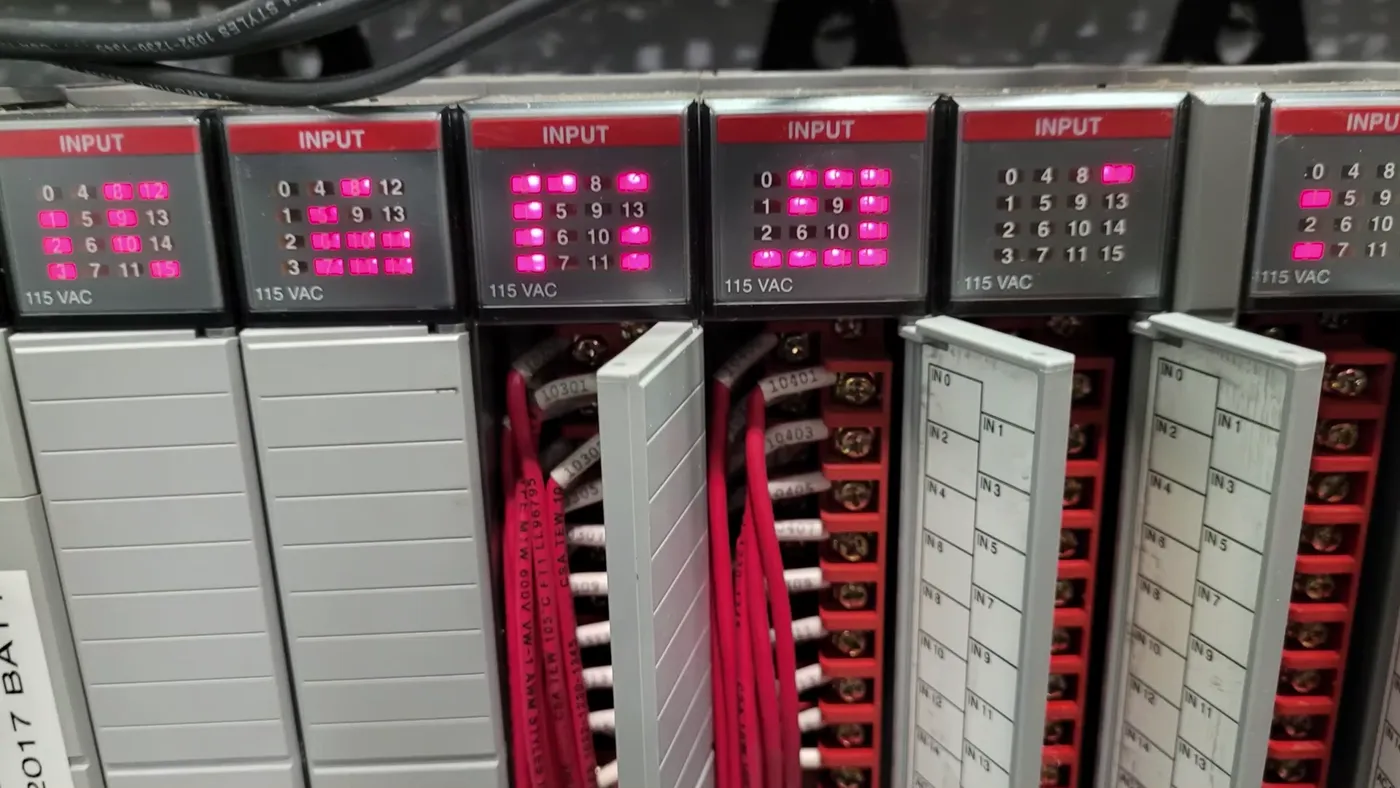
My watch was already recording my heart and my sleep every night. The storms are public: NOAA and a lab in Potsdam, Germany, log Earth's magnetic field around the clock. Nobody was putting the two side by side for one person.
Bios: my body vs the storms
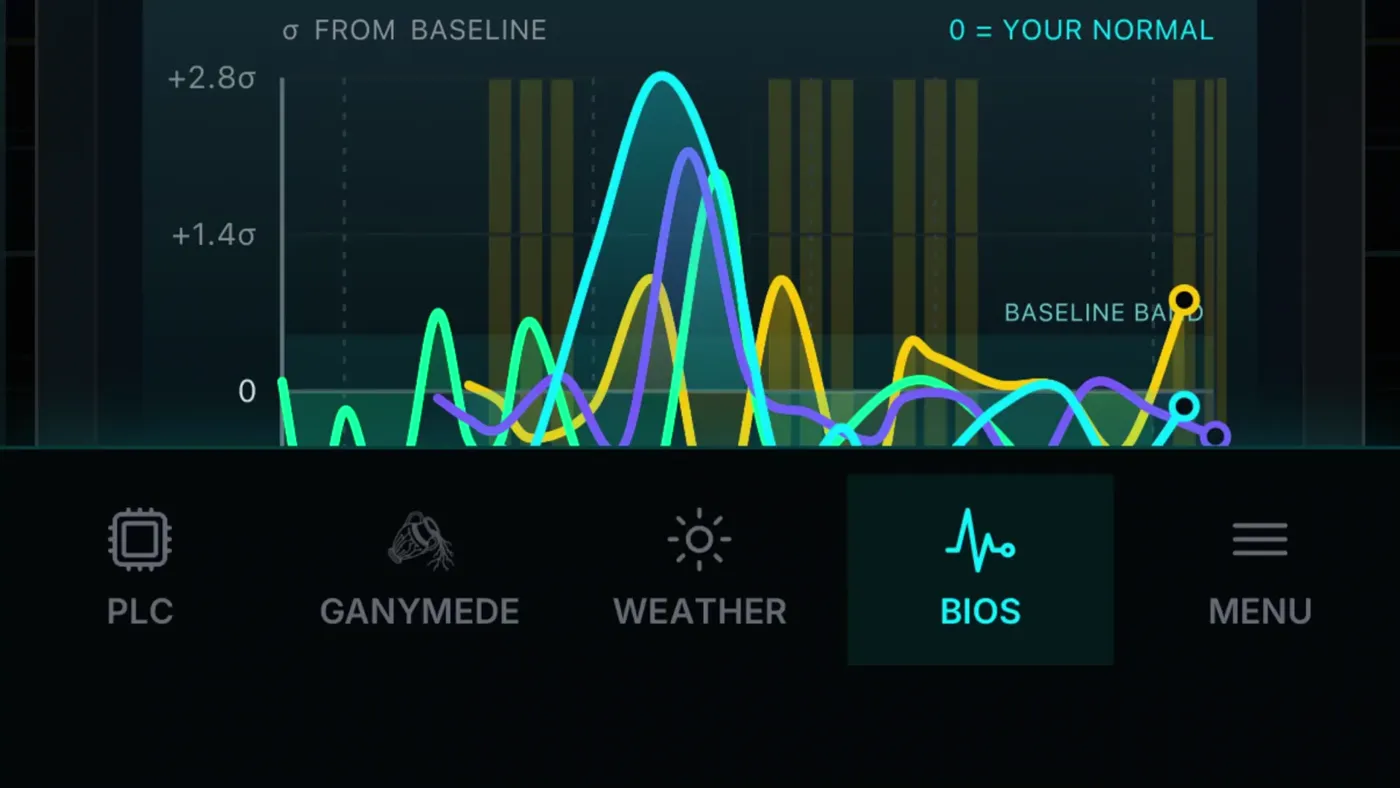
So I built the thing that does. It's called Bios. It lives in the Electric Astrology app.
My inner skeptic
Now, before I get too deep, a word from my inner skeptic.
My inner skepticCome on, Will. Earth's magnetic field is about a hundred times weaker than the magnet holding your grocery list on the fridge. And down here on the ground, a big storm changes it by less than one percent. You're telling me that knocks a grown man's heart around?
Yeah. He's got a point.
On a job site, we don't accept magic. You tell me there's voltage on a wire, I'm putting a meter on it. So for once, I agree with the skeptic. Show me the copper. Show me where in a body a signal that weak could even land.
The Caltech magnetic room
Turns out somebody at Caltech asked the same question and built a room to answer it.
A dark, quiet chamber, shielded from radio. People sit inside with their eyes closed while the researchers turn a magnetic field around them. A field about as strong as Earth's.
And in some of those people, the brain wave of a resting mind, the alpha rhythm, dropped. But only when the field turned one way. Turn it the other way: nothing.
That detail matters. If my body were just acting like a coil of wire, picking up current, the direction wouldn't matter. The researchers say that rules out electrical induction. Something in there senses which way the field points, like a compass.
Thirty-six people tested. Four responded so strongly the team brought them back weeks and months later to test them again. All four did it again.
So the field is weak. But something in us can tell which way it's pointing. Is it something called biogenic magnetite, tiny magnetic crystals a Caltech scientist found in the human brain back in 1992? Maybe. That one gets its own deep dive.
Your heart is a drive (HRV)
And the brain isn't the only part of you that's listening. Your heart is too.
In the electrical trade, big motors run on variable frequency drives. A VFD lets a motor speed up and slow down smooth, instead of slamming on and off at one speed.
Your heart is a drive like that. A healthy heart doesn't beat like a clock. It speeds up a little when you breathe in and slows down when you breathe out. It's always adjusting. Doctors call that heart rate variability, HRV: how much the time between your heartbeats changes. In a healthy heart, it changes a lot.
A motor that can't vary its speed is a motor that is about to burn out.
So here's the study that got my attention. In Boston, researchers followed 809 older men. When the Kp index, the storm gauge, climbed, their HRV dropped.
Why the studies fight
But for every study like that, there's one that finds nothing. One team tracked twenty healthy people for a month, and once they cleaned up the statistics, most of the effects went away.
So who's right?
Here's how I think about it. Say I hit two machines with the same voltage spike. One's built heavy, it just hums. The other one's already running hot, and it trips. Now I average the two together, and on paper the spike did nothing.
That's what happens when you average a hundred people. You can't batch-test custom equipment. You have to commission it unit by unit. And every one of us is custom.
Here's what I believe. People with different Sun, Moon and rising signs are built to react differently to the same sky. So are people born at different points in the solar cycle. Astrology hasn't caught up with that yet. It's a hypothesis right now. Testing it takes thousands of people logging their own data, and that's what I'm building.
So I stopped asking what storms do to people. I started asking what they do to me.
My own log: 27 storms
Bios has been lining up my sleep and my heart against every storm.
Over the last four months, Earth's field hit Kp 4 or higher on twenty-seven days. Four is where the field is getting shoved hard. Five is an official storm.
And here's what I wasn't expecting. The storm night itself? Nothing special.
The night after
It's the night after. My watch caught twenty-six of those nights. On twenty-one of them, I slept short. About five percent under my own normal.
And two nights after the storm: twenty-one out of twenty-five. Eight percent short.
Not the night of. The night after. And the night after that.
That's a lag. And a lag I understand. When a fault shows up a day or two after the event, you don't write it off. You mark it, and you keep watching.
It's not just me
And it's not just me. A study of 153 electric utility workers found that when geomagnetic activity went up, their melatonin, the sleep hormone, came in lower. And the strongest link was fifteen to thirty-three hours later. Right about the next night.
And yeah, I've thought about it. In 2020 the storm hit on a Monday. The heart attack came that Friday. I don't know if those two things are connected. I'm not a doctor, and one week is one reading. But I know which question I'm going to keep asking. What is my connection to the sky? I think it's electrical. I think I can measure it. And I think I can measure it for thousands of people and build a picture of how all of us respond to the sky.
Ganymede
Inside the app there's a guide I built. His name is Ganymede, and he reads everything Bios logs. So I asked him.
GanymedeThe part to watch is the lag: the night after, and the night after that.
GanymedeThe next time the Kp reaches four, watch the two nights after it. Every storm adds another night to the record.
That's what Ganymede does. He doesn't tell me what's going to happen to me. He tells me what to watch.

The array: you are the study
Here's why I'm showing you my numbers instead of keeping them in a notebook.
Out in the New Mexico desert there's a radio telescope called the Very Large Array. The scientists needed a dish twenty miles wide. So they didn't build one. They built twenty-seven small ones, wired them together, and they act like one giant eye.
One person's log is a diary. It's good for your life, but it doesn't move anything. Thousands of logs, lined up against the same storms? That's a telescope.
You're not waiting for a university to fund a study. You are the study.
And here's what that lag gives you: a head start. When the Kp climbs, you know which two nights to watch. The people around you might be dragging and not know why. You'll know. You'll plan around it. That's an edge.
So put the meter on your own wiring. If you've got a watch or a ring that tracks your sleep, connect it to Bios in the Electric Astrology app, and it'll start lining up your nights against every storm. Find out if you're one that hums or one that trips.
The function of the circuit
I never really asked "why me." I asked "why then?" And what does it mean for the rest of my life?
What I found is that the hard days are part of the circuit, same as the good ones. So the question of a journeyman isn't "why." It's: what is the function of this circuit?
Back then, I didn't even know there was weather up there. Now I check the solar wind like other people check for rain.
One tap
Do you sleep worse after a geomagnetic storm?
The next step
Put the meter on your own wiring.
One person’s log is a diary. Thousands of logs, lined up against the same storms, are a telescope. Connect your watch or ring to Bios and find out what the next storm does to you.
Want the whole story on paper? Get the book →